

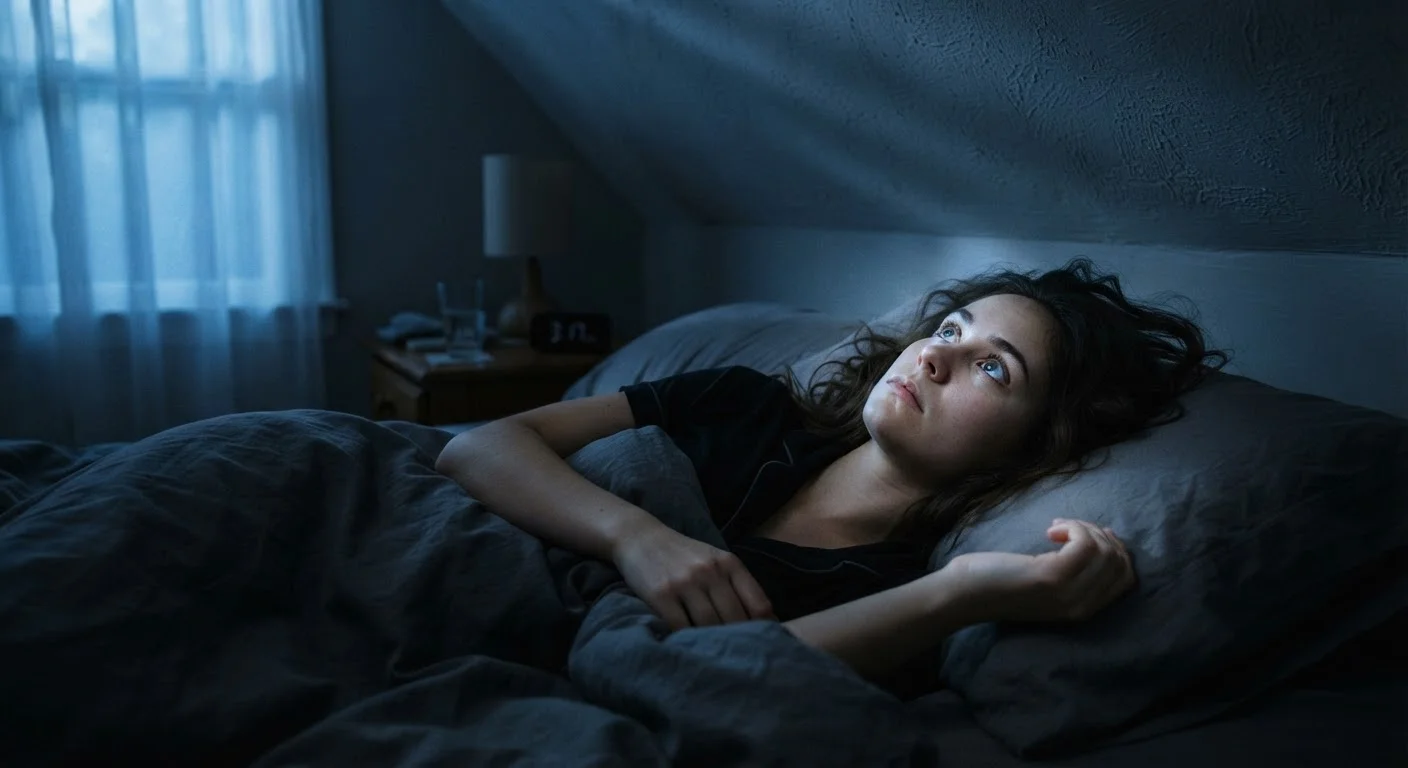
Why Insomnia Doesn't Just Go Away on Its Own
Most people expect insomnia to resolve the way a headache does — with a little time and rest. In reality, insomnia has a stubborn tendency to outlast its original cause. A stressful work deadline, a bout of illness, or a major life transition can all disrupt sleep, but for many people the difficulty sleeping persists long after the trigger has passed.
The reason has to do with how the brain adapts. During a period of poor sleep, the mind becomes increasingly vigilant about rest — monitoring for signs of sleeplessness, anticipating another difficult night, and treating the bed as a site of potential failure rather than relaxation. This state of heightened mental alertness, which sleep researchers call hyperarousal, is the opposite of what sleep requires. The harder someone tries to sleep, the more elusive it becomes.
This is what distinguishes chronic insomnia from a rough patch of poor nights. It isn't simply tiredness — it's a self-reinforcing cycle driven by both psychology and behavior. Understanding that cycle is the first step toward breaking it. For a closer look at how stress feeds directly into this process, see how stress and anxiety feed insomnia.
The Behavioral Trap: How Coping Makes Things Worse
When sleep becomes difficult, people naturally reach for compensatory strategies — sleeping in later, taking long afternoon naps, going to bed earlier than usual, or spending more time lying in bed hoping sleep will eventually come. While these responses feel logical, they often backfire.
The Bed Should Signal Sleep, Not Wakefulness
If you frequently lie awake in bed for long periods, consider getting up and doing something calm in low light until you feel genuinely sleepy before returning. This approach, called stimulus control, is a cornerstone of CBT-I and helps re-establish the mental link between your bed and actual sleep. Consistency matters more than any single night's outcome.
Spending extra time in bed without sleeping weakens the brain's association between the bed and actual sleep. Over time, the bed becomes a cue for wakefulness rather than rest — a phenomenon sleep clinicians call conditioned arousal. This is one of the most persistent mechanisms keeping insomnia alive.
Similarly, irregular wake times interfere with the homeostatic sleep drive — the biological pressure to sleep that accumulates the longer a person is awake. When that drive is dissipated through napping or oversleeping, falling asleep at the intended bedtime becomes harder. These are patterns that people often undermine their own sleep without realizing it.
The Role of Thoughts and Expectations
Insomnia is not purely behavioral — the way a person thinks about sleep plays an equally important role. Catastrophic thinking patterns, such as believing that one poor night will ruin an entire week, or that the inability to sleep signals something seriously wrong, increase pre-sleep anxiety and perpetuate the cycle.
Sleep performance anxiety — the dread of another sleepless night — activates the same stress-response systems that make sleep physiologically difficult. The mind becomes a kind of internal alarm clock, scanning for wakefulness and inadvertently producing it. These cognitive patterns are addressed directly in evidence-based treatment.
~30%
Adults reporting insomnia symptoms
Research published in sleep epidemiology literature consistently estimates that roughly 30% of adults experience insomnia symptoms at any given time.
10%
Adults with chronic insomnia disorder
An estimated 10% of the adult population meets clinical criteria for chronic insomnia disorder, according to sleep medicine literature.
70–80%
Improvement rate with CBT-I
Clinical trials of CBT-I consistently report meaningful improvement in sleep outcomes for the majority of participants who complete the full course of treatment.
It's worth noting that insomnia is not the same as simply not getting enough sleep hours. The distinction between insomnia and sleep deprivation is clinically meaningful and affects how the problem should be addressed.
What Actually Helps: Evidence-Based Approaches
The most well-supported treatment for chronic insomnia is Cognitive Behavioral Therapy for Insomnia (CBT-I). Unlike sleep medications — which can address symptoms in the short term — CBT-I targets the underlying behavioral and cognitive mechanisms sustaining insomnia. Major sleep medicine bodies consistently recommend it as the first-line treatment for chronic cases.
CBT-I typically includes components such as sleep restriction (temporarily limiting time in bed to consolidate sleep), stimulus control (rebuilding the association between bed and sleep), and cognitive restructuring (challenging unhelpful beliefs about sleep). These elements work together to interrupt the self-reinforcing cycle rather than simply treating its surface symptoms.
Habits that have gradually eroded sleep quality over months also need examination. Research consistently shows that certain common routines quietly undermine sleep biology in ways that aren't immediately obvious. Addressing these alongside formal treatment gives the best chance of meaningful, lasting improvement.
Anyone experiencing persistent sleep difficulties is encouraged to speak with a qualified healthcare professional rather than relying solely on self-directed strategies. A clinician can assess for underlying conditions and help determine whether CBT-I, other interventions, or a combination is most appropriate.
This article is for general informational and educational purposes only and does not constitute medical advice. Always consult a qualified healthcare professional for guidance specific to your health situation.
Frequently Asked Questions
Once insomnia takes hold, the brain often develops a learned association between the bedroom and wakefulness. Even after the original stressor resolves, that conditioned response keeps the body alert at bedtime. The worry about not sleeping becomes its own perpetuating trigger.
No — they are distinct problems. Sleep deprivation results from not having enough opportunity to sleep, while insomnia involves difficulty sleeping despite adequate opportunity. Understanding the difference matters because the interventions differ significantly. See <a href="/sleep-health/sleep-disorders/insomnia-vs-sleep-deprivation-two-different-problems">Insomnia vs. Sleep Deprivation</a> for a detailed comparison.
For people with insomnia, irregular sleep timing can undermine the sleep drive that builds throughout the day, making it harder to fall asleep the following night. Consistent wake times are generally recommended as part of behavioral treatment approaches.
Cognitive Behavioral Therapy for Insomnia (CBT-I) is a structured, evidence-based approach that targets the thoughts and behaviors maintaining insomnia. It typically includes sleep restriction therapy, stimulus control, and cognitive restructuring. Clinical guidelines from sleep medicine organizations consistently support it as the preferred first-line treatment.
Yes. If sleep difficulties have persisted for several weeks and are affecting your daily functioning, speaking with a qualified healthcare professional is advisable. A clinician can rule out underlying medical or psychiatric conditions and help determine the most appropriate treatment path.
The content on this site is for informational purposes only and is not a substitute for professional advice. Always consult a qualified professional for guidance specific to your situation.