

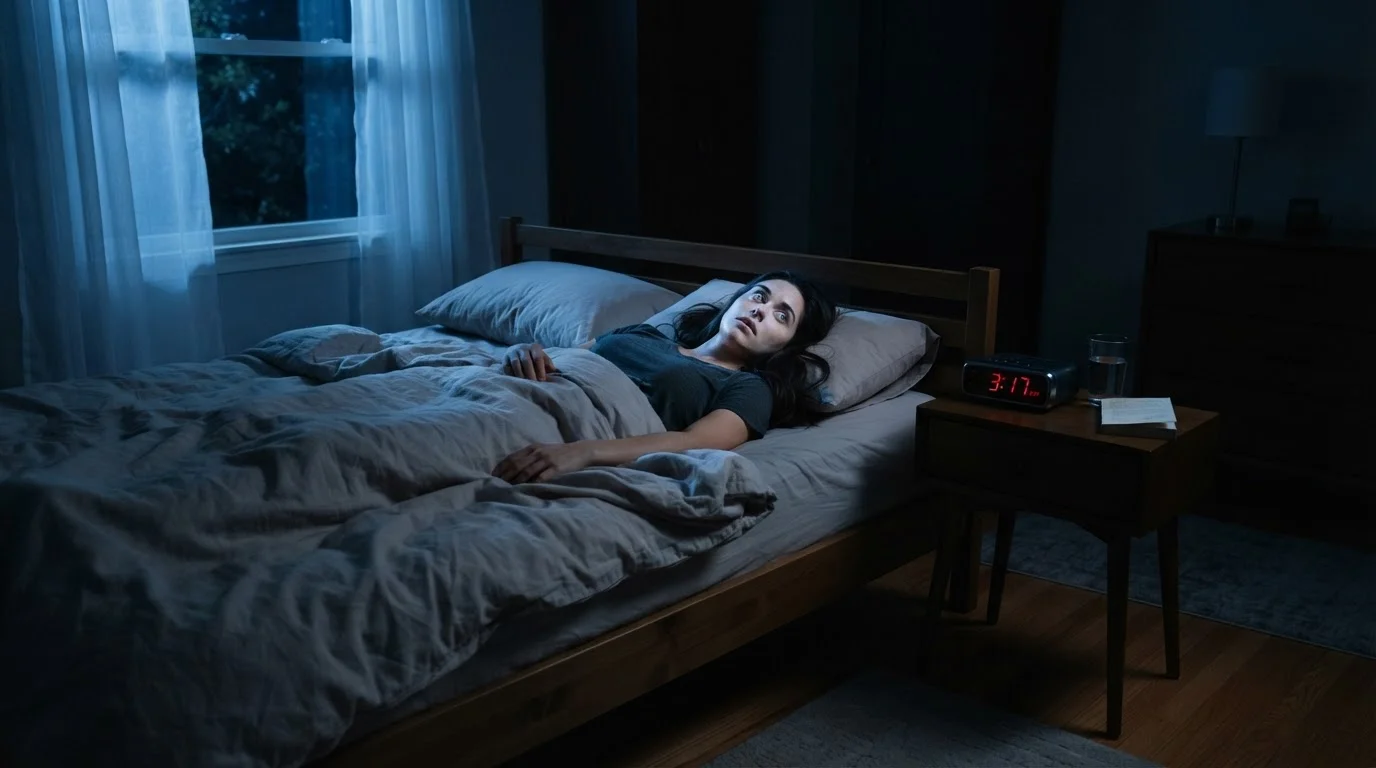
The Biology Behind Stress and Sleeplessness
When the brain registers a threat — a looming deadline, a difficult conversation, financial uncertainty — it dispatches a cascade of stress hormones, primarily cortisol and adrenaline, through the body. This response evolved to mobilize energy and sharpen focus in the face of danger. The problem is that the nervous system cannot reliably distinguish between a predator and an overflowing inbox.
Elevated cortisol suppresses melatonin, the hormone that signals to the body that night has arrived. Meanwhile, heightened sympathetic nervous system activity keeps heart rate and core body temperature elevated — both of which need to drop for sleep to begin. The result is a brain that remains alert, scanning for problems, at precisely the moment sleep requires it to power down.
The relationship between stress and sleep runs in both directions. A single bad night doesn't just leave you tired — it measurably increases emotional reactivity and threat sensitivity the following day, making the next night harder. Understanding this bidirectional loop is the first step toward interrupting it.
How Anxiety Turns Acute Stress Into Chronic Insomnia
Occasional sleeplessness during a stressful period is normal and usually resolves on its own. Chronic insomnia develops through a different mechanism: conditioned arousal. As sleep difficulties persist, the bed — and the act of trying to sleep — becomes associated in memory with frustration, wakefulness, and anxiety. Eventually, lying down triggers alertness rather than drowsiness.
Anxious thinking compounds this. Watching the clock, calculating how many hours remain before the alarm, predicting impaired performance the next day — these mental habits are collectively called sleep-related worry, and they are among the most powerful drivers of chronic insomnia. The original stressor may long since have resolved, yet the insomnia continues.
Insomnia's self-reinforcing psychological roots make it resistant to simple fixes like earlier bedtimes or extra time in bed — strategies that, paradoxically, often worsen the problem by extending time spent lying awake.
Anxiety Disorders and Insomnia Often Co-Occur
Generalized anxiety disorder, PTSD, and other anxiety conditions are among the most common psychiatric comorbidities of chronic insomnia. When both are present, treatment often needs to address each condition — insomnia does not always resolve simply by treating the underlying anxiety disorder, and vice versa. A mental health professional can help clarify the relationship and guide appropriate care.
Evidence-Based Strategies for Breaking the Cycle
The most rigorously studied intervention for stress-related insomnia is Cognitive Behavioral Therapy for Insomnia (CBT-I). CBT-I typically combines several components over four to eight weeks:
- Sleep restriction therapy: Temporarily limiting time in bed to consolidate sleep and rebuild a strong sleep drive.
- Stimulus control: Re-associating the bed exclusively with sleep by leaving the bedroom when awake and anxious.
- Cognitive restructuring: Identifying and challenging unhelpful beliefs about sleep (e.g., "I must get eight hours or tomorrow is ruined").
- Relaxation training: Techniques such as progressive muscle relaxation or diaphragmatic breathing to lower physiological arousal before bed.
Beyond formal CBT-I, daily habits that support a calmer mind — consistent wake times, regular movement, and reduced evening screen exposure — create a foundation that makes sleep more accessible. For nights when racing thoughts feel unmanageable, a structured pre-bed checklist can provide a practical path toward settling the mind.
Prioritizing sleep as a stress-management tool, rather than sacrificing it in the name of productivity, is one of the most impactful shifts a person can make.
This article is for informational purposes only and does not constitute medical advice. If sleep difficulties are persistent or significantly affecting your daily life, please consult a qualified healthcare professional.
Frequently Asked Questions
Stress activates the hypothalamic-pituitary-adrenal axis, releasing cortisol and adrenaline that elevate heart rate, body temperature, and mental alertness — all states that oppose sleep onset. The brain essentially remains in 'threat-scanning' mode, making it very difficult to transition into the relaxed state needed for sleep.
Yes. Anxiety can initiate insomnia, but conditioned arousal — where the bed itself becomes associated with wakefulness and worry — often sustains it long after the original stressor resolves. This is why chronic insomnia frequently requires behavioral intervention beyond simply managing the underlying anxiety.
Cognitive Behavioral Therapy for Insomnia (CBT-I) is a structured, multi-week program that targets the thoughts and behaviors perpetuating insomnia. Clinical research consistently shows CBT-I produces durable improvements in sleep quality. Major sleep medicine organizations recommend it as a first-line treatment, often ahead of sleep medications.
Regular moderate-intensity exercise is associated with improved sleep quality and reduced anxiety symptoms in multiple studies. The timing matters for some people — vigorous activity too close to bedtime may be stimulating — but morning or afternoon exercise is generally considered beneficial.
If sleep difficulties persist for more than three weeks, significantly impair daytime functioning, or are accompanied by symptoms of a mood or anxiety disorder, consulting a healthcare professional is advisable. A clinician can rule out other contributing conditions and discuss appropriate treatment pathways.
The content on this site is for informational purposes only and is not a substitute for professional advice. Always consult a qualified professional for guidance specific to your situation.