

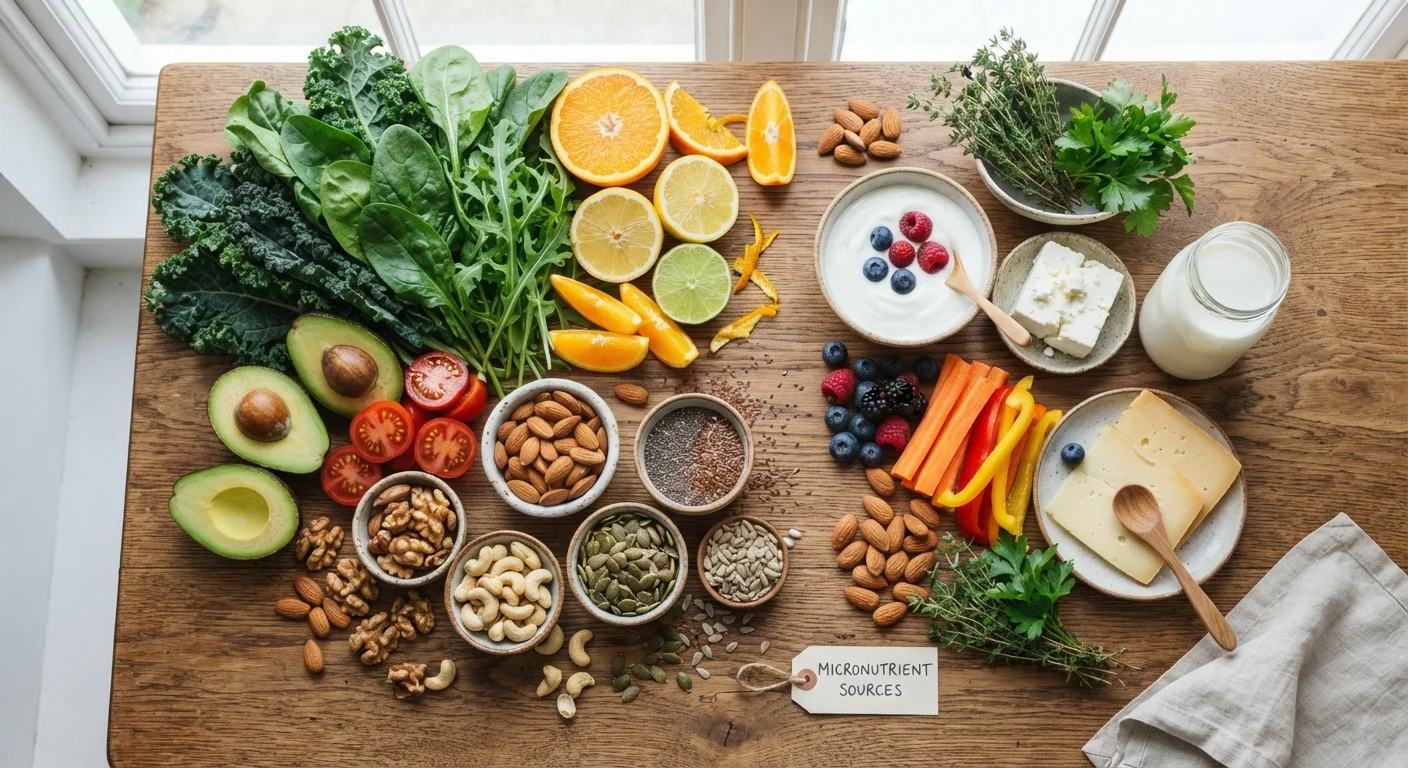
Why Nutrient Interactions Matter
Eating a varied, nutrient-rich diet is essential — but what you eat together matters almost as much as what you eat at all. Micronutrients don't simply pass through your digestive system in isolation. They compete for the same transport proteins, require biochemical partners to function, and can either enhance or block each other's absorption depending on the conditions in your gut.
Understanding these interactions helps you get the most nutritional value from your meals without relying on guesswork. If you're new to thinking about vitamins and minerals in general, see our starter's overview of micronutrients before diving in.
Bioavailability
The proportion of a nutrient that is actually absorbed and used by the body after you consume it. Many factors affect bioavailability, including food form, meal composition, and gut health.
Non-heme iron
The form of iron found in plant-based foods such as beans, lentils, and spinach. It is generally less efficiently absorbed than heme iron, which comes from animal sources.
Fat-soluble vitamins
Vitamins A, D, E, and K, which dissolve in fat and require dietary fat for proper absorption. They are stored in body fat and the liver, unlike water-soluble vitamins.
Metallothionein
A protein in intestinal cells that binds certain minerals, including zinc and copper. High zinc intake can cause excess metallothionein production, which traps copper and reduces its absorption.
Competitive inhibition
When two nutrients share the same absorption pathway and high amounts of one reduce how much of the other is absorbed. Common among minerals like iron, zinc, calcium, and copper.
Key Cooperative Pairs: Nutrients That Work Together
Some micronutrients form genuine partnerships — one helping the other absorb, activate, or perform its biological role.
| Vitamin C effect on iron absorption | Can increase non-heme iron absorption by up to 2–3× (National Institutes of Health, Office of Dietary Supplements) |
| Vitamins requiring fat for absorption | A, D, E, and K |
| Minerals most likely to compete | Calcium, iron, zinc, copper |
| Magnesium's role with vitamin D | Required to activate vitamin D in the liver and kidneys (American Journal of Clinical Nutrition, ongoing research) |
| Best food source strategy | Whole foods rarely cause competitive mineral imbalances |
Vitamin D and Calcium
Vitamin D is essential for absorbing calcium from the small intestine. Without adequate vitamin D, the body can absorb only a fraction of the calcium you consume, regardless of how much dairy or leafy greens you eat. This relationship is so important it has its own dedicated deep-dive: how vitamin D and calcium work as a team.
Vitamin C and Non-Heme Iron
Iron from plant sources (non-heme iron) is far less bioavailable than iron from meat. Vitamin C converts ferric iron to the ferrous form, which your intestinal cells absorb far more efficiently. Adding citrus juice, bell peppers, or strawberries to a bean or lentil dish is a practical, evidence-backed strategy.
Fat-Soluble Vitamins and Dietary Fat
Vitamins A, D, E, and K are fat-soluble, meaning they require fat in the same meal to be absorbed properly. Eating a low-fat salad with no dressing, for example, can significantly reduce how much beta-carotene (a precursor to vitamin A) and vitamin K your body actually takes in.
Vitamin K2 and Magnesium with Vitamin D
Emerging research suggests vitamin D works more effectively in the presence of adequate magnesium, which is needed to activate vitamin D in the liver and kidneys. Vitamin K2 helps direct calcium to bones rather than soft tissues when vitamin D drives calcium absorption. These relationships underscore why a food-first approach — rather than single-nutrient supplementation — is often preferred by nutrition researchers.
Key Competitive Pairs: Nutrients That Interfere
Just as some nutrients boost absorption, others compete for the same uptake pathways. High doses of one mineral can suppress absorption of another, even when both are consumed at the same meal.
Calcium and Iron
Calcium directly inhibits both heme and non-heme iron absorption when consumed together. This is one reason nutrition professionals often recommend spacing iron-rich meals apart from high-calcium foods or supplements if iron status is a concern. This applies to food sources as well — a glass of milk with an iron-fortified meal reduces iron uptake.
Zinc and Copper
High zinc intake — typically from supplements rather than food — can interfere with copper absorption. Both minerals compete for the same intestinal binding protein (metallothionein). This is one of many reasons that taking too much of a supplement carries real nutritional risks that aren't always obvious.
Iron and Zinc
At very high supplemental doses, iron can also reduce zinc absorption by competing for the same transporter protein. Again, this interaction is rarely a concern when nutrients come from food, but becomes relevant with high-dose supplementation.
For a fuller strategy on getting these nutrients through meals rather than pills, see our guide on building micronutrient intake through everyday meals.
Practical Takeaways for Everyday Eating
You don't need to overhaul your diet or plan every meal around absorption science. A few general principles go a long way:
- Pair plant iron with vitamin C: Add a squeeze of lemon or some tomatoes to beans, lentils, tofu, or spinach dishes.
- Include healthy fat with fat-soluble vitamins: Dress your salads, add avocado, or include olive oil when eating vegetables rich in vitamins A, E, or K. Note that cooking methods also affect vitamin content — both factors shape what your body actually absorbs.
- Be cautious with single-nutrient supplements: High-dose supplements of one mineral can disrupt the balance of related minerals. Whole foods rarely cause these imbalances because nutrient concentrations in food are naturally moderate.
- Spacing matters when needed: If a healthcare provider has recommended iron supplementation, taking it separately from calcium-rich foods or calcium supplements can improve how much iron is actually absorbed.
This article is for general informational and educational purposes only and is not a substitute for personalized medical or nutritional advice. If you have questions about your specific nutrient needs or are managing a health condition, consult a qualified healthcare professional or registered dietitian.
The content on this site is for informational purposes only and is not a substitute for professional advice. Always consult a qualified professional for guidance specific to your situation.