

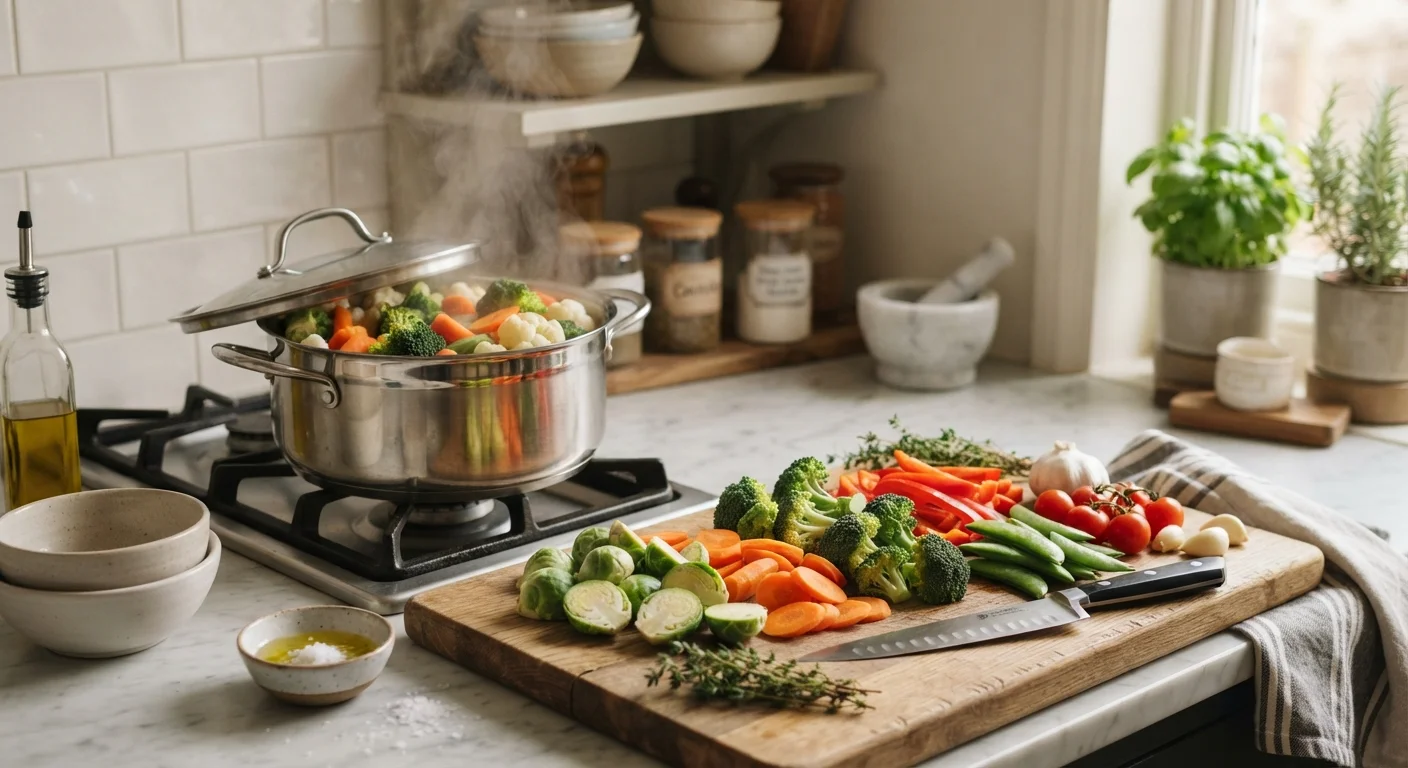
Why Cooking Affects Vitamins at All
Vitamins are chemically complex molecules. They're sensitive to the same forces that transform raw ingredients into cooked meals: heat, water, light, and oxygen. Whether a vitamin survives the cooking process depends largely on its chemistry.
Water-soluble vitamins — vitamin C and the eight B vitamins — dissolve readily in cooking liquid and break down under sustained heat. Fat-soluble vitamins — A, D, E, and K — are bound within the fat matrix of food and are generally more heat-stable, though extreme temperatures can still degrade them.
Cooking time matters as much as method. A brief steam and a 45-minute boil deliver very different results even if the starting ingredient is identical. Understanding this relationship lets you make smarter choices at the stove without overhauling how you eat.
How Each Common Method Compares
Research on cooking and nutrient retention consistently points to a few key patterns:
- Boiling causes the greatest water-soluble vitamin losses. Vitamins C and B1 (thiamine) leach into the water, and prolonged heat accelerates breakdown. Studies suggest boiling can reduce vitamin C content in vegetables by 40–60% depending on the vegetable and cooking time. Importantly, the cooking water itself retains those leached vitamins — using it in soups or sauces recovers much of what was lost.
- Steaming keeps food out of direct contact with water, dramatically reducing leaching. It's one of the best methods for retaining water-soluble vitamins while still softening texture and improving digestibility.
- Microwaving combines short cooking times with minimal water, making it surprisingly effective at preserving vitamins — often comparable to steaming in controlled studies.
- Roasting and baking use dry heat, so leaching isn't a concern. However, high temperatures over longer periods can degrade heat-sensitive vitamins. Shorter roasting at moderate temperatures limits those losses.
- Sautéing and stir-frying use high heat but for brief periods with minimal water. Losses can be modest, though fat-soluble vitamins may migrate into the cooking oil.
40–60%
Vitamin C lost during boiling
Research on common vegetables shows boiling can reduce vitamin C content by roughly 40–60%, depending on the vegetable and cook time.
~25%
Average nutrient loss from steaming
Steaming typically results in significantly lower vitamin losses compared to boiling, with some studies showing retention rates well above 75% for key water-soluble vitamins.
2 types
Vitamin categories with different heat responses
Water-soluble vitamins (C, B group) and fat-soluble vitamins (A, D, E, K) respond very differently to cooking methods, heat, and water exposure.
For a broader view of how cooking fits into your overall micronutrient strategy, see building micronutrient intake through everyday meals.
When Cooking Actually Improves Nutrient Access
It's worth noting that "raw" doesn't automatically mean "more nutritious." Cooking can increase the bioavailability of certain nutrients — meaning your body can absorb and use more of them after cooking than before.
Cooking also breaks down antinutrients — compounds like oxalates and phytates found in some plant foods that can bind to minerals and limit absorption. Lightly cooking spinach, for example, reduces its oxalate content, making the calcium within it more available. For a deeper look at how nutrients interact, visit our article on micronutrients that compete or cooperate.
Practical Strategies to Retain More Nutrients
You don't need to eat everything raw or invest in special equipment to preserve more vitamins. Small, consistent habits make a meaningful difference:
- Use less water. When boiling is necessary, use just enough water to cover the food and keep the lid on to reduce cooking time.
- Save the cooking liquid. Vitamin-rich water from boiled vegetables is excellent in soups, stews, and sauces.
- Cut food larger. Smaller pieces have more surface area exposed to water and heat. Larger cuts retain more nutrients during boiling or steaming.
- Cook only until tender. Overcooking accelerates vitamin loss. Test doneness early and remove food from heat as soon as it's ready.
- Match method to vegetable. Delicate greens do well with a quick steam; root vegetables handle roasting well; tomatoes actually benefit from heat.
Plant-based eaters in particular can benefit from these approaches — our resource on getting the most from plant-based sources of vitamins and minerals covers additional techniques for maximizing what your body absorbs.
This article is for general informational and educational purposes only and is not a substitute for professional medical or dietary advice. Consult a qualified healthcare provider with questions about your specific nutritional needs.
Frequently Asked Questions
Microwaving is actually one of the better methods for preserving nutrients. Because it uses short cooking times and little or no added water, water-soluble vitamins have less opportunity to leach out or break down. Research generally shows microwave cooking compares favorably to boiling for retention of vitamins like C and B1.
Steaming and microwaving tend to preserve the most vitamins, particularly water-soluble ones, because they use minimal water and shorter cooking times. Raw consumption preserves nutrients fully in many cases, though some foods yield better nutrient availability after light cooking.
Boiling doesn't eliminate all nutrients, but it does cause the most significant losses among common cooking methods. Water-soluble vitamins leach into the cooking liquid, and heat breaks down some heat-sensitive compounds. Using the cooking water in soups or sauces can help recover some of those nutrients.
Not always. While raw vegetables retain all their heat-sensitive vitamins, cooking can increase the bioavailability of certain nutrients. Cooked tomatoes provide more absorbable lycopene; cooked carrots release more beta-carotene. The ideal approach often depends on the specific vegetable and nutrient in question.
Roasting uses dry heat at relatively high temperatures, which can degrade heat-sensitive vitamins like C and folate over time. However, because no water is added, water-soluble vitamins don't leach out the way they do with boiling. Shorter roasting times at moderate temperatures help limit losses.
Yes, you can still meet your vitamin needs through cooked foods by diversifying your diet and using gentler methods where possible. Eating a wide variety of vegetables, fruits, legumes, and whole grains — whether raw or cooked — is the most reliable strategy for broad micronutrient coverage.
The content on this site is for informational purposes only and is not a substitute for professional advice. Always consult a qualified professional for guidance specific to your situation.