

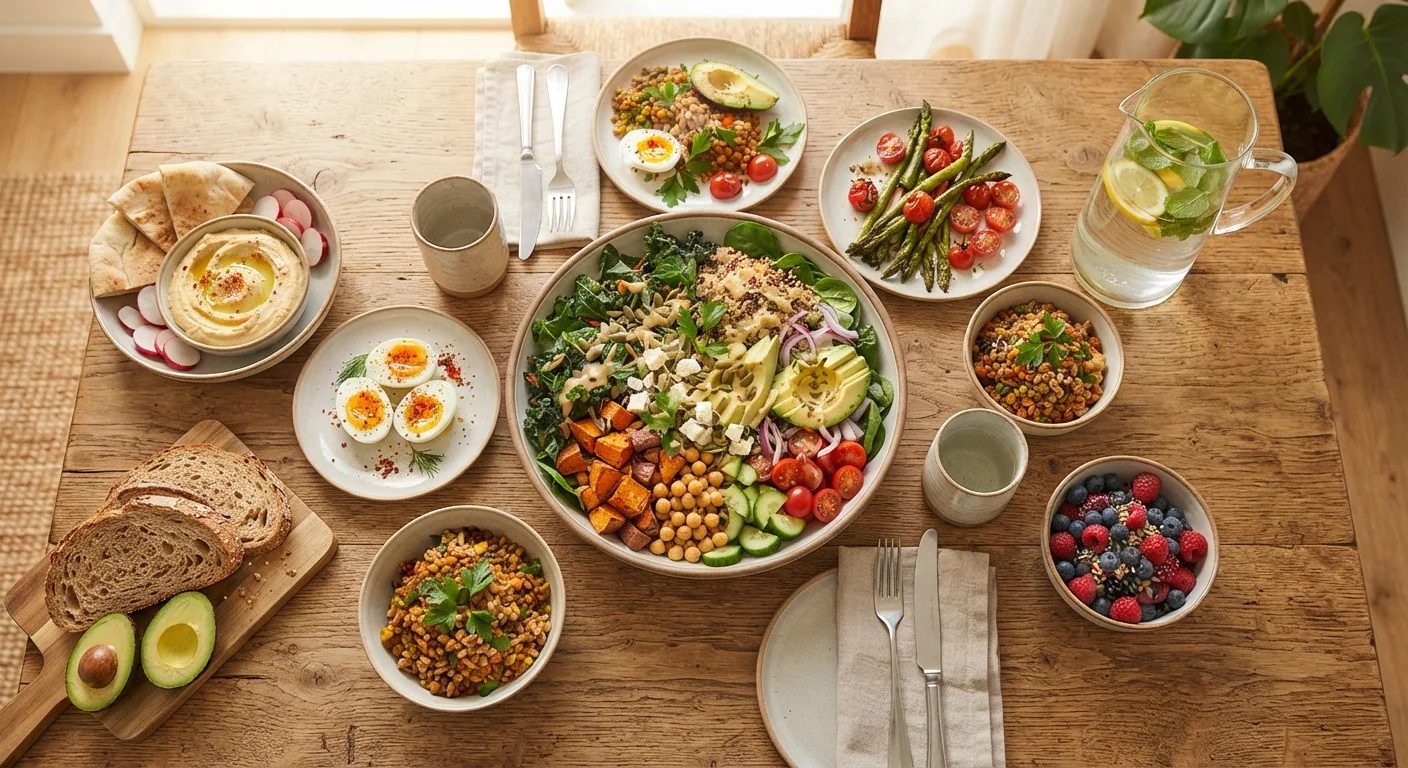
Why Food Sources Beat Supplements for Most People
Vitamins and minerals don't work in isolation. In whole foods, they arrive bundled with fiber, phytonutrients, and other compounds that influence how efficiently your body absorbs and uses them. A supplement delivers an isolated nutrient; a food delivers a package. That distinction matters more than many people realize.
Research consistently shows that nutrients consumed through food are generally better absorbed and less likely to cause imbalances than the same nutrient taken in pill form. High-dose supplementation can also push certain micronutrients — notably fat-soluble vitamins like A and D — into ranges that carry real health risks. For a closer look at those risks, see why more isn't always better with supplements.
If you're new to thinking about micronutrients, our introductory overview explains what vitamins and minerals are and why they matter before you dive into building a strategy.
Variety Is Your Most Powerful Nutrition Tool
No single food supplies every essential micronutrient in adequate amounts. The most effective strategy is consistent variety across food groups over days and weeks — not perfection at any single meal. Small, habitual additions (a handful of nuts, a second vegetable, a serving of legumes) accumulate into meaningful nutritional coverage over time.
What You Need Before You Start
Building micronutrient intake through food doesn't require special equipment or a nutrition degree — but a few fundamentals will make the process far more practical.
What you will need
Step-by-Step: Building Micronutrient Intake Through Everyday Meals
Follow these steps in order. Each one builds on the last, gradually shifting your eating patterns toward greater nutritional breadth without requiring an overhaul of your entire diet.
Map your current food group coverage
Before changing anything, spend two or three typical days noting which broad food groups appear in your meals: vegetables, fruits, whole grains, legumes, dairy or fortified alternatives, protein foods (eggs, fish, poultry, meat), and nuts or seeds. You don't need to count nutrients — you're looking for categories that are consistently absent. A missing category almost always signals a missing cluster of micronutrients.
Anchor each meal to at least two food groups
Meals built around a single food group — a plain bagel for breakfast, a bowl of pasta for dinner — tend to be micronutrient-thin even when they're calorically adequate. Aim to pair food groups at every eating occasion. Add an egg or some Greek yogurt to that breakfast; toss leafy greens and white beans into that pasta. This pairing habit naturally broadens your micronutrient profile without requiring you to follow a rigid plan. See what a balanced plate actually looks like for a practical visual framework.
Rotate your protein sources across the week
Different protein foods carry different micronutrient profiles. Fatty fish like salmon and sardines supply vitamin D and omega-3 fatty acids. Beans and lentils are rich in folate, iron, and magnesium. Eggs provide choline and B12. Red meat delivers zinc and heme iron. Rotating among these sources across the week is one of the most efficient strategies for covering a wide range of vitamins and minerals without tracking individual nutrients. Practical strategies for varying protein sources can help you build this habit sustainably.
Use strategic food pairings to improve absorption
Certain nutrients are absorbed more efficiently when eaten alongside specific companions. Vitamin C consumed with plant-based iron sources — such as squeezing lemon juice over lentils, or adding bell pepper to a bean salad — meaningfully improves iron absorption. Fat-soluble vitamins (A, D, E, and K) require dietary fat to be absorbed at all, so drizzling olive oil over a spinach salad isn't just flavor — it's functional. Calcium absorption, meanwhile, is inhibited by very high intakes of oxalate-rich foods like raw spinach; cooking reduces oxalate levels.
Choose cooking methods that preserve nutrients
Water-soluble vitamins — particularly vitamin C and the B vitamins — leach into cooking water and degrade with prolonged heat. Steaming, microwaving, and stir-frying tend to preserve more of these nutrients than boiling. When you do boil vegetables, consider using the cooking liquid in soups or sauces rather than discarding it. Roasting and baking are generally fine for mineral retention, since minerals are more heat-stable than vitamins.
Build repeatable, nutrient-dense meal templates
Dietary consistency matters more than occasional superfoods. Rather than searching for a single perfect meal, develop three to five simple meal templates you'll actually repeat: a grain bowl with leafy greens and a protein; a vegetable-forward stir-fry with eggs or tofu; a bean soup with whole-grain bread. These templates act as reliable micronutrient delivery vehicles across the week. For help making this work on a tight schedule, see eating well on a packed schedule. Sustainable eating habits — not short-term optimization — are what drive long-term nutritional adequacy, as outlined in habits that support balanced eating.
Addressing Common Gaps and Special Considerations
Even with solid habits, some micronutrients are harder to get in adequate amounts from food alone. Vitamin D is a well-known example: few foods contain meaningful amounts, and sun exposure varies significantly by location and lifestyle. Calcium and vitamin D work as a biological team — learn how these two nutrients depend on each other for maximum effect.
Iron, zinc, and B12 can also be harder to obtain reliably on plant-forward or fully plant-based eating patterns. Evidence-based approaches to plant-based absorption can meaningfully close that gap. For a quick reference on which foods supply each essential vitamin and mineral, consult our at-a-glance micronutrient guide.
Micronutrient needs also shift through life. Children, pregnant individuals, and older adults face different requirements and risks. See how needs change across life stages for group-specific guidance. If you have a chronic health condition, are pregnant, or are managing a child's nutrition, consult a registered dietitian or your healthcare provider before making significant dietary changes.
This article is for general informational and educational purposes only and is not a substitute for professional medical or nutritional advice. Always consult a qualified healthcare professional with questions about your individual health needs.
The content on this site is for informational purposes only and is not a substitute for professional advice. Always consult a qualified professional for guidance specific to your situation.