

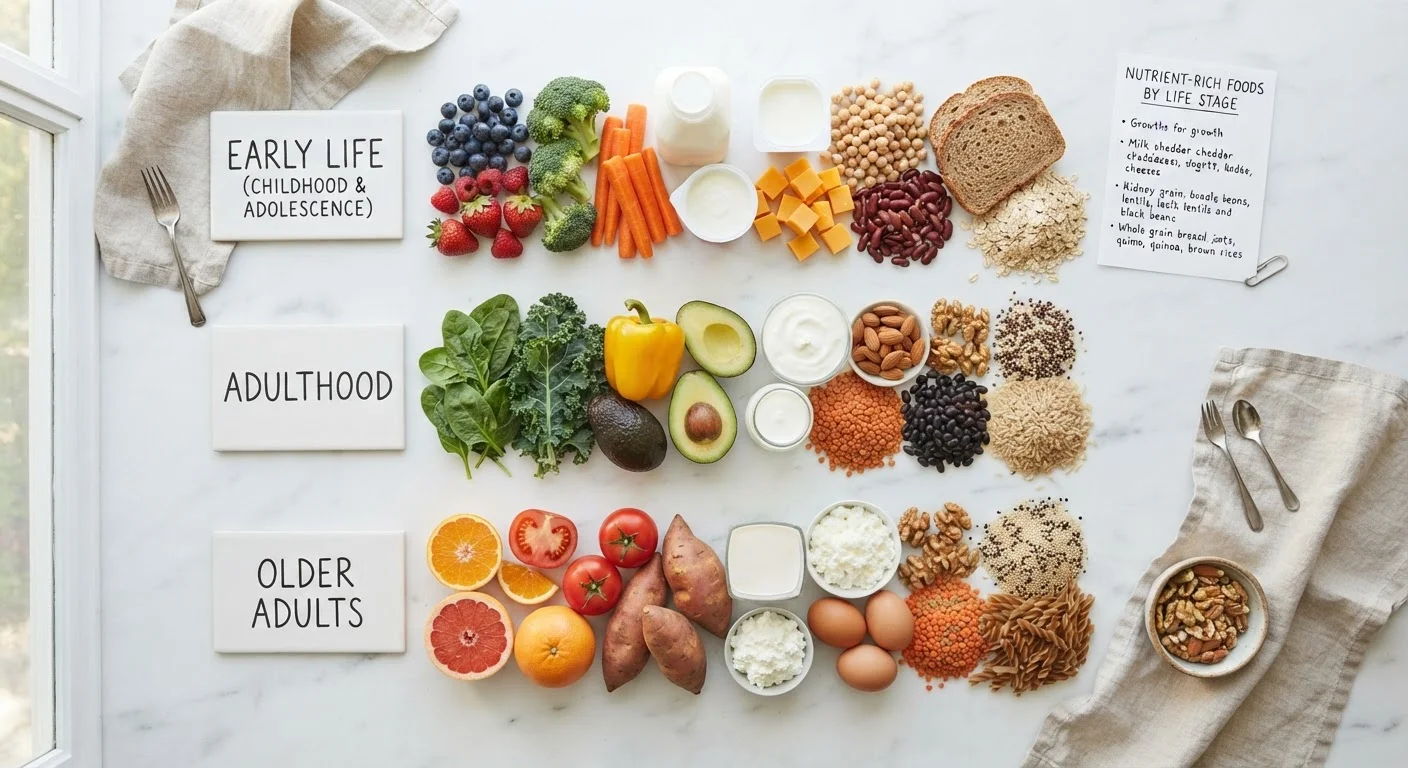
Why Micronutrient Needs Change Over Time
Vitamins and minerals — collectively called micronutrients — are required in small amounts but play outsized roles in every body process, from bone formation to immune defense. If you're new to this subject, the Micronutrients for Everyday Americans overview is a good starting point before diving deeper.
What changes across life stages isn't the list of essential nutrients — it's how much the body needs and how efficiently it absorbs them. Growth spurts, hormonal shifts, pregnancy, and aging all alter the body's internal chemistry. For example, a rapidly growing child has a higher iron requirement relative to body weight than a healthy middle-aged adult. An older adult may consume adequate vitamin B12 but absorb only a fraction of it due to reduced stomach acid production.
Understanding these shifts helps you make more targeted food choices — or recognize when a conversation with a healthcare provider is warranted.
Key Micronutrients for Children
From infancy through adolescence, the body is building bones, brain tissue, muscle, and immune capacity at a remarkable pace. Several micronutrients are especially critical during these years.
Calcium and Vitamin D
Bone mass accumulates rapidly in childhood and peaks in early adulthood, making calcium and vitamin D a priority. Dairy products, fortified plant milks, leafy greens, and fatty fish are strong food sources. Vitamin D is also synthesized through sun exposure, though dietary sources and, in some cases, supplementation are often needed — particularly in northern latitudes or for children with limited outdoor time.
Iron
Iron supports oxygen transport and cognitive development. Deficiency during early childhood is associated with developmental delays. Lean meats, beans, lentils, and fortified cereals supply iron; pairing plant-based iron sources with vitamin C improves absorption.
Iodine and Zinc
Iodine is essential for thyroid hormone production and brain development. Zinc supports immune function, growth, and wound healing. Both are found in seafood, meat, dairy, and iodized salt.
When evaluating a child's diet for iron adequacy, look beyond red meat — pair lentils or fortified cereals with a vitamin C source like orange juice or bell peppers to meaningfully boost non-heme iron absorption.
Plant-based (non-heme) iron is absorbed less efficiently than heme iron from meat, but vitamin C can significantly enhance its uptake, making this pairing a practical tool for diverse diets.
For adults over 50, ask your healthcare provider about a blood test for vitamin B12 status before assuming dietary intake is sufficient — absorption issues can exist even when intake looks adequate on paper.
Atrophic gastritis, which reduces stomach acid production, affects a notable proportion of older adults and impairs B12 absorption from food, making routine intake measures unreliable without absorption context.
Note: Nutritional requirements for infants and young children vary considerably by age and individual health status. Parents and caregivers should work with a pediatrician or registered dietitian to assess specific needs.
Micronutrient Priorities for Adults
During adulthood, the body's primary nutritional task shifts from building to maintaining. Energy needs often stabilize, but several micronutrients remain critical — and are frequently underconsumed in typical American diets.
Folate
Folate (vitamin B9) is vital for DNA synthesis and cell repair. It's especially important for people who can become pregnant, as adequate folate in the early weeks of pregnancy significantly reduces the risk of neural tube defects. Legumes, leafy greens, and fortified grains are reliable sources. For those planning a pregnancy, a healthcare provider may recommend folic acid supplementation.
Magnesium
Magnesium participates in over 300 enzymatic reactions and supports muscle and nerve function. Nuts, seeds, whole grains, and dark leafy vegetables are among the best food sources. National dietary surveys consistently show that many American adults fall short of recommended intakes.
Vitamin C and Potassium
Vitamin C supports immune function and iron absorption from plant foods. Potassium helps regulate blood pressure. Both are found abundantly in fruits and vegetables — and both are underconsumed in typical American eating patterns. For practical strategies, see building micronutrient intake through everyday meals.
Micronutrient Needs for Older Adults
After roughly age 50, several physiological changes affect how the body absorbs and uses specific nutrients. Calorie needs often decrease, meaning each food choice must carry more nutritional weight. At the same time, requirements for certain micronutrients actually increase.
Vitamin B12
Absorption of vitamin B12 depends on a protein called intrinsic factor and adequate stomach acid — both of which can decline with age. Fortified foods (such as breakfast cereals) and crystalline B12 in supplements are more reliably absorbed than the B12 naturally bound in food. Healthcare providers may recommend testing B12 levels in adults over 50.
Calcium and Vitamin D
Recommended calcium and vitamin D intakes rise for adults over 70 to help slow bone density loss. Skin becomes less efficient at producing vitamin D from sunlight with age, making dietary and supplemental sources more important. For a broader view of how nutrition shifts in later decades, see nutrition across the decades.
Common Gaps in Older Adult Diets
Research shows older Americans are frequently short on vitamin D, calcium, potassium, and magnesium. The where older adults' diets tend to fall short article explores these patterns in depth.
Putting It All Together: A Food-First Approach
Across every life stage, a varied diet rich in whole foods — vegetables, fruits, whole grains, legumes, nuts, seeds, lean proteins, and dairy or fortified alternatives — is the most reliable strategy for meeting micronutrient needs. No single food or supplement replaces dietary variety.
For a detailed look at each essential vitamin and mineral, including primary roles and food sources, see every essential vitamin and mineral at a glance. And if you're looking to strengthen your daily eating patterns, the food-first guide to micronutrient intake offers practical, meal-level guidance.
Supplements can play a supporting role for specific populations or diagnosed deficiencies, but they should not substitute for medical evaluation. Before adding any supplement to your routine, consult a qualified healthcare professional who can assess your individual needs.
This article is for general informational and educational purposes only and is not a substitute for professional medical advice, diagnosis, or treatment. Always consult a qualified healthcare provider with questions about your or your child's nutritional health.
The content on this site is for informational purposes only and is not a substitute for professional advice. Always consult a qualified professional for guidance specific to your situation.