

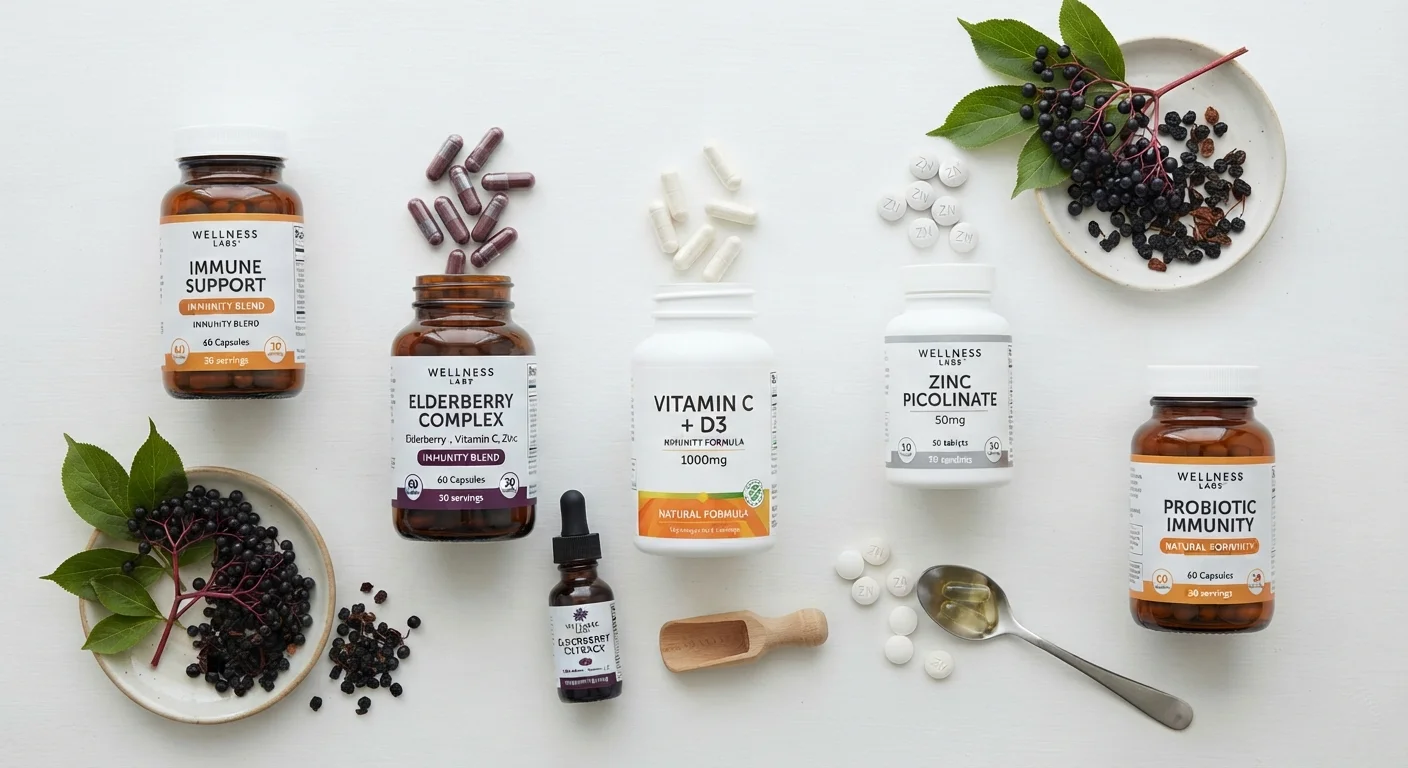
Why Immune Supplements Dominate the Market
Walk into any pharmacy or grocery store and you'll find entire aisles dedicated to products promising to "boost," "strengthen," or "support" your immune system. Sales of immune-focused supplements surged dramatically in recent years, yet the regulatory landscape governing their claims is largely permissive. Under the Dietary Supplement Health and Education Act (DSHEA), manufacturers are not required to prove efficacy before marketing a product — they only need to avoid explicitly claiming to treat or cure a disease.
That gap between marketing language and clinical evidence is significant. Phrases like "supports immune function" sound authoritative but are often backed by limited, preliminary, or industry-funded research. Understanding what the science actually says helps consumers spend wisely — and stay healthy through proven means. For a broader look at where supplements genuinely help, see When Vitamin Supplements Help — and When They Don't.
Common Immune Supplements Under the Microscope
Myth
Taking high-dose vitamin C daily prevents you from getting colds.
Fact
Evidence shows vitamin C supplementation does not prevent colds in most adults, though it may modestly shorten duration.
A comprehensive Cochrane Review examining decades of trials found that regular vitamin C supplementation did not reduce cold incidence in the general population. It may reduce cold duration by roughly 8% in adults — a modest effect. Benefits were more notable in people under extreme physical stress, such as marathon runners. Megadosing above tolerable upper intake levels also carries risks, including kidney stones and gastrointestinal distress, so more is not better.
Myth
Zinc supplements reliably boost immune function in healthy adults.
Fact
Zinc supplementation corrects immune deficits caused by deficiency, but offers minimal added benefit to those with adequate zinc levels.
Zinc plays a genuine structural role in immune cell development and signaling. Research does suggest that zinc lozenges or syrup started within 24 hours of cold symptoms may shorten illness duration. However, routine supplementation in zinc-sufficient individuals has not been shown to meaningfully enhance immune defenses. Long-term high-dose zinc intake can actually impair immunity by depleting copper, an essential co-nutrient. Dietary sources — meat, shellfish, legumes, seeds — are sufficient for most Americans.
Myth
Elderberry syrup is a proven treatment that prevents and shortens respiratory infections.
Fact
Early studies are promising but small; elderberry is not a proven preventive or treatment by current evidence standards.
Several small randomized controlled trials suggest elderberry extract may reduce the duration of influenza symptoms by one to two days. However, most studies are industry-funded, involve small sample sizes, and use varying formulations and doses — making firm conclusions difficult. The National Institutes of Health notes that evidence is insufficient to recommend elderberry for prevention or treatment of any illness. It is generally considered safe for short-term use in healthy adults, but is not a substitute for antiviral medications or influenza vaccination.
Myth
Vitamin D supplements are universally effective at preventing infections.
Fact
Vitamin D deficiency is linked to increased infection risk; correcting deficiency may help, but supplementing beyond sufficiency shows limited benefit.
Vitamin D receptors are found on immune cells, and severe deficiency is associated with higher susceptibility to respiratory infections. A large meta-analysis published in The BMJ found that vitamin D supplementation reduced the risk of acute respiratory infections — but the protective effect was strongest in people who started with very low vitamin D levels. People with already-sufficient levels saw little added protection. Given that vitamin D deficiency is common in the U.S., testing levels before supplementing — rather than assuming benefit — is the evidence-supported approach.
Myth
"Immune-boosting" supplements are safe because they're natural and sold over the counter.
Fact
Natural does not mean risk-free; many supplements interact with medications and can cause harm at high doses.
The FDA regulates supplements as a category of food, not drugs, meaning pre-market safety and efficacy review is not required. Echinacea, for example, may trigger allergic reactions in people sensitive to related plants. High-dose fat-soluble vitamins (A, D, E, K) accumulate in the body and can reach toxic levels. Several immune supplements interact with immunosuppressants, blood thinners, and chemotherapy agents. The natural origin of an ingredient provides no guarantee of safety, especially at the concentrated doses found in supplement form.
The pattern across these popular supplements is consistent: benefits tend to appear in people who are already deficient, are taking supplements therapeutically at the onset of illness, or are in specialized populations under clinical supervision. Healthy, well-nourished adults generally see little measurable immune gain from supplementation alone. For related misconceptions in the vitamin space, The Truth Behind Common Vitamin Myths is a useful companion read.
What Actually Supports a Resilient Immune System
~50%
U.S. adults who take dietary supplements regularly
According to the NIH Office of Dietary Supplements, approximately half of American adults use at least one dietary supplement, with immune support among the top stated reasons.
8%
Average reduction in cold duration with vitamin C
A Cochrane Review of over 30 trials found regular vitamin C supplementation reduced adult cold duration by roughly 8%, with no significant effect on incidence.
40–42%
U.S. adults estimated to have vitamin D insufficiency
CDC data and NHANES analyses consistently show a substantial portion of Americans fall below recommended vitamin D serum levels, particularly in winter months.
The strongest evidence for immune resilience points not to supplements but to foundational lifestyle factors. Consistent, quality sleep allows the body to produce cytokines — proteins that target infection and inflammation. Regular moderate exercise is associated with improved immune surveillance over time. A diet rich in vegetables, fruits, legumes, and whole grains provides the micronutrients your immune system needs in bioavailable forms. Lifestyle Habits That Support a Healthy Immune Response covers the evidence behind these everyday practices in detail.
Vaccination remains one of the most effective tools available for building specific, durable resistance to serious infectious diseases. No supplement replicates the targeted, long-lasting immune memory that vaccines create. If you're evaluating the science behind vaccine safety, Persistent Myths About Vaccine Safety, Addressed with Evidence addresses common misconceptions directly.
This article is for general informational and educational purposes only and does not constitute medical advice. Consult a qualified healthcare professional before starting any new supplement, particularly if you are pregnant, nursing, elderly, managing a chronic condition, or taking prescription medications.
The content on this site is for informational purposes only and is not a substitute for professional advice. Always consult a qualified professional for guidance specific to your situation.