

Why Vitamin Myths Persist
Vitamins occupy a unique space in American health culture — they feel safe, natural, and unambiguously good. That perception makes them fertile ground for misinformation. Wellness marketing, social media, and well-meaning friends all amplify claims that sound plausible but don't hold up to scrutiny.
Understanding what vitamins actually do — and don't do — helps you make smarter decisions about both the foods you eat and whether any supplement makes sense for your situation. For a parallel look at how similar myths form around another essential nutrient, see our breakdown of persistent protein myths.
The myth-and-fact pairs below address the most common vitamin misconceptions, grounded in established nutrition science.
Common Vitamin Myths — Corrected
These widely held beliefs range from harmless misunderstandings to ideas that could genuinely affect your health decisions. Read each carefully, and consult a registered dietitian or healthcare provider before making significant changes to your supplement routine.
Myth
Taking high doses of vitamin C will prevent you from getting a cold.
Fact
Evidence does not support vitamin C supplementation as a cold preventive for most people. It may modestly shorten duration in some cases, but it does not stop infection.
Decades of research, including large reviews of randomized controlled trials, have consistently found that routine vitamin C supplementation does not reduce the incidence of colds in the general population. Some studies suggest a small reduction in cold duration — roughly half a day — among people under intense physical stress, such as endurance athletes. For everyone else, the preventive effect is not established. High-dose supplementation (above 2,000 mg/day) can also cause digestive upset, kidney stones in susceptible individuals, and other side effects. Getting adequate vitamin C through fruits and vegetables remains the evidence-supported approach for most people.
Myth
More vitamins are always better — you can't overdose on them because they're natural.
Fact
Fat-soluble vitamins (A, D, E, and K) accumulate in body tissues and can reach toxic levels. Even some water-soluble vitamins cause harm at very high doses.
The body excretes excess water-soluble vitamins like C and most B vitamins fairly readily, but this does not make them risk-free in large quantities. High-dose vitamin B6, for example, is associated with nerve damage (peripheral neuropathy) when taken at supplemental levels over long periods. Fat-soluble vitamins are more immediately concerning: vitamin A toxicity can cause liver damage, bone thinning, and birth defects; excessive vitamin D leads to dangerous calcium buildup in the blood. The fact that something is natural does not determine its safety profile — dose always matters. For a detailed look at these risks, see our article on the risks of taking too much of a good thing.
Myth
You can get all the vitamin D you need from spending time in the sun.
Fact
Sunlight exposure stimulates vitamin D synthesis, but many factors limit its reliability as a sole source — including skin tone, geography, season, sunscreen use, and age.
Vitamin D deficiency is among the most common nutrient shortfalls in the United States. While the skin does produce vitamin D when exposed to UVB radiation, the process is affected significantly by latitude (less effective the farther from the equator), time of year (minimal synthesis in northern states during winter), time of day, cloud cover, air pollution, and the amount of skin exposed. People with darker skin tones require longer sun exposure to produce the same amount of vitamin D. Older adults also synthesize vitamin D less efficiently. Because dermatologists recommend limiting unprotected sun exposure to reduce skin cancer risk, sun alone is not a reliable strategy for maintaining adequate vitamin D levels for most Americans.
Myth
"Natural" vitamins from whole foods are chemically different from synthetic vitamins in supplements.
Fact
For most vitamins, the synthetic and food-derived forms are chemically identical and used by the body in the same way.
The body generally cannot distinguish between a vitamin C molecule from an orange and one produced in a laboratory — they have the same chemical structure and behave the same way physiologically. A few exceptions exist: vitamin E in food comes as a mix of tocopherol forms, while many supplements provide only alpha-tocopherol; folate from food differs slightly in structure from folic acid (the synthetic form used in supplements and fortification), with some research suggesting slightly different bioavailability. These nuances matter in specific contexts but do not support a blanket claim that natural vitamins are superior. What whole foods offer that supplements do not is the broader matrix of fiber, antioxidants, and other compounds that appear to support health in ways that isolated nutrients alone may not.
Myth
If you eat a healthy diet, you never need to worry about vitamin deficiencies.
Fact
A varied, balanced diet meets most people's vitamin needs — but certain groups face genuine gaps that food alone may not address.
For most healthy adults eating a wide variety of whole foods, vitamin deficiency is uncommon. However, several populations face documented risks: people following strict plant-based diets are at risk for vitamin B12 deficiency, since this vitamin is found almost exclusively in animal products; pregnant people need substantially more folate than a typical diet provides, making supplementation a standard clinical recommendation; those with malabsorption conditions (such as Crohn's disease or celiac disease) may not absorb vitamins efficiently regardless of dietary quality; and vitamin D insufficiency is widespread even among people who eat well. The takeaway is not that everyone needs supplements, but that individual circumstances — diet pattern, life stage, health status — shape actual needs. A healthcare provider or registered dietitian can assess your specific situation.
Curious about which supplement claims have strong evidence versus thin support? Our article on immune support supplements examines the research honestly.
Getting Vitamins from Food vs. Supplements
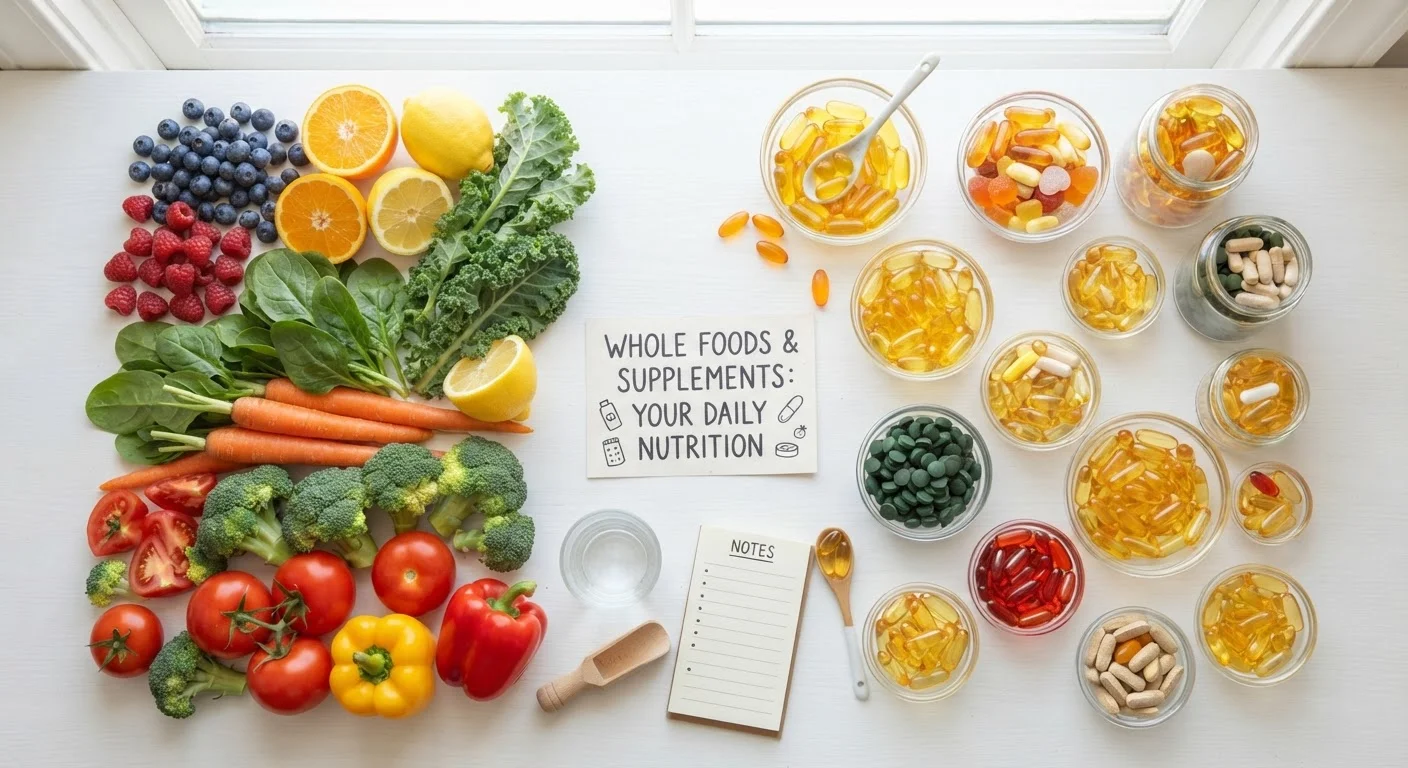
Whole foods deliver vitamins alongside fiber, phytonutrients, and other compounds that may influence how those nutrients are absorbed and used. A supplement provides an isolated dose — useful in specific circumstances, but not a nutritional equivalent to a varied diet.
That said, supplementation is genuinely beneficial in certain situations: vitamin D for people with limited sun exposure or darker skin tones, folate during early pregnancy, and vitamin B12 for those following plant-based diets are well-supported examples. The key is matching supplementation to an identified need rather than using it as a general insurance policy.
Supplements Are Not a Substitute for Medical Care
If you suspect a vitamin deficiency — symptoms like fatigue, bone pain, numbness, or frequent illness — speak with a healthcare provider. Blood tests can confirm whether a deficiency exists. Self-diagnosing and self-treating with high-dose supplements without professional guidance can mask symptoms of underlying conditions or cause harm from excess intake.
If you're an older adult, the picture can be more nuanced. Some absorption efficiencies decline with age, affecting vitamins like B12 and D. Our related article on nutrition myths that affect older adults addresses this in more detail.
For a thorough look at when supplements genuinely help versus when they offer little benefit, see when vitamin supplements help — and when they don't.
This article is for general informational purposes only and is not a substitute for personalized medical or dietary advice. Consult a qualified healthcare professional before starting, stopping, or changing any supplement regimen.
The content on this site is for informational purposes only and is not a substitute for professional advice. Always consult a qualified professional for guidance specific to your situation.