

Why Protein Myths Spread So Easily
Protein sits at the center of two powerful cultural forces: fitness culture and the wellness industry. That combination creates fertile ground for oversimplification. Genuine nutrition science gets filtered through marketing, social media, and gym folklore until nuance disappears. The result is a set of deeply held beliefs that feel true — because they contain a grain of truth — but mislead people about what protein actually does and how much they actually need.
Understanding the real evidence helps everyday eaters make confident choices without overcorrecting in either direction. If you've spotted similar distortions in other areas of health, our look at exercise myths that keep people from getting started follows the same approach.
Myth
You need to eat massive amounts of protein every day to build muscle.
Fact
Research suggests that protein needs for muscle growth are meaningful but modest — most active adults require roughly 0.6–0.9 grams per pound of body weight per day, not the extreme amounts often promoted.
The fitness industry has long pushed high-protein eating as the key to gains, but sports nutrition research consistently shows diminishing returns beyond a moderate threshold. The body has a ceiling on how much protein it can use for muscle protein synthesis at one time. Consuming far beyond that ceiling does not translate to extra muscle — the surplus is broken down and used for energy or stored as fat. Focusing on consistent resistance training, overall calorie balance, and distributed protein intake across meals tends to matter more than chasing a dramatic daily total.
Myth
Plant protein is incomplete and therefore doesn't really count.
Fact
While some individual plant foods are lower in certain amino acids, eating a variety of plant protein sources across the day reliably covers all essential amino acids for most healthy adults.
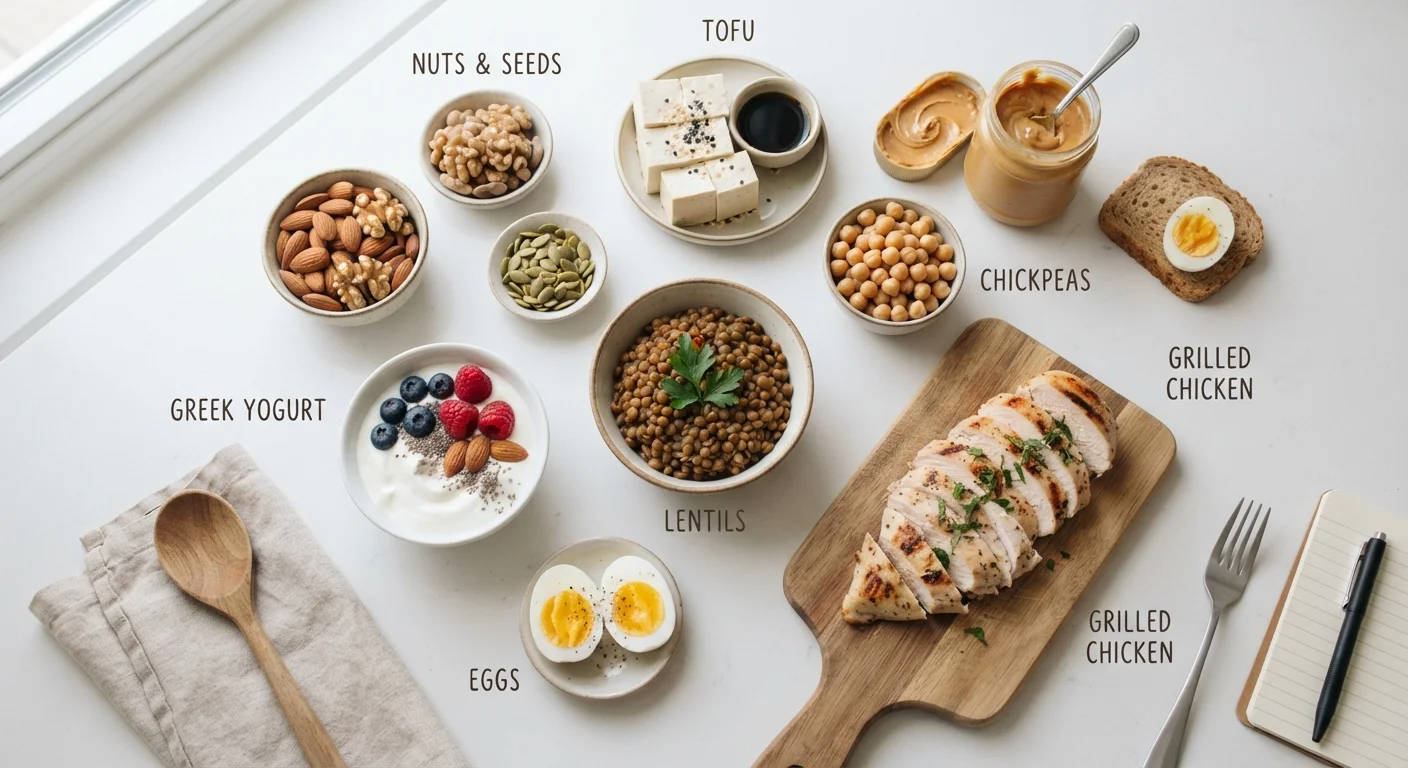
The idea that plant protein is inherently inferior stems from older nutritional thinking that required combining specific foods at every meal — an approach that has since been updated. Current guidance from major dietetics organizations recognizes that a varied plant-based diet provides all essential amino acids over the course of a day. Foods like lentils, beans, tofu, tempeh, edamame, whole grains, and nuts each contribute meaningfully to your amino acid pool. Learn practical strategies for reaching adequate protein without centering meals on meat.
Myth
More protein is always better, no matter how much you eat.
Fact
Beyond a certain intake level, additional dietary protein provides no additional muscle-building benefit and may place unnecessary strain on the kidneys in individuals with pre-existing kidney conditions.
For healthy individuals, very high protein intake is generally tolerated, but it does not automatically improve health or body composition. For those with chronic kidney disease or reduced kidney function, consistently high protein intake can accelerate disease progression — making it important to consult a healthcare provider before dramatically increasing intake. Even for healthy adults, habitually crowding out other macronutrients in favor of protein can mean missing fiber, healthy fats, and micronutrients that support overall wellness.
Myth
Protein only matters if you're trying to build muscle.
Fact
Protein plays essential roles across nearly every system in the body, including immune defense, hormone production, enzyme activity, and tissue repair.
Muscle synthesis gets most of the attention, but protein's functions are far broader. Antibodies that fight infection are proteins. Enzymes that drive digestion and metabolism are proteins. Hormones like insulin are proteins. Hair, skin, and nails are built from protein. Even adequate blood clotting depends on protein. Explore the full range of roles protein plays in everyday body function, from enzymes to immune support. Prioritizing protein only when exercising misses its importance for everyone at every life stage.
Myth
You must consume protein immediately after a workout or the benefits are lost.
Fact
The post-workout 'anabolic window' is much wider than once believed — consuming protein within a few hours of exercise is generally sufficient for most people.
Early sports science suggested a narrow 30-minute window after training was critical for protein uptake. More recent research indicates this window is considerably more flexible, often spanning several hours. What matters most is your total daily protein intake distributed reasonably across meals, not rushing a shake the moment you leave the gym. This myth has sold a lot of supplements without providing a proportional benefit for most everyday exercisers.
What the Evidence Actually Supports
Protein requirements for most healthy adults are well-established by major nutrition and health organizations. General guidelines suggest a baseline of around 0.8 grams per kilogram of body weight per day, with higher amounts supported for active individuals, older adults, and those recovering from illness or injury. Special populations — including pregnant individuals, older adults, and people managing chronic conditions — should discuss protein needs with a qualified healthcare provider rather than relying on general guidelines alone.
~0.8 g/kg
Baseline daily protein recommendation for adults
The Recommended Dietary Allowance (RDA) set by the National Academies of Medicine reflects the minimum needed to meet the needs of most healthy, sedentary adults.
~70%
Share of U.S. adults meeting protein needs through food alone
National dietary survey data consistently shows most Americans already meet or exceed the protein RDA through everyday food choices, without supplementation.
20–40 g
Protein range effective per meal for muscle synthesis
Research published in sports nutrition journals suggests this per-meal range is where most muscle protein synthesis benefit occurs for typical adults.
For most Americans eating a varied diet, protein deficiency is uncommon. What's more frequently misunderstood is protein quality, distribution across meals, and the difference between marketing claims and peer-reviewed evidence. If you're curious about how nutrition myths affect older adults specifically, see our companion piece on nutrition myths that mislead older adults.
This article is for general informational and educational purposes only and is not a substitute for professional medical or dietary advice. Consult a qualified healthcare provider for guidance specific to your health needs.
The content on this site is for informational purposes only and is not a substitute for professional advice. Always consult a qualified professional for guidance specific to your situation.