

Our Verdict
Vitamin supplements serve a genuine purpose when deficiency is confirmed, dietary intake is structurally limited, or a life stage like pregnancy increases specific needs. For generally healthy adults eating varied diets, the evidence does not strongly support routine supplementation as a health booster. The smartest approach pairs honest assessment of your diet and health status with guidance from a qualified healthcare provider.
People with confirmed deficiencies, restricted diets (such as vegan or medically prescribed), certain life stages like pregnancy, or conditions that impair nutrient absorption will benefit most from targeted supplementation.
The Case for Supplements: Where Evidence Is Strongest
Vitamin supplements are not a monolith — their usefulness depends almost entirely on context. In specific, well-defined situations, supplementation is backed by solid evidence and widely recommended by health authorities.
Confirmed deficiency: When blood testing reveals a genuine deficiency — such as low vitamin D, vitamin B12, or iron — targeted supplementation is a medically appropriate first response. Deficiency left untreated can lead to measurable health consequences, from bone loss to nerve damage.
Pregnancy and early development: Folate (vitamin B9) supplementation before and during early pregnancy is one of the most evidence-backed uses in nutrition science. Adequate folate significantly reduces the risk of neural tube defects. Prenatal vitamins also commonly supply iron and iodine at levels difficult to meet reliably through diet alone during pregnancy.
Restricted or limited diets: People following a strict vegan or plant-based diet have a genuine need for vitamin B12, which is found almost exclusively in animal products. Similarly, those with limited sun exposure — particularly older adults and people living in northern climates — may not synthesize adequate vitamin D through skin alone. Plant-based diets offer many micronutrients, but some gaps are real and worth addressing.
Malabsorption conditions: Conditions such as celiac disease, Crohn's disease, or post-bariatric surgery status can significantly impair nutrient absorption, making supplementation not optional but necessary under medical supervision.
Corrects confirmed micronutrient deficiencies effectively
When blood tests confirm low levels of vitamin D, B12, or iron, supplementation can restore adequate status and prevent associated health complications. This is one of the most well-established uses in clinical nutrition.
Supports critical needs during pregnancy
Folate supplementation before and during early pregnancy is strongly evidence-backed for reducing neural tube defect risk. Prenatal formulas also help meet elevated iron and iodine needs that diet alone may not consistently satisfy.
Fills genuine gaps in restricted diets
Vegans and strict vegetarians face a real risk of vitamin B12 deficiency since the nutrient is found almost exclusively in animal products. Supplementation is a practical, necessary solution for this population.
Supports absorption when GI conditions interfere
Conditions like celiac disease, Crohn's disease, and bariatric surgery alter how nutrients are absorbed, sometimes making supplementation medically essential rather than optional.
Convenient when dietary access is limited
Food insecurity, geography, or medical dietary restrictions can make consistent nutrient-rich eating difficult. In these circumstances, targeted supplementation provides a practical safety net.
Where Supplements Tend to Fall Short
The supplement industry generates billions in annual revenue, yet for healthy adults without deficiencies, the evidence that routine multivitamins or isolated vitamin supplements prevent disease or improve wellbeing is weak at best.
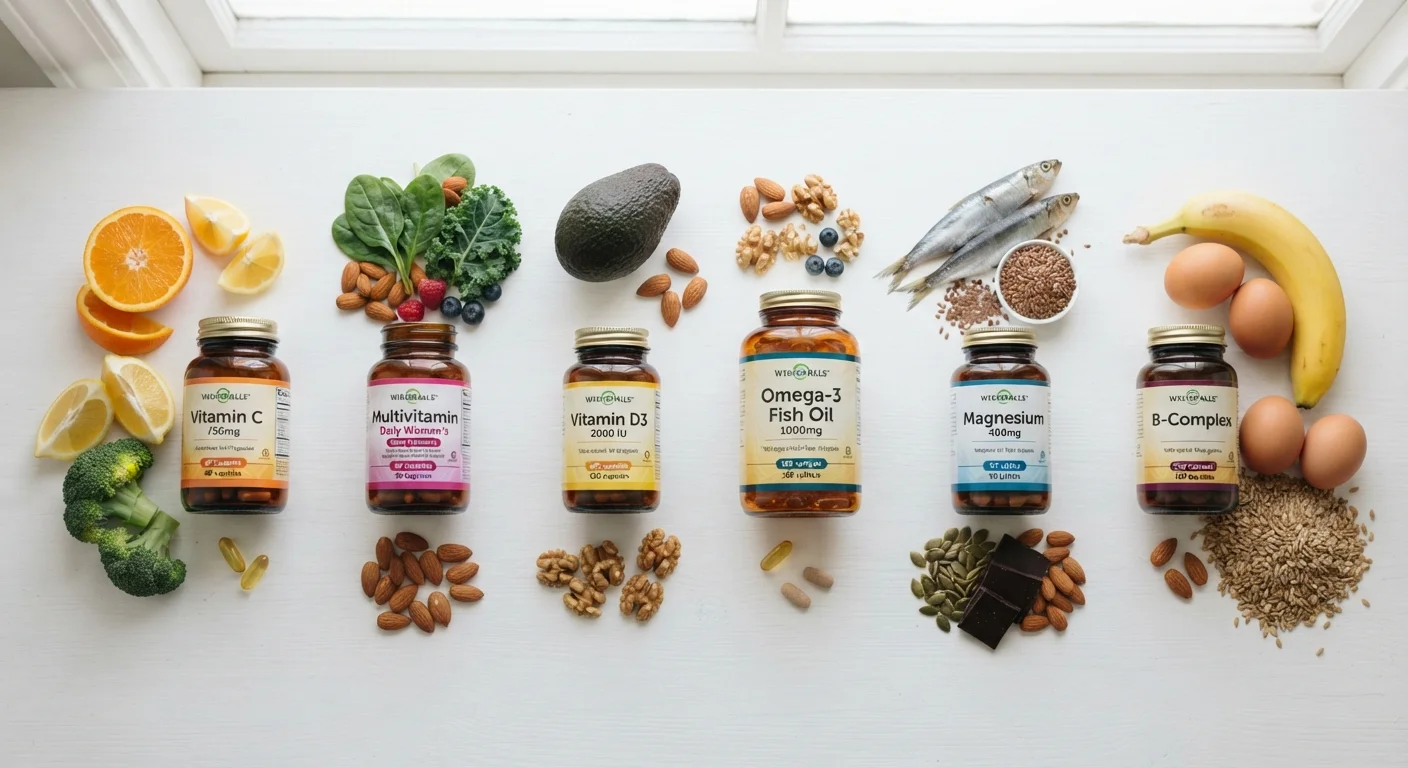
No substitute for dietary variety: Whole foods provide vitamins alongside fiber, phytonutrients, and co-factors that work together in ways a capsule cannot replicate. An orange delivers vitamin C with flavonoids; a supplement delivers the vitamin alone. Research consistently shows that the health benefits associated with nutrient-rich diets do not transfer cleanly to the isolated nutrients in pill form.
Immune-support claims often outpace evidence: High-dose vitamin C, zinc lozenges, and similar products are widely marketed for immune defense. While some evidence supports modest benefits in specific groups, immune supplement claims frequently go beyond what research supports. Everyday readers should approach these products with calibrated skepticism.
Toxicity at high doses: Fat-soluble vitamins — A, D, E, and K — are stored in body tissue and can accumulate to harmful levels when supplemented heavily over time. Even water-soluble vitamins like B6 can cause nerve damage with long-term excessive intake. Excess supplementation carries real toxicity risks that are easy to overlook.
Whole food benefits don't fully transfer to pills
Vitamins in food come bundled with fiber, phytonutrients, and natural co-factors that influence absorption and health outcomes. Isolated supplements cannot replicate this complexity, and large trials rarely show the same benefits seen with nutrient-rich diets.
Fat-soluble vitamins can accumulate to toxic levels
Vitamins A, D, E, and K are stored in body fat and liver tissue. Prolonged high-dose supplementation can lead to toxicity — vitamin A excess, for example, is linked to liver damage and, in pregnancy, birth defects.
Most immune-support claims exceed the evidence
High-dose vitamin C and zinc are popular for immunity, but research supporting meaningful benefits for generally healthy adults is limited. Marketing claims in this category routinely outpace what peer-reviewed science demonstrates.
Self-diagnosis of deficiency is often inaccurate
Fatigue, hair loss, and poor concentration are commonly attributed to vitamin deficiencies, but they overlap with many other conditions. Supplementing without testing can mask underlying issues and delay appropriate care.
Unregulated quality and label accuracy
Dietary supplements in the U.S. do not require pre-market approval from the FDA. Studies have found that some products contain more or less of an ingredient than stated on the label, and contamination has been documented.
Potential for drug-nutrient interactions
Certain vitamins and minerals can interfere with prescription medications — vitamin K affects blood thinners, and high-dose calcium can reduce absorption of some antibiotics. This risk is easily underestimated by consumers taking supplements without medical guidance.
Making a Smarter Decision About Supplementation
Before reaching for a supplement, the most useful first step is honest evaluation — of your diet, your health status, and your life stage. A few guiding principles help frame that assessment.
Testing First: A Simple but Important Step
Before purchasing any vitamin supplement, consider asking your primary care provider for a basic micronutrient panel. Blood tests for vitamin D, B12, iron, and folate are commonly available and can reveal whether a true deficiency exists. Supplementing based on confirmed need — rather than assumption — is both safer and more cost-effective. This is general information; your provider can help interpret results in the context of your full health picture.
Start with food where possible: For most micronutrients, a varied diet rich in vegetables, legumes, whole grains, dairy or fortified alternatives, and lean proteins can meet recommended daily values without supplementation. Common vitamin myths often overstate what pills can accomplish and understate what food already provides.
Get tested before you supplement: Self-diagnosing a deficiency based on symptoms alone is unreliable. Many deficiency symptoms — fatigue, brain fog, hair thinning — overlap with a wide range of conditions. A blood panel ordered by a healthcare provider gives you an accurate baseline. For older adults weighing this question, understanding what supplements actually fill versus what whole foods cover is especially important.
Consider nutrient partnerships: Some vitamins work interdependently. Vitamin D, for example, supports calcium absorption — meaning that supplementing one without adequate intake of the other may not fully serve your bone health goals. Vitamin D and calcium function as a team, and that relationship matters when designing any supplement strategy.
This article is for general informational and educational purposes only and is not a substitute for professional medical advice. Always consult a qualified healthcare provider before starting, stopping, or changing any supplement regimen, particularly if you have an existing health condition, are pregnant, or take prescription medications.
The content on this site is for informational purposes only and is not a substitute for professional advice. Always consult a qualified professional for guidance specific to your situation.