

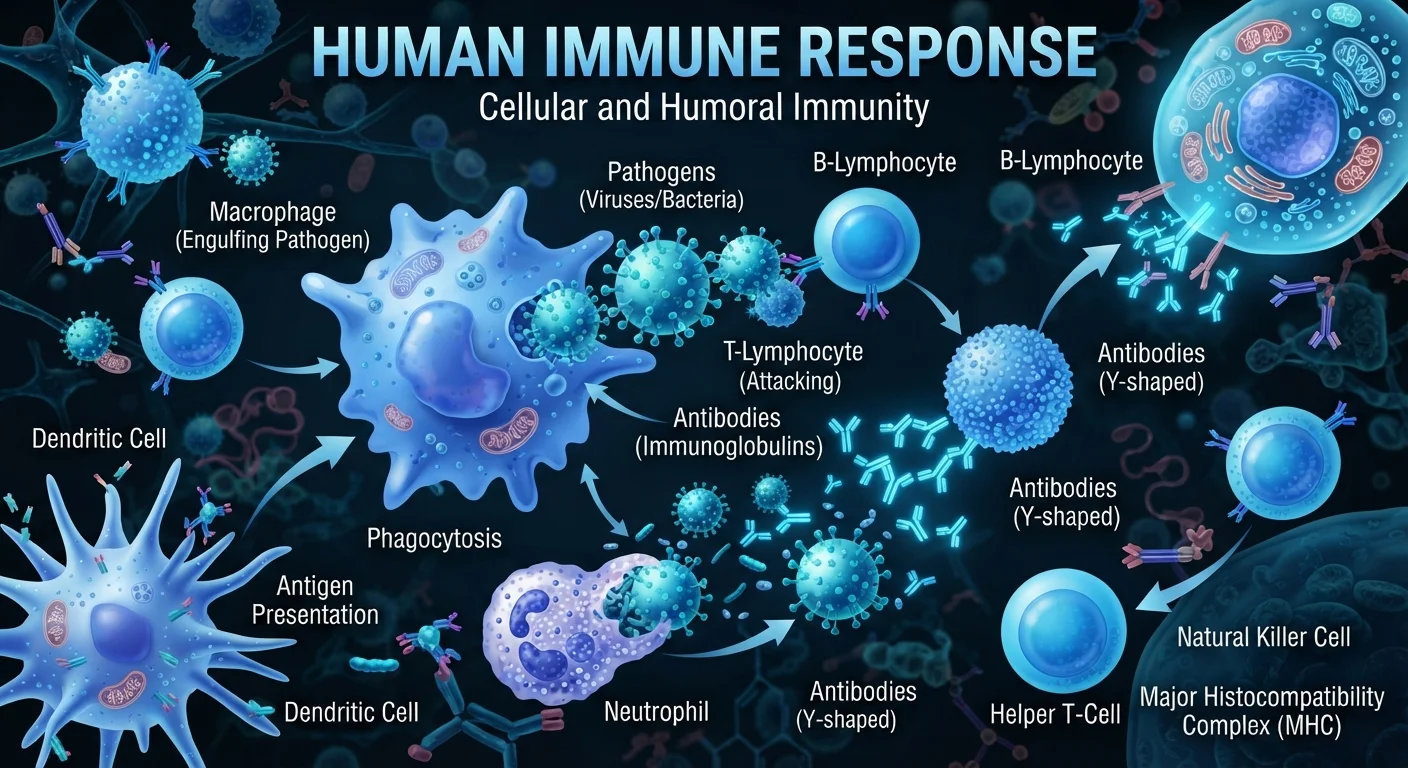
Two Defense Systems Working as One
The immune system operates through two interconnected branches that activate in sequence whenever a threat enters the body.
Innate immunity is the first responder. It activates within minutes to hours, deploying physical barriers (skin, mucous membranes), fever responses, and generalist immune cells called natural killer cells and macrophages. These cells don't recognize specific pathogens — they recognize broad patterns common to foreign invaders and act quickly to contain damage.
Adaptive immunity is the precision strike force. It takes several days to fully mobilize but produces a targeted response specific to the exact pathogen. It also creates memory — meaning the next time the same pathogen appears, the adaptive immune system can respond within hours rather than days. This is the principle behind vaccination.
To understand how vaccines train this memory system, see how vaccines and immune memory work.
The Key Players: Cells, Proteins, and Organs
Several cell types and structures are essential to immune defense:
- White blood cells (leukocytes): The primary agents of immune response. Subtypes include neutrophils (first to arrive at infection sites), T cells (which coordinate and carry out targeted attacks), and B cells (which produce antibodies).
- Antibodies (immunoglobulins): Proteins secreted by B cells that bind to specific antigens on pathogens, neutralizing them or marking them for destruction.
- The lymphatic system: A network of vessels and lymph nodes that filters pathogens from tissue fluid and transports immune cells throughout the body.
- The thymus and bone marrow: Primary organs where T cells and B cells are generated and matured before entering circulation.
- The spleen: Filters blood, removes damaged cells, and houses large numbers of immune cells ready for deployment.
70%
Of immune cells located in the gut
Research published in immunology literature estimates that approximately 70% of the body's immune cells reside in gut-associated lymphoid tissue, highlighting the link between digestive health and overall immunity.
~4–7 days
Time to mount full adaptive response
The adaptive immune system typically takes 4–7 days to generate a full, targeted response to a new pathogen — explaining why many infections peak and resolve within one to two weeks.
3x
Higher infection risk with poor sleep
A study published in Sleep journal found that people sleeping fewer than 7 hours per night were approximately three times more likely to develop a cold after exposure compared to those sleeping 8 or more hours.
Each component has a distinct role, but the immune system only works well when these parts communicate and coordinate effectively.
How Lifestyle Shapes Immune Function
Immune cells are living biological systems — they're directly affected by the body's overall physiological state. Research from the CDC, National Institutes of Health, and peer-reviewed immunology literature consistently identifies several lifestyle factors as having measurable effects on immune response:
- Sleep: During sleep, the body produces cytokines — signaling proteins that help regulate immune responses. Chronic sleep deprivation reduces cytokine production and impairs T cell function.
- Physical activity: Moderate, regular exercise supports immune surveillance — the body's ongoing monitoring for abnormal or infected cells. What happens inside the body during exercise extends beyond muscle adaptation to include measurable immune benefits.
- Nutrition: Micronutrients including vitamins C, D, and zinc play well-documented roles in immune cell production and function. See what vitamins and minerals actually do inside your body for a deeper look.
- Stress: Chronic psychological stress elevates cortisol, which suppresses immune activity over time. This is one of the most replicated findings in psychoneuroimmunology.
For a full evidence-based breakdown, lifestyle habits that support a healthy immune response covers the research in detail.
This article is for general informational and educational purposes only and does not constitute medical advice. Always consult a qualified healthcare provider for guidance specific to your health situation.
Frequently Asked Questions
The immune system has an innate branch, which responds quickly and non-specifically to any detected threat, and an adaptive branch, which mounts a targeted attack and builds immunological memory. Both work together — the innate system buys time while the adaptive system assembles its precise response.
Antibodies are Y-shaped proteins produced by B cells that bind to specific markers (antigens) on pathogens. Once bound, they flag the invader for destruction or directly block it from entering healthy cells. Antibody levels typically rise within days of infection and can persist for months or years.
Research consistently links adequate sleep, regular moderate exercise, balanced nutrition, and stress management to healthier immune responses. These habits support the conditions in which immune cells function optimally, though they cannot guarantee protection against any specific illness.
In autoimmune conditions, the immune system misidentifies the body's own healthy tissues as threats and attacks them. The exact causes vary by condition and are not fully understood, but genetics, environmental triggers, and prior infections are all considered contributing factors.
Vaccines introduce a harmless antigen — such as an inactivated pathogen or a protein fragment — that triggers an adaptive immune response without causing disease. The immune system builds memory cells, so if the real pathogen appears later, it can respond rapidly and effectively.
Not necessarily. An overactive immune system can cause allergies, chronic inflammation, or autoimmune disease. The goal is a well-regulated immune system — one that responds appropriately to genuine threats without overreacting to harmless substances or the body's own cells.
The content on this site is for informational purposes only and is not a substitute for professional advice. Always consult a qualified professional for guidance specific to your situation.