

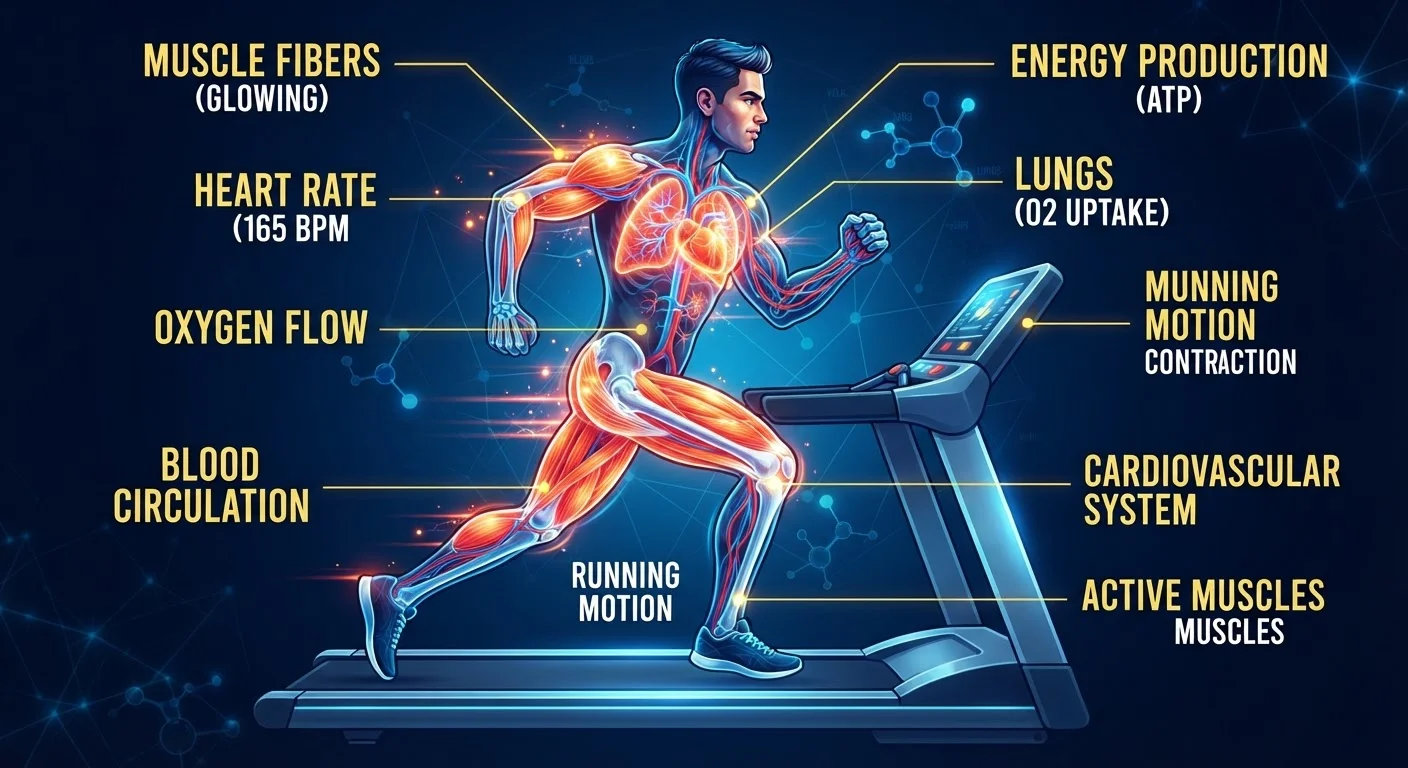
What's Actually Happening When You Work Out
Exercise is fundamentally a controlled disruption. When you run, lift, or cycle, you're challenging your body's systems beyond their resting state. Your muscles consume more fuel, your heart pumps harder, and your cells signal distress. That disruption is the entire point — because it's the body's response to that stress that produces fitness gains.
During a workout, muscle fibers experience microscopic mechanical damage, particularly during resistance training. Simultaneously, your cardiovascular system is working to deliver oxygen and clear metabolic byproducts like lactate. Energy systems — including the aerobic and anaerobic pathways — shift into higher gear depending on the intensity and duration of what you're doing.
None of this is random. These processes are tightly regulated and purposeful. Understanding them helps explain why certain training approaches work and why common fitness myths can lead people astray.
Muscle Adaptation: Growth Happens at Rest
One of the most important principles in exercise science is that muscle tissue doesn't grow during the workout — it grows during recovery. When muscle fibers sustain microscopic damage from resistance training, the body initiates a repair process. Satellite cells (muscle stem cells) fuse with existing fibers and lay down new contractile proteins, making the fiber thicker and stronger than before.
This process, known as muscle protein synthesis, is heavily influenced by adequate protein intake and sleep quality. Shortcut either of those, and adaptation slows significantly.
~6–8 weeks
Time for noticeable muscle hypertrophy to develop
Exercise physiology research generally identifies this as the minimum timeframe for structural muscle changes to become measurable with consistent resistance training.
~20%
Increase in mitochondrial density from aerobic training
Studies in exercise science have documented mitochondrial biogenesis improvements of this magnitude in previously sedentary adults following weeks of structured aerobic training.
150 min/week
Moderate aerobic activity recommended for adults
The U.S. Department of Health and Human Services Physical Activity Guidelines for Americans recommend at least 150 minutes of moderate-intensity aerobic activity per week for substantial health benefits.
Over time, the nervous system also adapts. In the early weeks of a new training program, strength gains come primarily from improved neuromuscular coordination — the brain gets better at recruiting muscle fibers efficiently — rather than from muscle size itself. This is why beginners often feel and perform stronger before any visible change occurs.
These are the foundational mechanisms behind progressive overload, the principle of gradually increasing training demands to keep driving adaptation forward.
Cardiovascular Change: Training a Smarter Heart
Aerobic exercise — walking, running, cycling, swimming — places demand on the heart and lungs. The heart responds to sustained training over weeks and months by becoming more efficient. The left ventricle, which pumps oxygenated blood to the body, gradually increases in volume. This means the heart can pump more blood per beat, reducing the number of beats needed at rest and during moderate exertion.
A lower resting heart rate is one visible sign of this adaptation. Well-conditioned individuals often have resting heart rates in the range of 50–60 beats per minute or lower, compared to the typical adult average of around 60–100 bpm. Alongside this, the body develops a denser network of capillaries in muscle tissue, improving oxygen delivery to working cells.
Your metabolism also shifts with regular cardio training. Mitochondria — the organelles responsible for producing energy from oxygen — increase in number and efficiency inside muscle cells. This means your body becomes better at burning fat as fuel during sustained activity, a change with broad implications for energy management and metabolic health.
Exercise Beyond the Muscles: Brain, Hormones, and Immunity
The benefits of exercise extend well beyond the musculoskeletal system. Regular physical activity has measurable effects on brain function, hormonal balance, and immune regulation — areas that connect fitness directly to overall wellbeing.
During exercise, the brain releases endorphins and endocannabinoids, compounds that contribute to the mood lift many people experience after a workout. Beyond these immediate effects, sustained exercise training influences the regulation of cortisol (a stress hormone) and promotes the release of brain-derived neurotrophic factor (BDNF), a protein that supports the growth and maintenance of neurons. This is one reason research consistently links exercise to improved mental health outcomes.
Moderate regular exercise is also associated with improved immune function — though very intense exercise without adequate recovery can temporarily suppress immune response. The key is consistency and balance rather than extremes.
It's also worth noting that exercise interacts with nutrition. The body draws on macronutrients — carbohydrates, proteins, and fats — differently depending on training intensity and duration, and key micronutrients play supporting roles in muscle repair and energy production.
This article is for general informational purposes only and does not constitute medical advice. Consult a qualified healthcare professional before beginning a new exercise program, especially if you have an existing health condition.
Frequently Asked Questions
Delayed onset muscle soreness (DOMS) results from microscopic tears in muscle fibers during unfamiliar or intense exercise. The inflammation and repair process that follows is what causes the soreness, typically peaking 24–48 hours after a workout. This is a normal part of adaptation and not a sign of injury.
Early improvements in strength and endurance can occur within a few weeks, driven initially by neurological adaptations rather than muscle growth. Visible physical changes generally take longer — often 6–12 weeks of consistent training — and vary considerably between individuals based on genetics, diet, and training intensity.
Research consistently links regular physical activity to reduced symptoms of anxiety and depression. Exercise influences brain chemistry by modulating neurotransmitters like serotonin and dopamine and by reducing stress hormones like cortisol. The evidence is strong enough that exercise is now included in many clinical guidelines for mental health support.
Yes. Even modest amounts of physical activity — such as a brisk 10-minute walk — produce measurable physiological benefits, including improved blood sugar regulation and mood. You don't need to follow a structured program to benefit; consistent movement in any form contributes to better health outcomes.
During aerobic exercise, your working muscles demand significantly more oxygen. Your breathing rate and heart rate increase to meet this demand. As cardiovascular fitness improves over weeks of training, your heart becomes more efficient, and the same effort requires less strain on the system.
The content on this site is for informational purposes only and is not a substitute for professional advice. Always consult a qualified professional for guidance specific to your situation.