

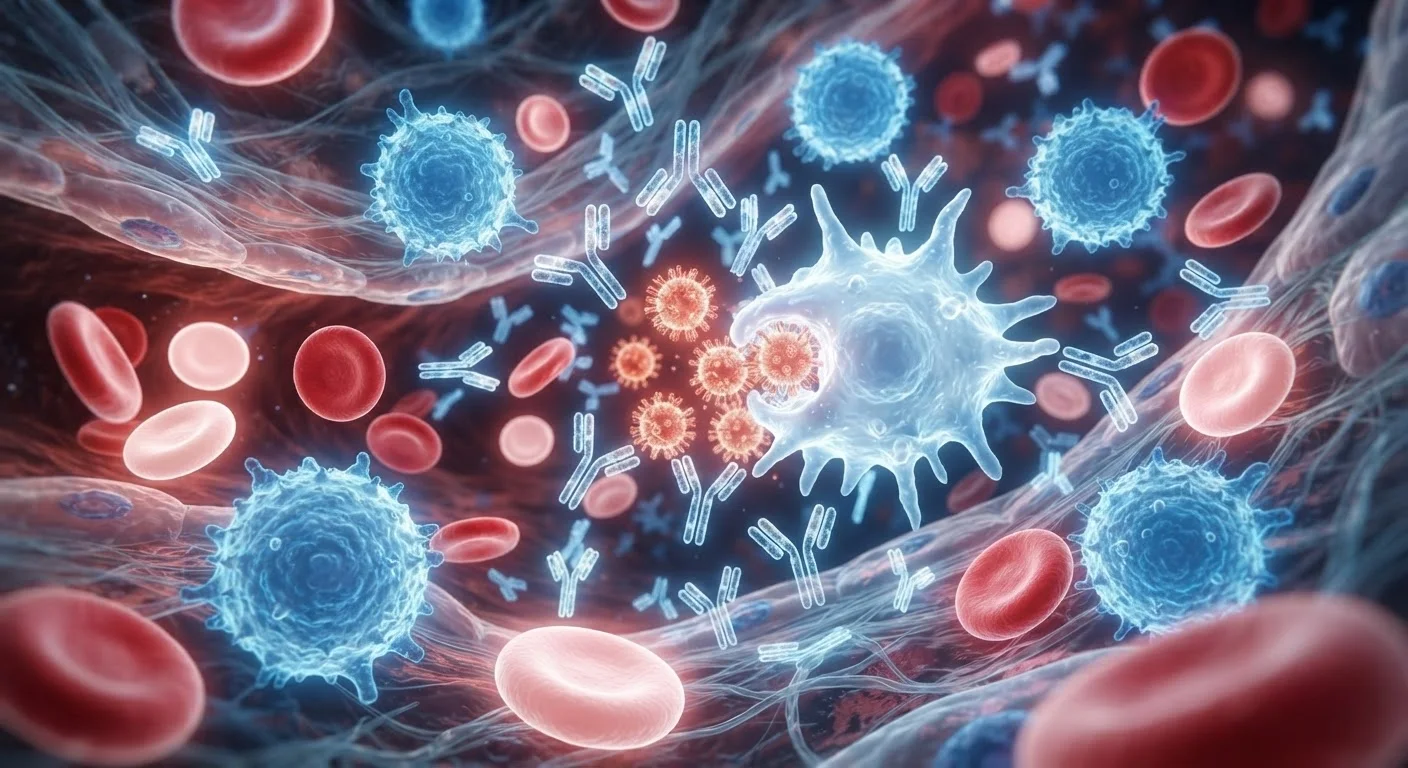
How Vaccines Train the Immune System
When a pathogen enters the body, the immune system doesn't immediately know how to fight it—it has to figure out the threat on the fly. That first response is slower and less precise, which is why illness occurs. Vaccines bypass this delay by introducing the immune system to a pathogen's signature before any real infection happens.
Depending on the vaccine type, this introduction might take the form of a weakened or inactivated pathogen, a harmless protein from its surface, or—as with mRNA vaccines—genetic instructions for your cells to temporarily produce a recognizable piece of the pathogen. None of these can cause the disease itself. What they do is trigger a cascade: the immune system detects the foreign material, activates specialized white blood cells called B cells and T cells, and produces antibodies tailored to neutralize that specific threat.
Crucially, some of these activated cells don't disappear after the job is done. They become memory cells—a standing reserve specifically programmed for that pathogen. If the real threat appears later, the immune system can skip the slow learning phase and deploy a rapid, targeted defense within hours to days rather than weeks.
“Immunological memory is the basis of all vaccination—the principle that the immune system, once trained, can respond faster and more powerfully to a threat it has seen before.”
— Paul Offit, Director of the Vaccine Education Center, Children's Hospital of Philadelphia
The Biology of Long-Term Protection
Two cell types are central to durable immunity: memory B cells and memory T cells.
Memory B cells circulate in the blood and lymph nodes, ready to rapidly multiply and differentiate into antibody-producing plasma cells when they encounter a familiar antigen. Some plasma cells migrate to the bone marrow and become long-lived plasma cells, continuously secreting low levels of antibodies for years—or in some cases, decades.
Memory T cells serve a complementary role. Cytotoxic T cells (CD8+) can directly destroy infected cells, while helper T cells (CD4+) coordinate the broader immune response. Both types persist long after vaccination and respond vigorously to re-exposure.
The interplay between these cell populations explains why some vaccines produce lifelong immunity—like those for measles and yellow fever—while others, like the annual flu shot, require repeat administration. When the pathogen mutates significantly or when memory cell populations decline over time, protection can wane. That's the biological rationale explored in depth in our article on why booster doses exist and when they're recommended.
95%+
Measles vaccine effectiveness after two doses
According to the CDC, two doses of the MMR vaccine are approximately 97% effective at preventing measles, with immunity persisting for most recipients throughout their lifetime.
~10 years
Duration of protection from tetanus booster
The CDC recommends a Td or Tdap booster every 10 years for adults, reflecting the gradual waning of antibody levels that occurs with the tetanus toxoid vaccine over time.
40–60%
Typical flu vaccine effectiveness in a well-matched season
The CDC estimates seasonal influenza vaccine effectiveness typically ranges from 40% to 60% in years when circulating strains closely match the vaccine formulation.
What Affects the Strength and Duration of Immune Memory
Not everyone develops identical immune memory from the same vaccine—individual variation is real and expected. Several factors influence the immune response:
- Vaccine platform: Live-attenuated vaccines (like MMR) tend to generate broader, more durable responses than some inactivated or subunit vaccines, though the latter are often safer for immunocompromised individuals.
- Age: Infants' immune systems are still maturing; older adults experience immunosenescence, a gradual decline in immune function. Both ends of the age spectrum may mount weaker initial responses.
- Immune status: People with certain immunodeficiencies or those on immunosuppressive medications may have reduced responses. Their healthcare providers should guide vaccine decisions.
- General health and lifestyle: Chronic sleep deprivation, obesity, and high stress are associated in research with blunted vaccine responses. Adequate sleep, balanced nutrition, and regular physical activity support baseline immune function—though they are no substitute for vaccination itself.
Understanding individual variation also helps explain why population-level strategies matter. When enough people in a community are vaccinated, even those with weaker immune responses gain indirect protection—a concept covered in detail in our explainer on herd immunity and community-level protection.
This article is for general informational purposes only and does not constitute medical advice. Speak with a qualified healthcare provider about your personal vaccination history, schedule, and any health concerns.
Frequently Asked Questions
Duration varies considerably by vaccine. Measles vaccination typically confers lifelong protection, while influenza vaccines are reformulated and readministered annually because both the virus and immunity levels change. The specific pathogen, vaccine platform, and your individual immune response all influence how long protection persists.
It depends on the disease. For some pathogens, natural infection produces robust, lasting immunity—but at the cost of experiencing the illness and its complications. Vaccines are engineered to stimulate strong, targeted immune memory while avoiding that risk. For certain diseases, like tetanus, vaccine immunity is actually more consistent than post-infection immunity.
Multiple doses serve different purposes. Some vaccines require a primary series to build a sufficient immune response in the first place—each dose reinforces and strengthens memory cell populations. Booster doses given years later help refresh waning immunity in people who were previously vaccinated.
Certain factors—including chronic sleep deprivation, poor nutrition, obesity, and chronic stress—are associated with blunted immune responses to vaccines in research settings. This doesn't mean lifestyle alone determines vaccine effectiveness, but maintaining general health supports immune function. Consult a healthcare provider if you have concerns about your immune response.
Older adults generally mount somewhat weaker immune responses to vaccines due to a process called immunosenescence—the gradual aging of the immune system. This is why some vaccines, like the high-dose flu vaccine, are specifically formulated for adults 65 and older. A healthcare provider can discuss appropriate vaccine options for older individuals.
The content on this site is for informational purposes only and is not a substitute for professional advice. Always consult a qualified professional for guidance specific to your situation.