

Why Everyday Movement Matters Beyond Exercise
Structured workouts are valuable, but they account for a small fraction of a typical day. Research in exercise physiology consistently shows that how you move — or don't move — across the remaining hours shapes functional health just as significantly. For older adults, this distinction is especially meaningful.
Muscle mass, joint mobility, and balance all respond to the cumulative demands placed on them daily. When movement is limited to a single gym session while the rest of the day is sedentary, the body adapts accordingly. Conversely, when purposeful movement is woven into ordinary tasks, the neuromuscular system receives regular, varied input that supports coordination and strength over time.
This is sometimes described in research as non-exercise activity thermogenesis (NEAT) — the energy expended through all movement that isn't deliberate exercise. Everyday activities like stair climbing and gardening contribute meaningfully to overall movement volume and shouldn't be dismissed as insignificant.
Understanding this context helps reframe independence as something maintained throughout the day — not achieved once a week.
Core Movement Habits That Build Functional Resilience
The following practices are grounded in geriatric health research and physical therapy guidance. They are designed to be integrated into daily life rather than added as separate obligations.
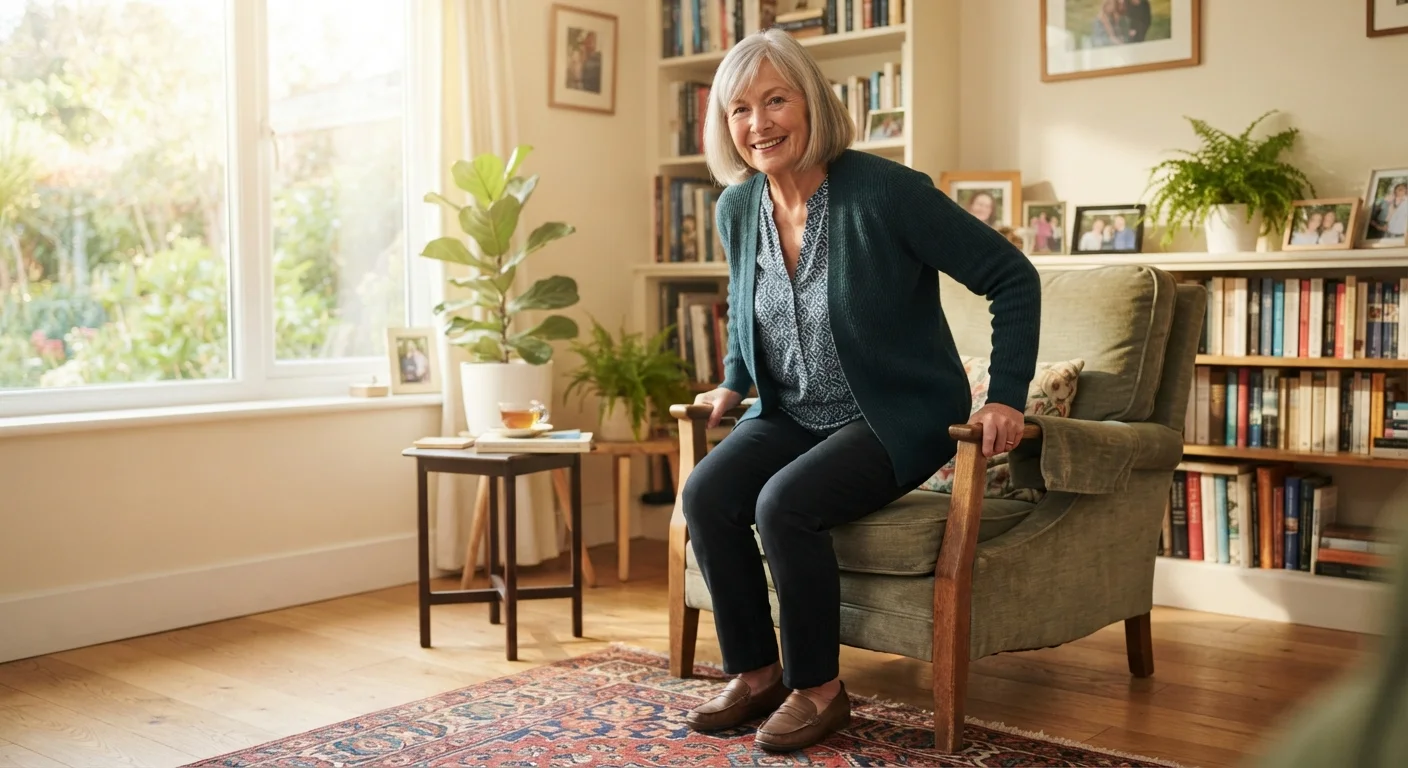
Rise from seated positions without using your hands whenever safely possible.
The ability to stand from a chair unassisted is one of the strongest predictors of functional independence and longevity in older adults. Practicing this regularly strengthens the quadriceps, glutes, and core — the muscles most critical for fall prevention and daily mobility.
Break up prolonged sitting every 30 to 45 minutes with brief standing or walking.
Extended uninterrupted sitting is associated with accelerated muscle weakening and circulatory changes that compound over time. Short, frequent interruptions — even a minute or two — help maintain metabolic and musculoskeletal function across the day.
Incorporate deliberate balance challenges into routine standing tasks.
Activities like brushing teeth, waiting for water to boil, or standing at a counter are opportunities to engage stabilizing muscles. These micro-challenges accumulate real balance training without requiring dedicated time.
Choose stairs over elevators or escalators when it is safe to do so.
Stair climbing is a compound lower-body movement that builds leg strength, cardiovascular endurance, and coordination simultaneously. It also reinforces the stepping and weight-transfer mechanics used in many everyday situations.
Carry groceries and household loads in a way that engages your body evenly.
Habitual carrying with one arm or consistently favoring one side can create muscular imbalances over time. Distributing loads evenly and using both sides of the body trains functional strength that directly mirrors real-life demands.
Practice controlled lowering movements, not just lifting.
Eccentric muscle control — the ability to lower yourself or an object slowly and with control — is closely linked to fall prevention and joint protection. Many people train the upward phase of movement while neglecting the downward phase.
For a broader look at how movement needs evolve across the decades, see how movement needs shift after 50. If you're managing a specific condition like arthritis, targeted movement guidance for joint health offers additional context.
Starting Small: Quick Wins You Can Apply Today
Independence isn't built through dramatic overhauls — it's built through decisions made repeatedly, day after day. The following actions require no equipment, no gym membership, and no scheduling. They're designed to meet you where you already are.
If you're unsure whether your current activity habits are covering all the key dimensions of healthy aging, the Active Aging Checklist is a practical self-assessment tool worth working through.
Balance, Safety, and Knowing Your Limits
Falls are a leading cause of injury-related loss of independence for older adults. Balance isn't a fixed trait — it's a trainable capacity that responds directly to practice. Simple habits like standing on one foot briefly while holding a sturdy surface, or walking heel-to-toe along a hallway, engage the stabilizing muscles and proprioceptive pathways that keep you upright.
Evidence-informed balance exercises can be integrated progressively, starting with supported variations and advancing as confidence grows. It's worth distinguishing these efforts from movement patterns that inadvertently stress joints, so effort is directed productively.
Equally important is functional fitness — movement that mirrors real daily tasks like getting up from the floor or carrying groceries. Practicing these movement patterns directly reinforces the abilities that matter most for day-to-day autonomy.
This article is for general informational purposes only and does not constitute medical advice. Older adults — particularly those with existing health conditions, recent injuries, or mobility limitations — should consult a qualified healthcare provider before making significant changes to their activity routines.
The content on this site is for informational purposes only and is not a substitute for professional advice. Always consult a qualified professional for guidance specific to your situation.