

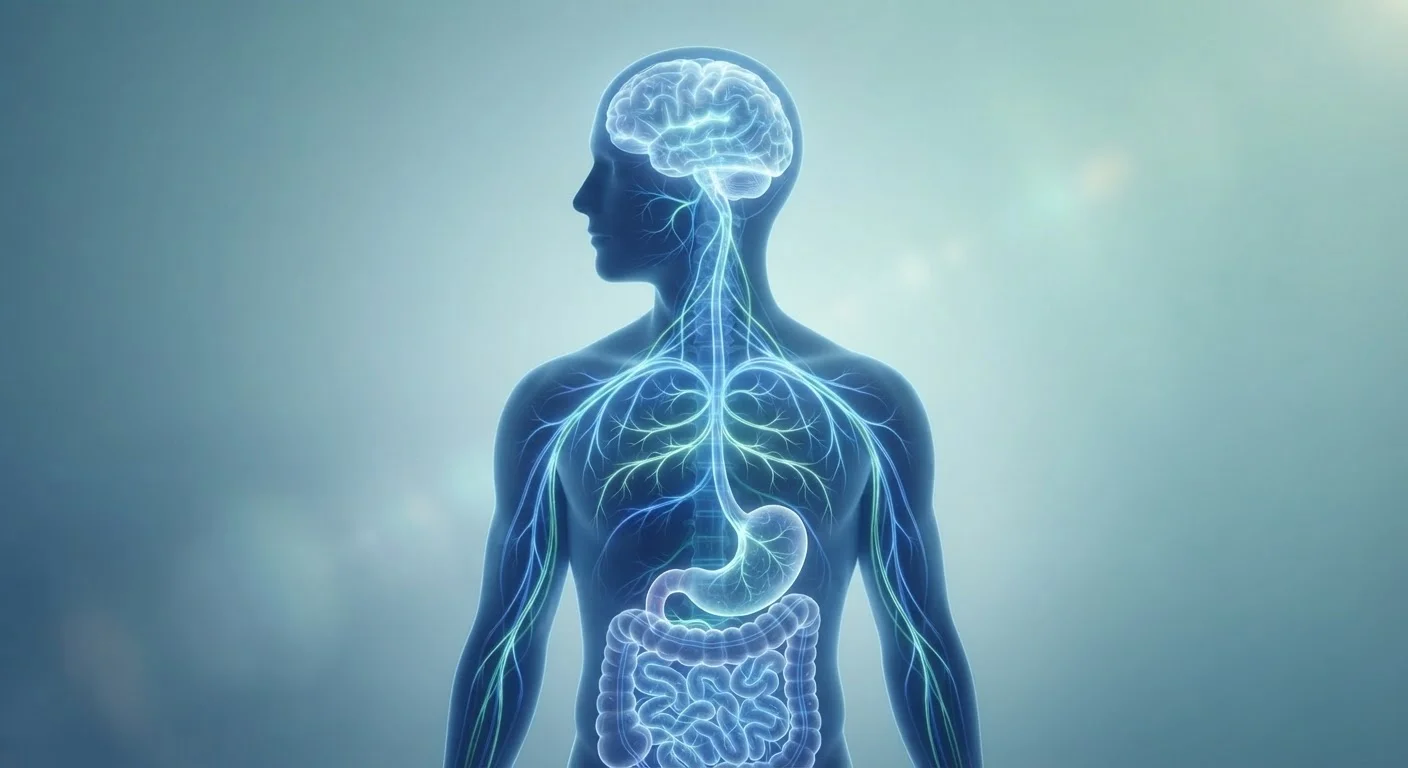
How Your Gut and Brain Stay in Constant Contact
Most people think of the brain as the body's sole command center. But your gut has its own sophisticated nervous system — and the two are in near-constant dialogue. This exchange happens through the gut-brain axis, a network that includes the vagus nerve, the immune system, circulating hormones, and the vast microbial community living in your intestines.
To understand why stress hits your stomach, it helps to know that this communication runs in both directions. Your brain sends distress signals downward during stressful moments — but your gut also sends information upward that can shape mood, cognition, and emotional resilience. As the science of stress makes clear, the body's stress response involves multiple interconnected systems, and the gut is squarely in that loop.
What Stress Actually Does to Your Digestive System
When your body detects a threat — real or perceived — it activates the fight-or-flight response. As described in more detail in our piece on what happens inside your body under pressure, stress hormones like cortisol and adrenaline redirect blood flow to your muscles and heart, away from digestion.
The practical consequences for your gut can include:
- Altered motility: Stress can speed up or slow down how quickly food moves through your intestines, leading to diarrhea or constipation.
- Increased gut permeability: Some research suggests chronic stress may loosen the tight junctions between intestinal cells, allowing substances to pass through that normally wouldn't — a phenomenon sometimes called 'leaky gut,' though this remains an active area of scientific study.
- Reduced digestive secretions: Stomach acid and enzyme output can decrease, impairing nutrient breakdown.
- Heightened pain sensitivity: The gut becomes more reactive to normal sensations, which may explain why stress worsens conditions like irritable bowel syndrome (IBS).
~95%
Of the body's serotonin produced in the gut
Research estimates that the vast majority of the body's serotonin — a key mood-regulating neurotransmitter — is synthesized in the gastrointestinal tract, not the brain.
500M+
Neurons in the enteric nervous system
The gut's intrinsic nerve network contains hundreds of millions of neurons, enabling it to regulate digestion independently of the central nervous system.
~38 million
Americans affected by IBS
The American College of Gastroenterology estimates that irritable bowel syndrome — strongly linked to stress — affects a significant portion of the U.S. population.
The Microbiome: A Key Player in Both Directions
Your gut is home to trillions of microorganisms — collectively called the gut microbiome. These bacteria, fungi, and other microbes do far more than aid digestion. They produce neurotransmitter precursors (including those involved in serotonin production), short-chain fatty acids that support brain function, and immune-modulating compounds that interact with the nervous system.
Chronic stress can shift the composition of the microbiome, reducing diversity and potentially favoring less beneficial bacterial strains. Conversely, a disrupted microbiome may amplify stress signals sent to the brain — creating a feedback loop that's difficult to interrupt without addressing both sides.
Factors that support microbiome diversity include a varied, fiber-rich diet, adequate sleep (which itself is disrupted by stress — see our article on how stress and sleep feed into each other), regular physical movement, and limiting unnecessary antibiotic use. These are not cures, but they form a reasonable foundation.
Practical Ways to Support the Gut-Brain Connection
Understanding the gut-brain axis isn't just academic — it points toward practical habits that may help both systems function better under pressure.
- Eat with consistency: Irregular meal timing can disrupt the gut's internal clock. Aim for roughly consistent mealtimes to support digestive rhythm.
- Prioritize dietary fiber: Vegetables, legumes, whole grains, and fruit feed beneficial gut bacteria. No single 'superfood' is necessary — variety is the more important goal.
- Practice stress-reduction techniques: Breathing exercises, gentle movement, and mindfulness practices activate the parasympathetic nervous system — the body's 'rest and digest' mode — which restores more normal gut function.
- Tend to social connection: Research on social support and stress shows that meaningful connection measurably dampens physiological stress responses, which may indirectly support gut health as well.
Start Small With Gut-Friendly Habits
You don't need a complete diet overhaul to begin supporting the gut-brain axis. Adding one or two additional servings of vegetables or legumes per week, and building even a brief daily wind-down routine, can be meaningful starting points. Small, sustainable changes tend to produce more lasting results than dramatic short-term efforts.
This article is for general informational purposes only and does not constitute medical advice. If you are experiencing persistent digestive symptoms, consult a qualified healthcare professional for an individualized assessment.
Frequently Asked Questions
Yes. Stress activates the fight-or-flight response, which redirects resources away from digestion. This can cause nausea, cramping, diarrhea, constipation, or bloating. These effects are well-documented in research on conditions like irritable bowel syndrome (IBS).
The enteric nervous system is a dense network of roughly 500 million neurons lining the gut wall. It can operate independently of the brain and regulates digestion, gut motility, and local immune responses. Because of its complexity, it's sometimes called the 'second brain.'
Gut bacteria produce neurotransmitters — including serotonin precursors — and short-chain fatty acids that influence brain function and mood. Research suggests that a diverse, balanced microbiome may help modulate the body's stress response, though this field is still developing.
Some research suggests links between microbiome composition and anxiety levels, but the science is early-stage and individual results vary considerably. Supporting gut health through balanced nutrition, sleep, and stress reduction is generally considered beneficial, but it's not a standalone treatment for anxiety disorders.
Probiotic research is promising but still evolving. Whether a probiotic helps depends on the specific strain, dose, and individual health context. Speak with a healthcare provider before starting any supplement, especially if you have an underlying health condition.
If digestive symptoms are persistent, severe, or accompanied by unexplained weight loss, blood in stool, or significant pain, consult a healthcare professional promptly. These symptoms warrant medical evaluation and should not be attributed to stress alone.
The content on this site is for informational purposes only and is not a substitute for professional advice. Always consult a qualified professional for guidance specific to your situation.