

Your Brain Sounds the Alarm
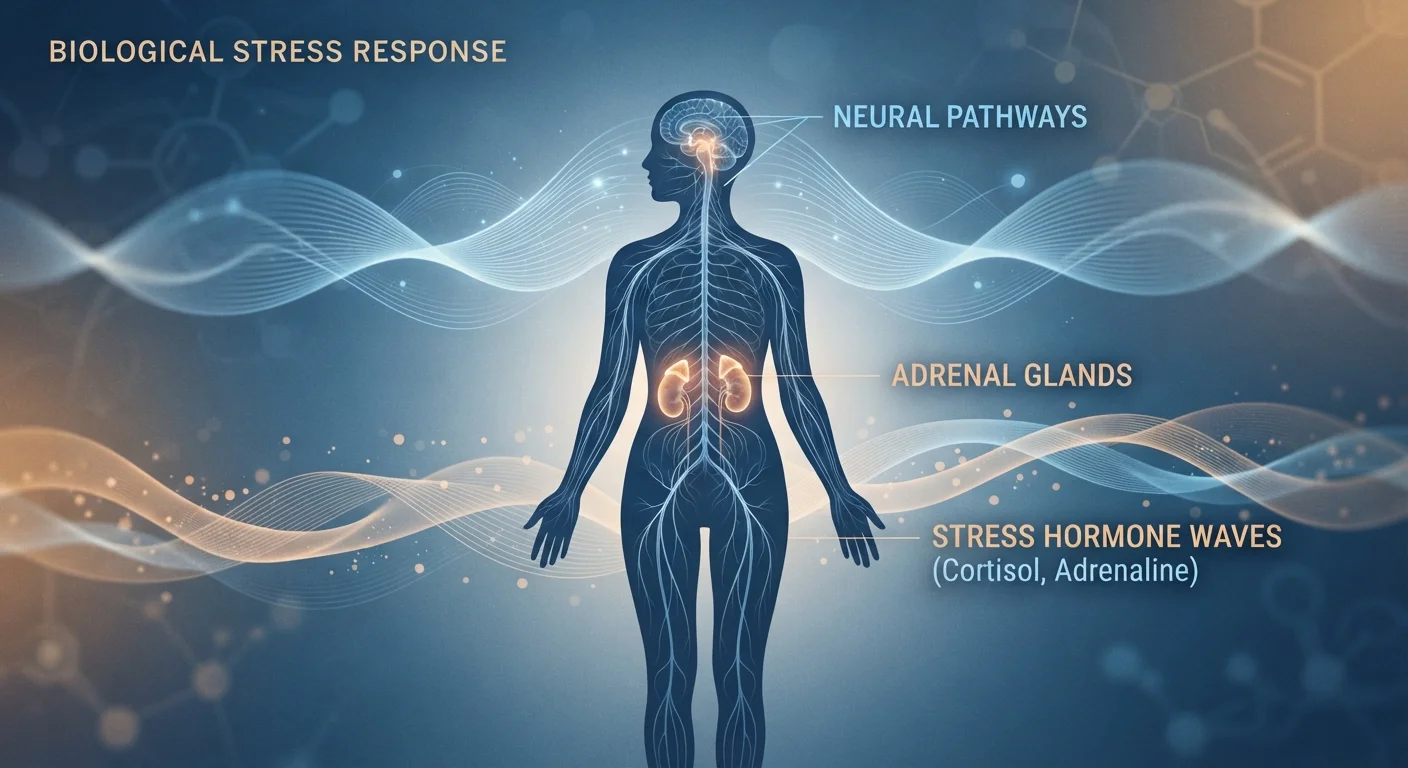
It starts in a region of your brain called the amygdala — a small, almond-shaped structure that processes emotional signals and threat detection. The moment the amygdala perceives danger (real or imagined), it sends an urgent signal to the hypothalamus, which acts as your body's command center. Within seconds, the hypothalamus activates the sympathetic nervous system, triggering what most people know as the fight-or-flight response.
This is not a metaphor. It is a precisely coordinated biological event. Your adrenal glands release a surge of adrenaline (also called epinephrine), which immediately raises your heart rate, tightens your muscles, widens your airways, and redirects blood flow toward the organs most useful for action — your heart, lungs, and large muscle groups. Digestion, reproduction, and immune activity are temporarily dialed back; they are luxuries your body cannot afford in a crisis.
To understand how this response differs depending on duration and intensity, see our deeper dive into acute vs. chronic stress.
Cortisol: The Second Wave
While adrenaline handles the initial burst, a second hormone takes the stage within minutes: cortisol. Released by the adrenal cortex under instruction from the hypothalamic-pituitary-adrenal (HPA) axis, cortisol's job is to sustain the stress response and restore balance once the threat passes.
Cortisol mobilizes glucose from stored energy to fuel your muscles and brain. It also has anti-inflammatory properties and helps regulate the immune system. In small, well-timed doses, it is genuinely useful — it even follows a natural daily rhythm, peaking in the morning to support alertness and tapering toward evening to allow sleep.
Problems arise when stress is ongoing. Persistently elevated cortisol disrupts sleep cycles, impairs memory consolidation, contributes to weight gain (particularly around the abdomen), and weakens immune defenses over time. For a thorough look at cortisol's nuanced role, our guide on cortisol and everyday stress goes into greater detail.
77%
Americans experiencing physical stress symptoms
According to the American Psychological Association's Stress in America surveys, a substantial majority of adults regularly experience physical symptoms linked to stress.
~20 min
Time for cortisol to peak after a stressor
Research on HPA axis dynamics shows cortisol typically reaches its peak concentration in blood roughly 15–20 minutes after the onset of a stressor.
2–3x
Greater cardiovascular risk with chronic stress
Multiple longitudinal studies have found that individuals with chronically high perceived stress face meaningfully elevated risk of cardiovascular events compared to those with lower stress levels.
What Chronic Activation Does to Your Body
The stress response evolved for short, intense threats — a predator, an accident, a sudden confrontation. It was never designed to run continuously in the background of modern life's relentless pressures: financial strain, work deadlines, relationship tension, or constant news exposure. When activation becomes the norm rather than the exception, the wear on major body systems accumulates.
- Cardiovascular system: Sustained high blood pressure and elevated heart rate increase the long-term risk of heart disease.
- Immune system: Chronic cortisol suppression of immune activity leaves the body more vulnerable to infections and slower to heal.
- Brain and cognition: Prolonged stress is associated with reduced volume in the hippocampus, an area critical for memory and learning, and impaired function in the prefrontal cortex, which governs decision-making and emotional regulation.
- Sleep: Elevated evening cortisol interferes with the hormonal conditions needed for restorative sleep, creating a damaging feedback loop. Explore how stress hormones interact with rest in our Sleep Science hub.
The key insight is that it is not stress itself, but unrecovered stress, that causes lasting harm. Your body has robust repair mechanisms — they just need the opportunity to operate.
Why Understanding This Helps You Manage It
Knowing the biological mechanics of stress is genuinely empowering. When you feel your heart pounding before a difficult conversation or a tight deadline, that is your adrenaline doing exactly what it was built to do. You are not broken — you are responding normally to perceived pressure.
That understanding shifts the goal from eliminating stress (impossible and arguably undesirable) to building in sufficient recovery. Behaviors like consistent sleep, moderate physical movement, diaphragmatic breathing, and social connection are not just feel-good habits — they directly influence cortisol rhythms and parasympathetic nervous system activity, the branch of your nervous system that promotes calm and restoration.
Use Your Biology to Wind Down
Slow, extended exhales — breathing out for longer than you breathe in — directly activate the parasympathetic nervous system, helping counteract the stress response. Even a few minutes of this type of breathing after a stressful event can help cortisol begin returning to baseline. You don't need an app or a special setting; any quiet moment works.
For a practical framework on balancing daily stress with recovery, see our article on stress exposure vs. stress recovery. And if you're curious how exercise intersects with all of this, the science behind why exercise works offers useful context.
This article is for general informational purposes only and is not a substitute for professional medical advice, diagnosis, or treatment. If you are experiencing symptoms you believe may be stress-related, please consult a qualified healthcare provider.
Frequently Asked Questions
The two primary stress hormones are adrenaline (epinephrine) and cortisol. Adrenaline kicks in almost instantly to raise your heart rate and sharpen alertness. Cortisol follows within minutes and helps sustain the response by mobilizing energy and regulating inflammation. Together they prepare your body to meet the challenge at hand.
No — brief, manageable stress can actually improve performance and resilience. Researchers sometimes call this 'eustress.' The health risks emerge when stress is chronic and unrelenting, keeping your body's alarm system activated without adequate recovery time.
Prolonged stress keeps cortisol and adrenaline elevated, which gradually disrupts sleep, suppresses immune function, raises blood pressure, and can impair digestion. The body was not designed to sustain a high-alert state indefinitely, so systems start to show strain over time.
Yes. Chronic stress exposure is associated with changes in areas of the brain involved in memory, decision-making, and emotional regulation — particularly the hippocampus and prefrontal cortex. Research suggests these changes can be at least partially reversed with effective stress management and adequate recovery.
Consistent sleep, regular moderate exercise, social connection, and practices like deep breathing or mindfulness are all supported by research as ways to support healthier cortisol rhythms. No single habit works in isolation; a combination of recovery behaviors tends to be most effective.
If stress is persistently interfering with your sleep, relationships, work, or physical health, it's worth speaking with a qualified healthcare provider. They can help identify whether there is an underlying condition and guide you toward appropriate support, which may include therapy, lifestyle changes, or other interventions.
The content on this site is for informational purposes only and is not a substitute for professional advice. Always consult a qualified professional for guidance specific to your situation.