

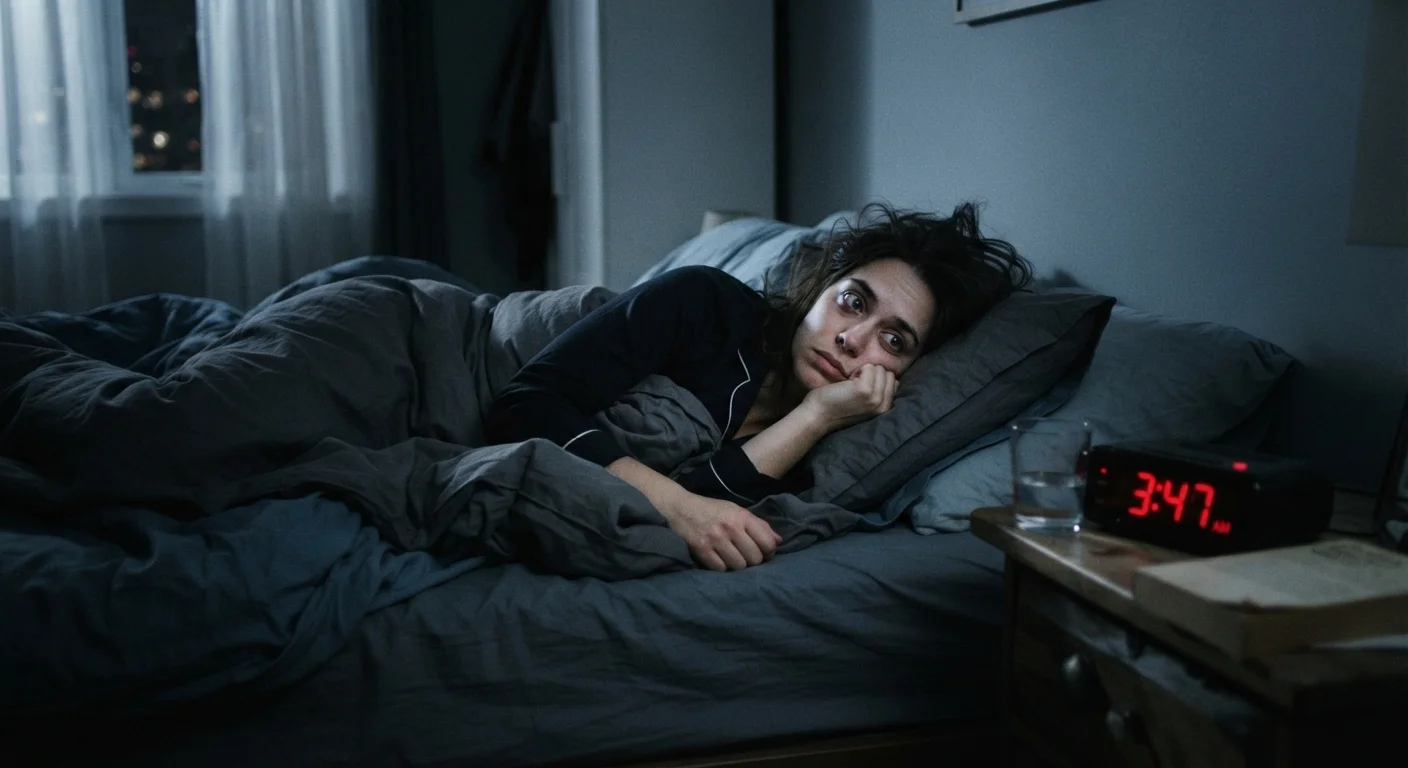
What Seven Hours Means in Research Terms
When scientists study sleep duration, they need a consistent threshold to distinguish adequate sleep from insufficient sleep. Seven hours has emerged as a practical cutoff in the majority of large population studies, backed by position statements from the American Academy of Sleep Medicine and the Sleep Research Society. Below this line, measurable shifts in biological markers tend to appear more reliably across study populations.
It's important to understand how this number is generated. Most research relies on self-reported sleep duration gathered through surveys or questionnaires. Participants estimate how long they sleep — not how long they spend in bed — but even self-reports can diverge from objectively measured sleep captured by wrist-worn accelerometers or laboratory polysomnography. This gap is worth keeping in mind when interpreting headlines that cite specific hour thresholds.
The seven-hour recommendation also reflects a population average, not a personal prescription. Some widely held sleep rules are more nuanced than they appear, and the science does acknowledge that a narrow range of individuals may genuinely function well below this threshold due to genetic factors.
What the Evidence Consistently Shows
The volume of research linking short sleep to adverse health outcomes is substantial. Meta-analyses — studies that pool data from many individual studies — repeatedly find associations between sleeping fewer than seven hours and elevated risks across several health domains.
1 in 3
U.S. adults sleeping fewer than seven hours
According to CDC data from the Behavioral Risk Factor Surveillance System, approximately one-third of American adults report regularly sleeping less than the recommended seven hours per night.
~13%
Higher all-cause mortality risk with short sleep
A meta-analysis published in Sleep Medicine Reviews found roughly a 12–13% increased risk of all-cause mortality associated with sleeping fewer than six hours compared to seven to eight hours.
~24 hrs
Cognitive impairment equivalent after 18 hrs awake
Research from the journal Sleep demonstrated that 17–19 hours of continuous wakefulness produces cognitive impairment comparable to a blood alcohol concentration around 0.05%, and 24 hours approaches 0.10%.
Cardiovascular risk is one of the most replicated findings. Multiple large cohort studies have found that people who report consistently short sleep have higher rates of hypertension, coronary artery disease, and stroke compared to those sleeping seven to eight hours. The association remains even after researchers adjust for factors like physical activity, smoking, and body weight.
Metabolic health is another well-studied area. Short sleep is associated with impaired glucose regulation and increased risk of type 2 diabetes. Laboratory studies show that even a few nights of restricted sleep can reduce insulin sensitivity in healthy adults, providing a plausible biological mechanism for the epidemiological findings.
Cognitive function declines measurably with insufficient sleep. Reaction time, attention, working memory, and decision-making all show deficits in controlled sleep restriction studies. What makes this particularly relevant is that chronically sleep-deprived individuals tend to underestimate their own impairment — a finding replicated across multiple research groups. For a deeper look at these cumulative effects, see what research reveals about the toll of not getting enough rest.
What the Research Cannot Yet Confirm
Observational data — the backbone of most sleep duration research — establishes association, not causation. People who sleep less may do so because of underlying health conditions, work demands, mental health struggles, or caregiving responsibilities. These factors could themselves drive the health outcomes attributed to short sleep, rather than the sleep loss being the primary cause.
Reverse causality is a genuine concern. Early cardiovascular or metabolic disease may disrupt sleep before it is diagnosed, making it appear that short sleep preceded the disease when the relationship may actually run in the other direction.
It is also worth noting that most intervention studies — where researchers experimentally extend sleep duration in habitual short sleepers — are short-term and small in scale. Whether systematically increasing sleep duration in a population produces proportional reductions in disease risk remains an open and important research question.
Several widely repeated sleep beliefs don't hold up to modern scrutiny, and intellectual honesty about the limits of the evidence is part of reading the science accurately.
Putting It Into Practice
For most adults, the evidence is strong enough to treat seven hours as a meaningful floor rather than an arbitrary guideline. Chronically sleeping below that threshold on most nights carries documented risks that accumulate over time — sleep debt is not a metaphor but a measurable physiological state. Research increasingly points to sleep timing consistency as a separate, equally important factor alongside duration itself.
If circumstances — a newborn, shift work, acute stress — temporarily reduce your sleep, that is biologically different from a years-long pattern of six-hour nights. The research burden falls most heavily on habitual, chronic short sleep rather than intermittent variation. Daytime naps may offer partial mitigation in some contexts; what sleep science reveals about nap timing and duration is worth understanding before making napping a regular strategy.
Building consistent habits that support adequate sleep is one of the most evidence-backed investments in long-term health available. Practical routines and lifestyle changes that support restorative sleep are a useful starting point for anyone looking to act on what the research actually recommends.
This article is for general informational purposes only and does not constitute medical advice. If you have concerns about your sleep health or suspect a sleep disorder, please consult a qualified healthcare professional.
Frequently Asked Questions
Research shows consistent associations between short sleep and negative health outcomes at the population level. However, individual variation exists, and a single night of short sleep is very different from a chronic pattern. The evidence is strongest when fewer than seven hours is habitual rather than occasional.
Some research suggests partial recovery of certain functions after recovery sleep, but evidence does not support full reversal of chronic sleep debt over a weekend. Metabolic and cognitive deficits from prolonged short sleep accumulate in ways that brief recovery periods may not fully address.
Rare genetic variants do allow a small number of people to function optimally on six or fewer hours. However, most people who believe they are 'short sleepers' have simply adapted to feeling less alert without recognizing their performance deficits. True short sleepers are estimated to make up well under 3% of the population.
Epidemiological research most consistently links short sleep to elevated cardiovascular risk, impaired glucose metabolism, weakened immune response, and increased accident risk. Mental health associations, particularly with depression and anxiety, are also well-documented, though directionality can be complex.
Both duration and quality are important. Seven hours of fragmented or low-quality sleep does not deliver the same restorative benefit as seven hours of consolidated, uninterrupted sleep. Conditions like sleep apnea can dramatically reduce sleep quality even when total time in bed appears adequate.
If you regularly sleep fewer than seven hours despite having adequate time to sleep, wake unrefreshed, experience excessive daytime sleepiness, or suspect an underlying sleep disorder, consulting a qualified healthcare provider is appropriate. This article provides general information and is not a substitute for medical evaluation.
The content on this site is for informational purposes only and is not a substitute for professional advice. Always consult a qualified professional for guidance specific to your situation.