

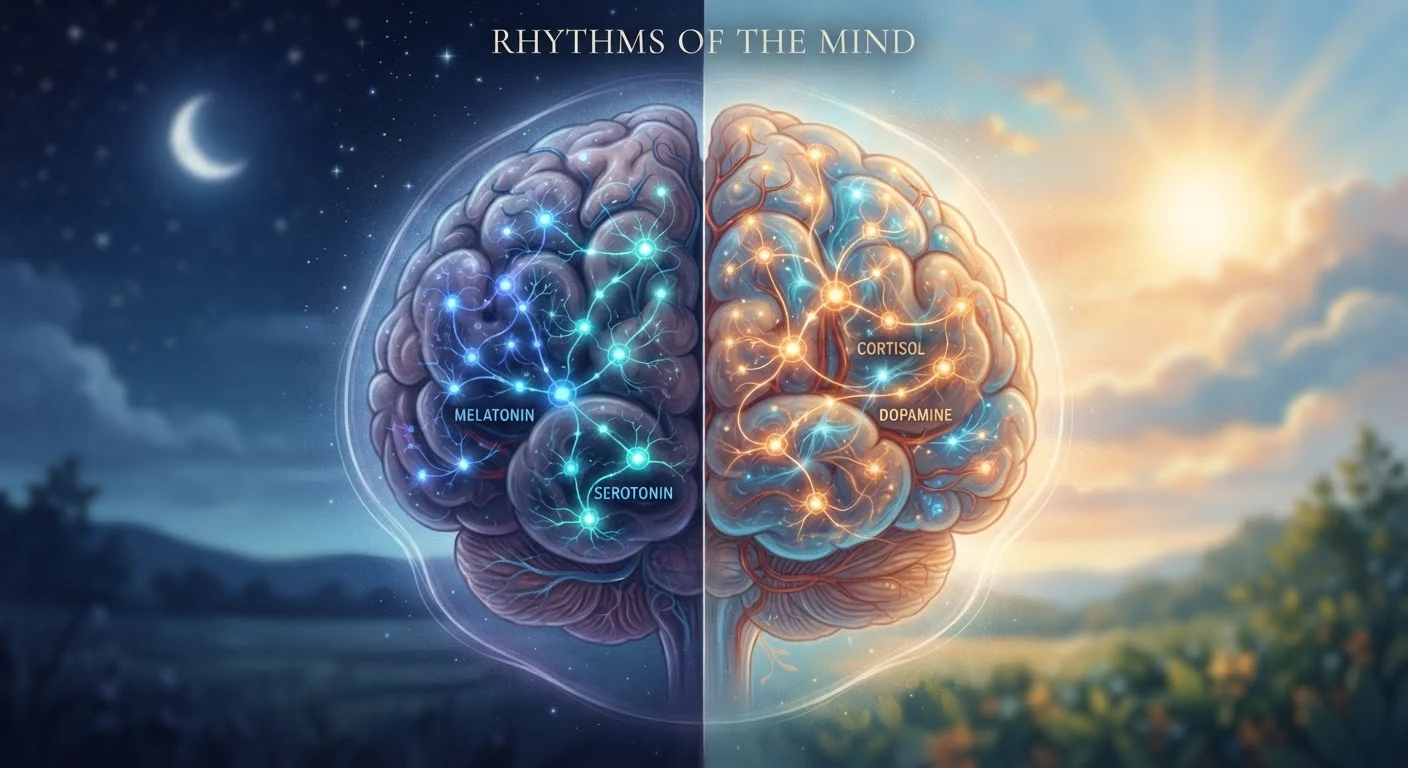
The Three Chemicals in Charge of Your Sleep
Your sleep isn't simply a passive state your body drifts into at the end of a long day. It's actively orchestrated by three key biological chemicals — melatonin, cortisol, and adenosine — each playing a distinct role in when you feel drowsy, how deeply you sleep, and how readily you wake. Understanding what each one does, and how they interact, is the foundation of understanding sleep itself.
Melatonin
A hormone produced by the pineal gland in response to darkness. It signals to the body that it is time to sleep but does not directly cause sleep — it shifts the body's internal clock toward rest.
Cortisol
A hormone released by the adrenal glands that promotes alertness and energy. Its levels peak shortly before and after waking, helping the body transition from sleep to active functioning.
Adenosine
A naturally occurring chemical that accumulates in the brain the longer you stay awake. Rising adenosine levels create the feeling of 'sleep pressure' — the mounting urge to sleep.
Circadian Rhythm
The body's internal 24-hour biological clock, which regulates the timing of sleep, wakefulness, hormone release, and many other physiological processes.
Homeostatic Sleep Pressure
The biological drive to sleep that builds proportionally with time spent awake. It is largely driven by adenosine accumulation and dissipates during sleep.
Pineal Gland
A small gland in the brain that synthesizes and secretes melatonin. Its output is tightly regulated by light exposure, increasing production in darkness and suppressing it in bright light.
To see how these chemicals fit into the larger picture of sleep regulation, see our guide to circadian rhythm and sleep pressure.
Melatonin: Your Body's Darkness Signal
Melatonin is often called the "sleep hormone," but that label is a little misleading. It doesn't cause sleep directly — it acts as a timing signal, communicating to the brain and body that darkness has arrived and sleep should begin. Produced by the pineal gland, melatonin secretion is tightly suppressed by light, especially short-wavelength (blue) light. As evening light fades, melatonin levels begin climbing roughly 90 minutes before your habitual bedtime.
This is why artificial light in the evening — from screens, overhead lighting, or devices — can significantly delay melatonin release and push your sleep window later. Light exposure in the morning, by contrast, helps anchor your melatonin rhythm so you feel sleepy at an appropriate hour each night. If you want to understand how to align your environment with melatonin's timing, our sleep environment checklist covers light management in practical terms.
Cortisol: The Wake-Up Architect
Cortisol is often associated with stress, but in the context of sleep it plays an essential and constructive role. Following a healthy night of sleep, cortisol levels surge in what researchers call the cortisol awakening response (CAR) — a sharp rise peaking about 30–45 minutes after waking. This surge helps mobilize energy, sharpen alertness, and prime the immune system for the day ahead.
These Are Signals, Not Simple On/Off Switches
Melatonin, cortisol, and adenosine don't work in isolation — they interact with each other and with dozens of other biological signals. Understanding what each does can help you make smarter decisions about light, timing, and daily habits, but individual variation is real. If you have persistent sleep difficulties, a qualified healthcare professional can help assess whether an underlying issue is at play.
Throughout the day, cortisol gradually declines. By evening, it should be at its lowest — which is one of the biological reasons the body becomes receptive to sleep. Chronic stress, irregular schedules, or poor sleep can disrupt this curve, keeping cortisol elevated into the night and making it difficult to wind down. This creates a self-reinforcing cycle: poor sleep raises evening cortisol, and high evening cortisol makes sleep harder. Understanding this interaction helps explain why stress management and sleep health are deeply linked.
Adenosine: The Pressure That Builds All Day
While melatonin tracks the time of day and cortisol tracks the body's arousal needs, adenosine tracks something different: how long you've been awake. Adenosine is a byproduct of neural activity that steadily accumulates in the brain during wakefulness. As it builds, it binds to receptors that promote sleepiness — creating what scientists call homeostatic sleep pressure.
| Primary sleepiness signal | Adenosine (builds with wakefulness) |
| Melatonin onset | Typically 1–2 hours before habitual bedtime (American Academy of Sleep Medicine) |
| Cortisol peak timing | 30–45 minutes after waking (CAR) (Sleep Medicine Reviews) |
| Caffeine's mechanism | Blocks adenosine receptors, masking sleep pressure |
| Light's effect on melatonin | Blue-wavelength light suppresses production within minutes (Journal of Clinical Endocrinology & Metabolism) |
| Adenosine clearance | Occurs primarily during non-REM slow-wave sleep |
Sleep — particularly deep, slow-wave sleep — clears adenosine from the brain, which is why a full night of quality sleep leaves you feeling restored. Caffeine works by blocking adenosine receptors, temporarily masking the feeling of sleepiness without actually reducing the accumulated debt. This is why a large late-afternoon coffee can leave you feeling alert but then hit a steep energy crash once the caffeine metabolizes. For a deeper look at what happens during the sleep stages when adenosine clears, see our overview of the sleep cycle.
How These Three Work Together — and What Disrupts Them
In a well-functioning sleep system, these three signals work in a coordinated rhythm. Adenosine climbs steadily through the day. As evening arrives, melatonin rises in response to dim light. Cortisol settles to its nighttime low. Together, these converging signals create the ideal biological window for sleep onset. After a full night, adenosine clears, melatonin fades as morning light appears, and cortisol surges — completing the cycle.
Common disruptions — late-night light exposure, irregular wake times, high daily stress, or shift work — can desynchronize these signals, making it harder to fall asleep, stay asleep, or feel refreshed after waking. Learning how sleep cycle timing interacts with these hormones can help you make more informed choices about your nightly routine.
This article is for informational purposes only and is not a substitute for professional medical advice. If you experience persistent sleep difficulties, consult a qualified healthcare provider.
The content on this site is for informational purposes only and is not a substitute for professional advice. Always consult a qualified professional for guidance specific to your situation.