

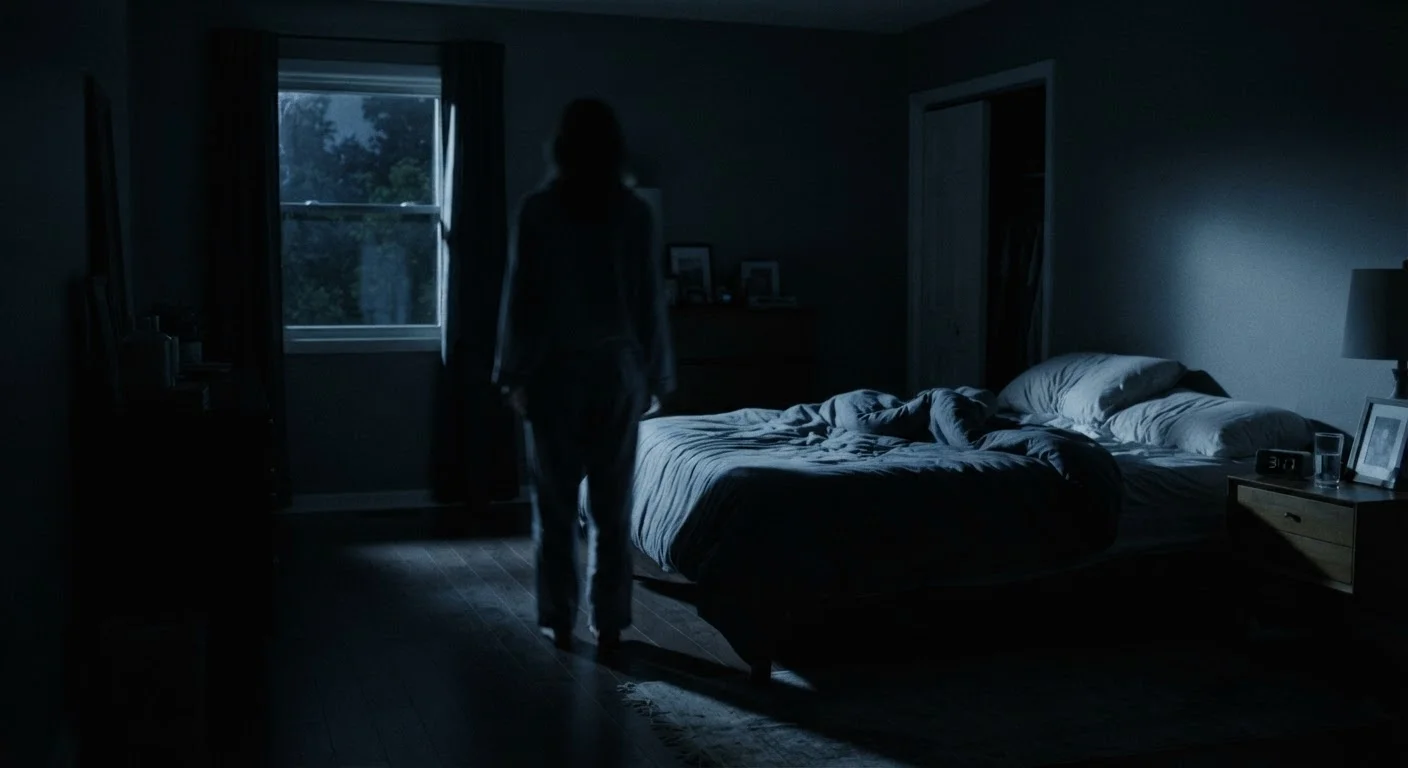
What Are Parasomnias?
Parasomnias are a category of sleep disorders characterized by abnormal behaviors, movements, emotions, perceptions, or dreams that occur during sleep or the transitions between sleep and wakefulness. Unlike insomnia or sleep apnea — which primarily affect the quantity or quality of sleep — parasomnias involve what happens during sleep itself. For a broader grounding in how sleep disorders are classified, see Sleep Disorders Explained.
Most parasomnias arise from incomplete transitions between sleep stages. Understanding those stages is key: Inside the Sleep Cycle explains how the brain moves through NREM and REM sleep each night. When those transitions stall or misfire, behaviors that normally stay suppressed can emerge.
| Definition | Abnormal behaviors or experiences during sleep or sleep-wake transitions |
| Primary sleep stages affected | Deep NREM sleep and REM sleep |
| Sleepwalking prevalence (children) | Estimated 1–15% of children experience at least occasional episodes (American Academy of Sleep Medicine) |
| Night terrors typical onset age | Most common between ages 4–12; often resolves by adolescence |
| RBD association | New-onset RBD in older adults may be linked to neurodegenerative conditions (Sleep Medicine Reviews) |
| When to see a specialist | Frequent episodes, injury risk, significant daytime impairment, or new adult onset |
Common Types: Sleepwalking, Night Terrors, and More
Parasomnias fall into two broad families based on which sleep stage they emerge from.
NREM-Related Parasomnias (Disorders of Arousal)
These occur during the deeper stages of non-REM sleep, typically in the first third of the night. The brain is partially aroused but not fully awake, producing a confusional state.
- Sleepwalking (Somnambulism): The person walks or performs routine behaviors — opening doors, rearranging objects — with eyes open but a blank expression, and has no memory of the episode. It is most common in children but can persist into adulthood.
- Sleep Terrors (Night Terrors): Characterized by abrupt arousal with a piercing scream, intense fear, rapid heart rate, and sweating. Unlike nightmares, the person is difficult to console and recalls little to nothing afterward. Sleep terrors are distinct from nightmares and are particularly common in children ages 4–12.
- Confusional Arousals: The individual appears awake but is mentally confused, responds slowly, and may say or do strange things. Episodes typically resolve on their own within minutes.
- Sleep-Related Eating Disorder (SRED): Recurrent episodes of eating during partial arousals, often involving unusual food combinations; the person is typically unaware during and afterward.
REM-Related Parasomnias
These emerge from REM sleep, when the brain is highly active and vivid dreaming occurs.
- REM Sleep Behavior Disorder (RBD): During REM sleep, the normal muscle paralysis (atonia) that prevents acting out dreams fails. People may shout, kick, punch, or leap from bed while dreaming. RBD is more common in older adults and, importantly, may be an early marker of certain neurological conditions — making professional evaluation especially important.
- Nightmare Disorder: Recurrent, vivid, distressing dreams that consistently disrupt sleep and cause significant daytime distress or avoidance of sleep. Distinct from the occasional bad dream everyone experiences.
- Sleep Paralysis: A brief inability to move or speak when falling asleep or waking, sometimes accompanied by hallucinations. Episodes are generally harmless but can be frightening.
Recognizing Patterns and Knowing When to Seek Help
Occasional isolated episodes — a single night terror in a stressed child, one episode of sleep paralysis in an adult — are generally not cause for alarm. However, certain patterns warrant professional evaluation:
- Episodes are frequent, escalating, or involve injury risk (sleepwalking near stairs, acting out RBD dreams violently)
- The behavior causes significant distress to the individual or household members
- Daytime functioning is impaired due to sleep disruption
- A new onset of RBD in a middle-aged or older adult, given its potential neurological associations
- Episodes in adults that appear for the first time without an obvious trigger
A sleep specialist can conduct a clinical interview and, when needed, a sleep study (polysomnography) to characterize the behavior and rule out other contributing conditions. Many parasomnias are also linked to sleep deprivation, stress, medications, or other sleep disorders — factors a clinician can assess. You can learn which sleep disorders commonly coexist with parasomnias in our article on the most common sleep disorders in American adults.
This article is for general informational purposes only and does not constitute medical advice. If you or someone you care for is experiencing sleep behaviors that cause concern, please consult a qualified healthcare professional.
The content on this site is for informational purposes only and is not a substitute for professional advice. Always consult a qualified professional for guidance specific to your situation.