

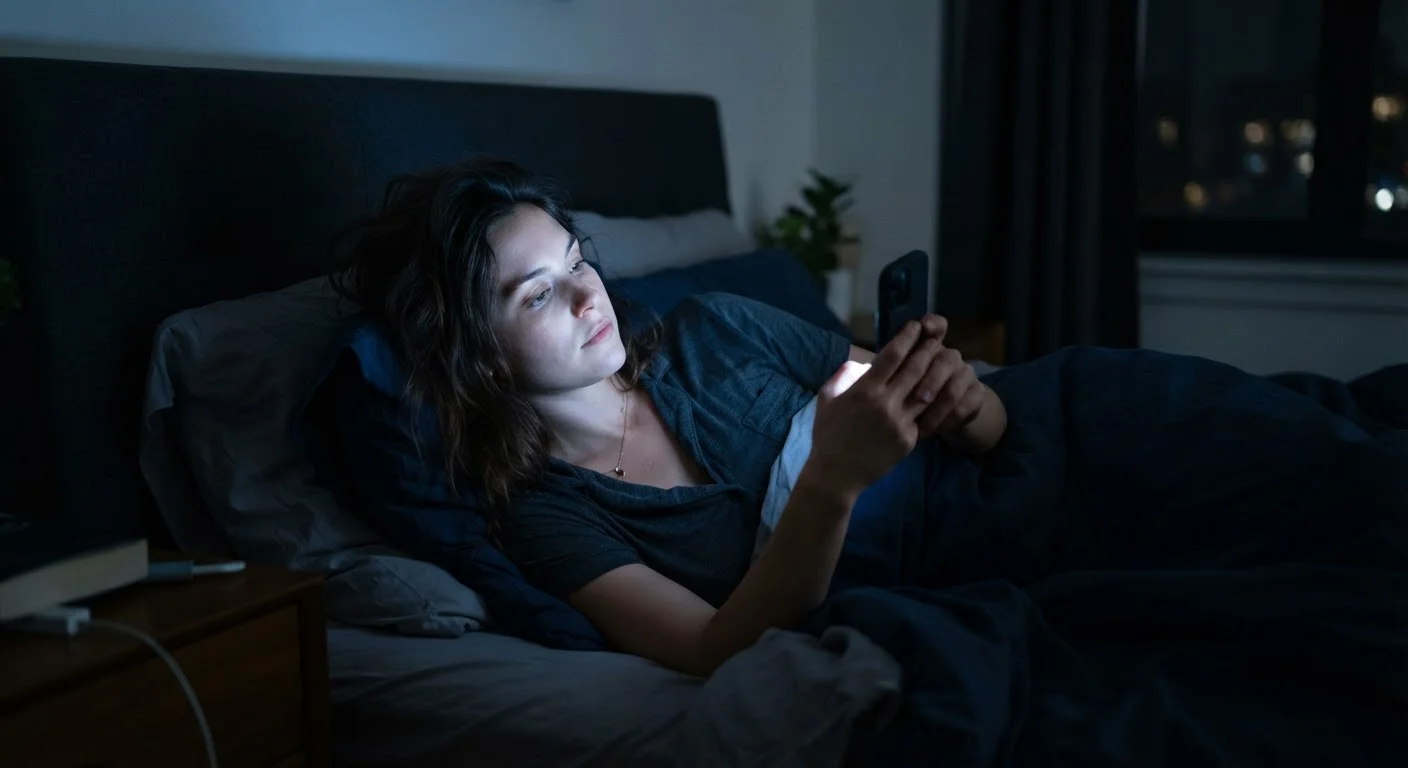
More Than Blue Light: The Full Picture
Blue light has become the shorthand villain in conversations about screens and sleep — and while the science behind it is real, focusing only on light wavelength misses a significant part of the story. Understanding what pre-sleep screen use actually does to your body requires looking at three distinct mechanisms working simultaneously.
First, there is photic suppression of melatonin. Your brain's circadian clock reads light intensity and color as cues about time of day. Bright, blue-enriched light in the evening tells the suprachiasmatic nucleus that it is still daytime, delaying the nightly rise in melatonin — the hormone that signals the body to prepare for sleep.
Second, there is psychological and cognitive arousal. Scrolling social media, reading breaking news, or playing a competitive mobile game keeps your prefrontal cortex engaged. This arousal state is independent of light: it can delay sleep onset even in complete darkness with no screen use at all, simply because the brain remains activated by stimulating content.
Third, there is emotional arousal. Content that provokes anxiety, excitement, or social comparison — common features of social media feeds — triggers mild stress responses that elevate cortisol and suppress the parasympathetic nervous system activity needed for sleep onset.
For a broader look at how these factors fit into overall evening screen habits and sleep disruption, the interplay of all three matters more than any single variable.
Individual Sensitivity Varies Considerably
Not everyone responds to evening light and stimulating content in the same way. People who are naturally 'evening types' (late chronotypes) may experience different melatonin timing patterns than morning types. Older adults generally produce less melatonin overall, which changes how much evening light disruption matters for them. If you suspect your sleep difficulties have a deeper biological basis, speak with a sleep specialist rather than relying solely on behavioral adjustments.
What the Research Actually Shows
Studies examining pre-sleep screen use have found consistent associations between evening device use and later sleep onset, reduced total sleep time, and lower subjective sleep quality. A frequently cited finding from Harvard's division of sleep medicine demonstrated that reading on a light-emitting device before bed — compared with reading a printed book — suppressed melatonin by approximately 55%, delayed melatonin onset by about 90 minutes, and shifted circadian timing. Participants also reported feeling less alert the following morning despite sleeping the same number of hours.
Importantly, research also shows that content type matters independently of light. Studies involving emotionally neutral content at reduced brightness cause less disruption than emotionally charged content at the same brightness. This confirms that the cognitive and emotional stimulation from screens are biologically meaningful, not just anecdotal complaints.
~55%
Melatonin suppression from light-emitting device use before bed
Harvard sleep research comparing e-reader use versus printed books found melatonin was suppressed by approximately 55% in the e-reader group.
90 min
Delay in melatonin onset from pre-sleep device use
The same Harvard study found that circadian melatonin timing was shifted by roughly 90 minutes in participants who used light-emitting devices before sleep.
70%+
U.S. adults who use a screen within an hour of bedtime
National Sleep Foundation survey data have consistently found that a majority of American adults report using electronic devices in the hour before bed.
It is worth noting that most studies use relatively short observation periods and controlled conditions that may not perfectly reflect real-world device use. The evidence consistently points toward harm from habitual evening screen use, but the exact dose-response relationship — how much use causes how much disruption — is still being refined. Individual factors such as chronotype (whether you naturally lean toward morning or evening alertness) also influence susceptibility.
To understand the broader science of how your circadian biology works, see the Sleep Science hub.
Practical Strategies Backed by Evidence
Knowing the biology points toward more nuanced solutions than simply buying blue-light glasses. The following approaches are grounded in current evidence and are practical enough to fit into most adults' lives.
- Reduce screen brightness aggressively in the evening. Dimming your display is more effective than shifting color temperature alone. Lower intensity means fewer photons reaching your retina regardless of wavelength.
- Prioritize content type over device type. If you choose to use screens close to bedtime, passive, low-stimulation content — such as a calm documentary at moderate volume — is less disruptive than interactive or emotionally charged material.
- Create a consistent wind-down window. Establishing a 30–60 minute screen-free period before your target sleep time allows melatonin to rise and arousal states to settle. This is one of the most evidence-supported behavioral changes in sleep hygiene practice.
- Move devices out of the sleeping space. Phones on a nightstand create temptation to check notifications during the night, which fragments sleep architecture even after initial sleep onset.
If you want a structured approach to auditing your bedroom and evening habits, the pre-sleep environment checklist covers light, temperature, noise, and screen use together. For a step-by-step wind-down plan, see Your Evening Routine, Rebuilt for Better Sleep.
This article is for general informational purposes only and does not constitute medical advice. If you experience persistent sleep difficulties, please consult a qualified healthcare professional.
Frequently Asked Questions
Most sleep researchers suggest stopping screen use 30 to 60 minutes before bed as a reasonable guideline. The more stimulating the content — news, social media, intense video — the earlier the cutoff may need to be. There is no single universal answer, since individual sensitivity varies.
Evidence for blue light glasses specifically improving sleep is mixed and limited. Night mode and warm-color display settings reduce short-wavelength light output, which may help modestly, but they do not address the cognitive stimulation caused by engaging content. They are a partial measure, not a complete solution.
Both can interfere with sleep, but smartphones and tablets are typically held closer to the face, delivering more intense light exposure to the eyes. Phones also deliver interactive, socially stimulating content that keeps the brain more alert than passive TV viewing in many cases.
Children and adolescents are considered more sensitive to evening light and stimulating content than adults, and their sleep needs are greater. Parents and caregivers should consult a pediatrician for age-appropriate guidance on screen time limits and bedtime routines.
Chronically poor sleep is linked to a range of health risks including cardiovascular disease, metabolic dysfunction, and mood disorders. While screens alone are one factor among many, habitual sleep disruption from any cause warrants attention. Talk with a healthcare provider if poor sleep is a persistent problem.
The content on this site is for informational purposes only and is not a substitute for professional advice. Always consult a qualified professional for guidance specific to your situation.