

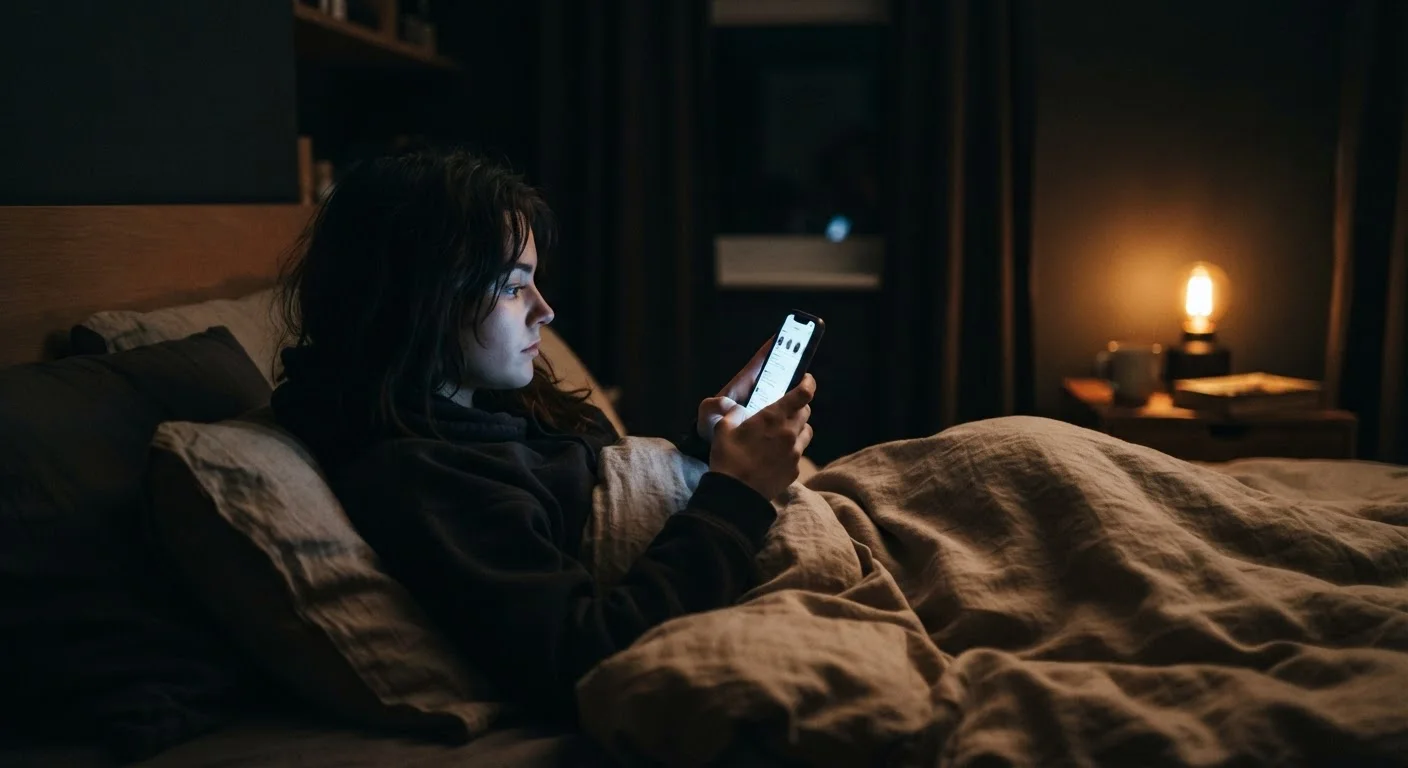
Why Screens and Sleep Are Genuinely at Odds
The relationship between evening screen use and poor sleep is real — but it's more layered than the blue-light headlines suggest. Yes, short-wavelength blue light emitted by phones, tablets, and televisions can suppress melatonin, the hormone that signals the body to prepare for sleep. Research published in sleep medicine literature consistently supports this mechanism. But light is only one of several pathways through which screens interfere with the transition to rest.
The second major factor is cognitive arousal. Screens deliver a near-constant stream of novel information, social feedback, and emotionally engaging content. Each notification, scroll, or plot development keeps the brain's alerting systems active — the opposite of the quiet, deactivated state that precedes healthy sleep onset. For a deeper look at the full biological picture, see what screen use actually does to your sleep biology.
A third, often overlooked factor is time displacement. Screens extend wakefulness, not because they are inherently stimulating, but because they make time pass invisibly. Sleep suffers not only in quality but in total duration.
Common Mistakes That Make Evening Screens More Disruptive
Understanding the science is useful. But most people lose sleep not because of abstract mechanisms — they lose sleep because of specific, repeatable habits that compound night after night. The mistakes below are the most common ones, along with the reasons they persist and how to address them.
Using a smartphone in bed as the primary way to wind down for the night.
Why it happens: Reaching for a phone feels effortless and familiar — it's the path of least resistance after a demanding day. Most people genuinely believe they are relaxing when scrolling.
Relying on 'Night Mode' or blue-light filters as a complete solution to screen-related sleep disruption.
Why it happens: Blue light suppression is well publicized, so enabling Night Mode feels like the problem is solved — when the research picture is considerably more complicated.
Watching high-intensity content — thrillers, news, competitive gaming — in the hour before bed.
Why it happens: Stimulating content is designed to hold attention, and the transition from active day to passive viewing feels like rest even when the nervous system remains activated.
Ignoring the role of screens in displacing sleep time entirely.
Why it happens: "Just one more episode" or an open-ended social media scroll regularly erodes the actual hours available for sleep without the person registering it as a deliberate choice.
Assuming the effects of evening screen use are immediate and obvious, and dismissing them when sleep seems unaffected.
Why it happens: Sleep disruption from screens is cumulative and subtle — people often adapt to mild chronic sleep deprivation and misjudge their own sleep quality.
If you want to audit your full evening environment — not just screen habits — the pre-sleep environment checklist covers light, temperature, noise, and other conditions that affect sleep quality.
Practical Alternatives That Actually Work
Removing screens from the pre-sleep window is only sustainable if something replaces them. The most effective substitutes share a common quality: they lower physiological and cognitive arousal rather than sustaining it.
- Physical reading — fiction in particular tends to absorb attention gently without the algorithmic push of digital feeds.
- Low-stimulation audio — podcasts on calm topics, audiobooks, or ambient sound can ease the mind toward sleep without screen light.
- Light stretching or breathing exercises — slow, deliberate movement or diaphragmatic breathing activates the parasympathetic nervous system, signaling safety and readiness for rest.
- Journaling — offloading worries or tomorrow's tasks onto paper reduces the mental rehearsal loop that often keeps people awake.
This Is General Information, Not Medical Advice
The habits described here are grounded in sleep science and intended for general educational purposes. If you regularly struggle to fall or stay asleep, or feel unrefreshed despite adequate time in bed, consult a qualified healthcare professional. Sleep disorders require proper clinical evaluation.
For readers who regularly experience racing thoughts at bedtime, the before-bed checklist for nights when your mind won't quiet down offers a structured approach to settling an overactive mind.
Building these habits into a consistent routine amplifies their effect. A deliberate wind-down sequence — ideally beginning 60 to 90 minutes before bed — trains the brain to recognize behavioral cues for sleep. The guide to rebuilding your evening routine walks through this process step by step.
This article is for general informational and educational purposes only and is not a substitute for professional medical advice, diagnosis, or treatment. If you have concerns about your sleep health, consult a qualified healthcare provider.
The content on this site is for informational purposes only and is not a substitute for professional advice. Always consult a qualified professional for guidance specific to your situation.