

Why the Term "Sleep Hygiene" Exists
The word hygiene in everyday language usually means cleanliness — so attaching it to sleep can feel odd. But when sleep researchers coined the phrase, they were borrowing the broader public health meaning: a set of practices that maintain health and prevent problems.
Sleep hygiene emerged as a formal concept in the late 1970s through the work of sleep medicine pioneers who recognized that behaviors around sleep were as important as the biology of it. The framework gave clinicians a practical vocabulary for addressing poor sleep without immediately turning to medication.
Today, sleep hygiene is a central topic in sleep science and a starting point for anyone experiencing inconsistent or unrefreshing rest. Understanding what it actually covers — not just the shorthand version — helps readers apply it more effectively. For a deeper introduction, Sleep Hygiene From the Ground Up provides a comprehensive primer on the core habits.
The Core Dimensions of Sleep Hygiene
Sleep hygiene is best understood as three overlapping categories: timing and consistency, behavioral habits, and sleep environment. Each dimension influences a different biological mechanism.
Timing and Consistency
The body's circadian clock — a roughly 24-hour internal rhythm — governs when you feel sleepy and when you feel alert. Going to bed and waking at consistent times strengthens this rhythm. Irregular schedules, including dramatic weekend sleep shifts sometimes called "social jet lag," disrupt circadian signaling and can leave people perpetually groggy.
Behavioral Habits
Certain everyday behaviors intersect directly with sleep biology. Caffeine, for example, blocks adenosine receptors — adenosine is the chemical that builds sleep pressure across the day. Because caffeine has a half-life of roughly five to seven hours, an afternoon coffee can still be active in the system at bedtime. Alcohol, while sedating at first, suppresses REM sleep and fragments rest in the second half of the night. Exercise generally benefits sleep, though vigorous workouts close to bedtime may delay sleep onset in some people.
Alcohol and Sleep: A Common Misconception
Many people report that alcohol helps them fall asleep faster — and it can, initially. However, alcohol is metabolized during the night and is associated with increased sleep fragmentation, more frequent awakenings, and suppression of REM sleep. The net effect on sleep quality is generally negative, even when the sedating effect feels helpful. Sleep researchers consider limiting alcohol close to bedtime a standard hygiene recommendation.
Sleep Environment
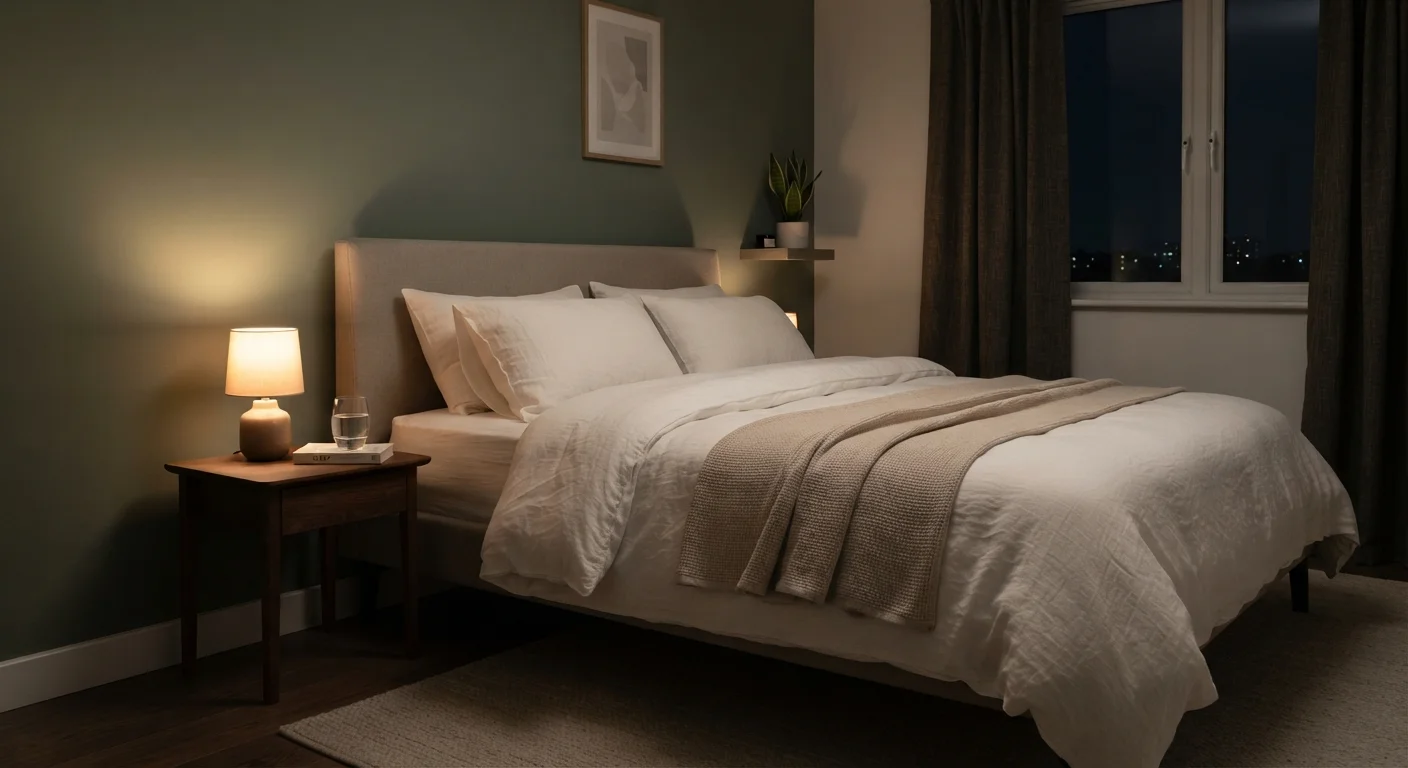
Light, temperature, and noise each influence sleep through distinct pathways. Light — particularly short-wavelength blue light from screens — suppresses melatonin production and delays sleep timing. A cooler bedroom (typically around 65–68°F is often cited in sleep research) supports the drop in core body temperature that accompanies sleep onset. For a detailed breakdown, Building a Sleep Environment That Works With Your Biology walks through the environmental factors backed by research.
What Sleep Hygiene Does Not Cover
Sleep hygiene is a behavioral framework, not a diagnostic one. It addresses habits and conditions that support normal sleep — it does not treat sleep disorders such as sleep apnea, restless legs syndrome, or clinical insomnia. Applying hygiene practices when a disorder is present may help at the margins, but is not a substitute for clinical evaluation.
It's also worth noting that not every wellness habit marketed as sleep-supporting is backed by strong evidence. The science of healthy habits is more nuanced than it often appears, and the same applies to sleep. Some widely repeated sleep tips have limited or mixed research support — distinguishing evidence-based practices from popular lore is part of using the framework well.
For a closer look at the behaviors most likely to quietly undermine sleep over time, Habits That Quietly Erode Sleep Quality Over Time covers the patterns sleep researchers flag most often.
“Sleep hygiene is not a cure for insomnia, but it is a necessary foundation. Without addressing the behaviors that undermine sleep, other interventions are working against a current.”
— Matthew Walker, Professor of Neuroscience and Psychology, University of California, Berkeley; author of research on sleep science
This article is for general informational purposes only and does not constitute medical advice. If you have concerns about your sleep or suspect a sleep disorder, please consult a qualified healthcare professional.
Frequently Asked Questions
A bedtime routine is one part of sleep hygiene, but the concept is broader. Sleep hygiene also includes daytime behaviors like caffeine timing, exercise habits, and light exposure — not just what you do in the hour before bed.
Most people notice improvements within one to three weeks of consistently applying evidence-based habits. Results vary depending on individual biology, underlying conditions, and how many changes are made at once.
For mild, situational sleep difficulties, improved hygiene can make a meaningful difference. However, chronic insomnia is a clinical condition and typically requires professional evaluation — often through CBT-I rather than hygiene changes alone.
Research consistently shows most adults need seven to nine hours for optimal cognitive and physical function, even when they don't feel subjectively impaired. Feeling fine on less sleep may reflect adaptation rather than genuine sufficiency.
Sleep researchers frequently highlight consistent sleep and wake times as foundational, since they anchor the body's internal circadian clock. That said, hygiene is most effective when practiced as a set of interconnected behaviors rather than relying on any single change.
The content on this site is for informational purposes only and is not a substitute for professional advice. Always consult a qualified professional for guidance specific to your situation.