

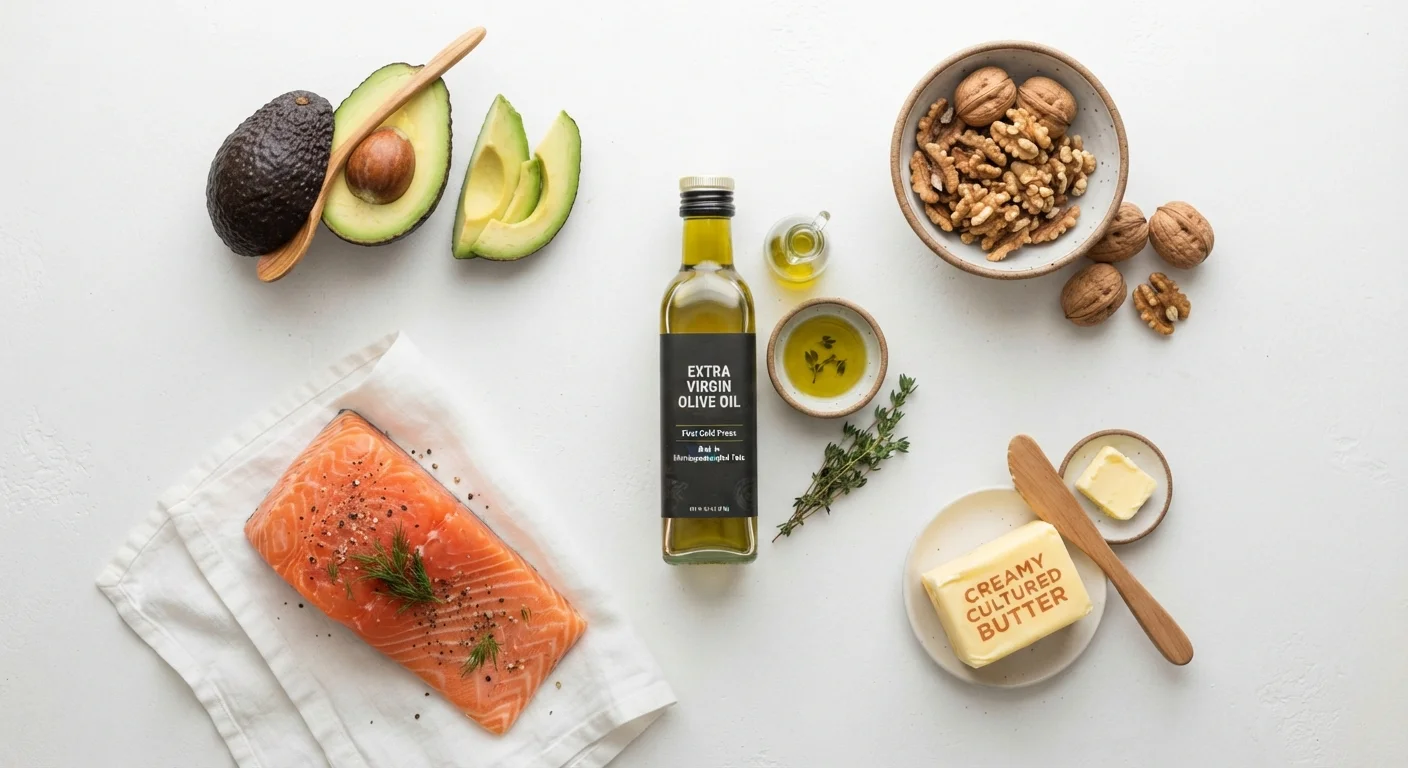
Why Fat Type Matters More Than Fat Amount
For decades, dietary fat carried a bad reputation — but nutrition science has shifted the conversation from how much fat you eat to what kinds. Fat is a macronutrient your body genuinely needs: it fuels cells, helps absorb fat-soluble vitamins, and supports hormone production. For a fuller look at what fat actually does in the body, see Dietary Fat Is Not the Enemy.
The key distinction lies in the chemical structure of fat molecules. The arrangement of carbon and hydrogen atoms determines whether a fat is solid or liquid at room temperature, how the body processes it, and how it influences markers like blood cholesterol. Three broad categories — saturated, unsaturated, and trans fats — behave quite differently in the body, and nutrition guidance treats each one accordingly.
Saturated fat
A type of dietary fat whose carbon chains are fully bonded with hydrogen atoms. Saturated fats are solid at room temperature and found primarily in animal products and some tropical oils.
Unsaturated fat
A dietary fat containing one or more double bonds between carbon atoms. Unsaturated fats are typically liquid at room temperature and include both monounsaturated and polyunsaturated varieties.
Trans fat
A fat formed when liquid vegetable oils are industrially hydrogenated to become more solid. Industrial trans fats have been largely removed from the U.S. food supply due to cardiovascular concerns.
LDL cholesterol
Low-density lipoprotein, often called "bad" cholesterol. High LDL levels are associated with an increased risk of arterial plaque buildup in cardiovascular research.
HDL cholesterol
High-density lipoprotein, often called "good" cholesterol. HDL helps transport cholesterol away from the arteries, and higher levels are generally considered favorable.
Omega-3 fatty acids
A family of polyunsaturated fats essential to the diet because the body cannot make them. Found in fatty fish, flaxseed, and walnuts; associated with anti-inflammatory effects in research.
Partially hydrogenated oil (PHO)
An industrially processed oil created by adding hydrogen to vegetable oil, producing trans fats. PHOs were the primary source of industrial trans fats in the U.S. food supply.
Saturated Fats: The Basics
Saturated fats have carbon chains fully "saturated" with hydrogen atoms, which makes them solid at room temperature. Common food sources include:
- Fatty cuts of beef, pork, and lamb
- Full-fat dairy products (butter, cheese, whole milk)
- Coconut oil and palm oil
- Processed meats like sausage and bacon
Current U.S. dietary guidelines suggest limiting saturated fat to less than 10% of daily calories, because higher intakes are associated with elevated LDL (low-density lipoprotein) cholesterol in much of the research literature. That said, the relationship between saturated fat and cardiovascular health is still a topic of ongoing scientific discussion — not all saturated fats appear to behave identically, and the overall dietary pattern matters.
If you want to learn how saturated fat appears on a food label, Reading a Nutrition Label Through a Macronutrient Lens walks you through every fat line item.
Unsaturated Fats: Monounsaturated and Polyunsaturated
Unsaturated fats contain at least one double bond between carbon atoms, which creates a "kink" in the chain and keeps these fats liquid at room temperature. They divide into two subcategories:
Monounsaturated Fats (MUFAs)
One double bond. Found in olive oil, avocados, peanut butter, and most tree nuts. MUFAs are a primary feature of Mediterranean-style eating patterns, which are broadly associated with favorable cardiovascular outcomes in observational research.
Polyunsaturated Fats (PUFAs)
Two or more double bonds. This group includes the well-known omega-3 and omega-6 fatty acids — both considered essential because the body cannot synthesize them on its own. Omega-3s appear in fatty fish (salmon, sardines, mackerel), flaxseed, and walnuts. Omega-6s are abundant in vegetable oils like soybean and sunflower oil. Both play roles in inflammation regulation and cell membrane structure.
Unsaturated fats are generally the type nutrition guidance encourages in place of saturated fat, though portion size still matters since all fats are calorie-dense. For more on fat-soluble nutrient interactions, see The Fat-Soluble vs. Water-Soluble Vitamin Divide, Explained.
Trans Fats: The Clearest Guidance
Trans fats fall into two types. Naturally occurring trans fats exist in small amounts in meat and dairy from ruminant animals and are not considered a significant health concern at typical dietary levels. Industrial trans fats — also called partially hydrogenated oils (PHOs) — were manufactured by adding hydrogen to liquid vegetable oils to extend shelf life and create solid cooking fats.
Decades of research linked industrial trans fats to increases in LDL cholesterol and decreases in HDL (high-density lipoprotein) cholesterol, a particularly unfavorable combination. The U.S. Food and Drug Administration removed PHOs from the list of generally recognized as safe (GRAS) ingredients, and their use in the U.S. food supply has been largely phased out.
On a nutrition label, a product showing 0g trans fat per serving can still contain a trace amount (up to 0.5g) under current rounding rules — checking the ingredient list for "partially hydrogenated oil" remains the most reliable check.
This article is for informational purposes only and is not medical advice. For personal dietary questions, especially if you have a health condition, consult a registered dietitian or qualified healthcare provider.
The content on this site is for informational purposes only and is not a substitute for professional advice. Always consult a qualified professional for guidance specific to your situation.