

Option A
Complete Proteins
The all-in-one amino acid package.
Best for: People who want a single food source to cover all nine essential amino acids in one serving.
Option B
Incomplete Proteins
Partial amino acid profiles that pair well with others.
Best for: People building varied, plant-forward diets who combine foods across the day to meet their amino acid needs.
What Makes a Protein 'Complete' or 'Incomplete'?
Proteins are built from chains of molecules called amino acids. Of the 20 amino acids the human body uses, nine are considered essential — meaning your body cannot synthesize them in adequate amounts, so they must come from food. Those nine are: histidine, isoleucine, leucine, lysine, methionine, phenylalanine, threonine, tryptophan, and valine.
A complete protein is any food source that contains all nine essential amino acids in amounts sufficient to support normal body functions. A incomplete protein is one that is low in or missing at least one of those nine. The distinction is useful for planning, but it does not make one category inherently superior to the other — both contribute meaningfully to a healthy diet.
For a deeper look at why your body depends on dietary protein in the first place, see how protein supports everything from muscle repair to hormone production.
Where Each Type Shows Up in Everyday Foods
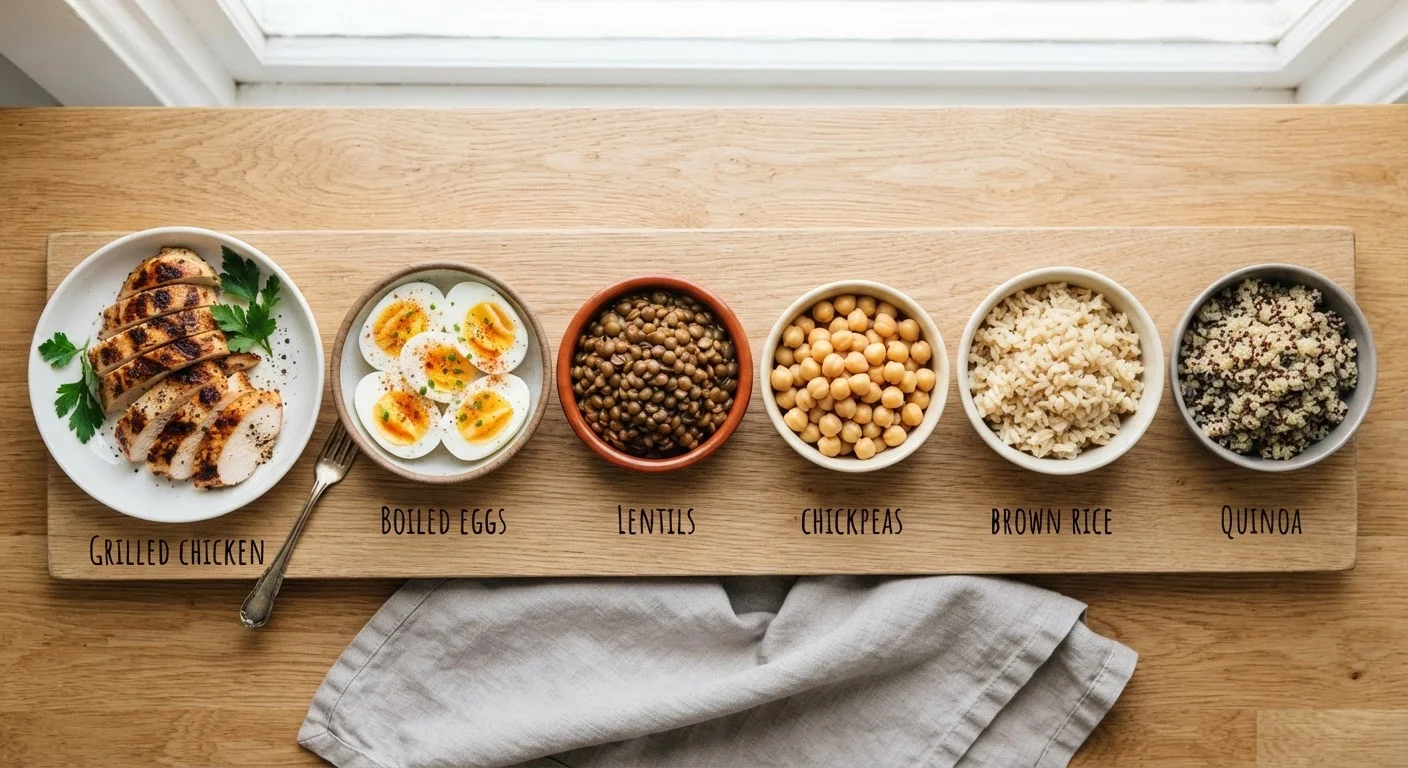
Complete protein sources are predominantly animal-based. Eggs, chicken, beef, pork, fish, seafood, dairy products (milk, yogurt, cheese), and whey all provide the full essential amino acid spectrum. Two notable plant-based exceptions are soy (including tofu, tempeh, and edamame) and quinoa, both of which qualify as complete proteins.
Incomplete protein sources include most other plant foods: beans, lentils, chickpeas, peanuts, almonds, sunflower seeds, whole grains like brown rice and oats, and vegetables such as spinach and broccoli. These foods are not nutritional liabilities — they often deliver fiber, antioxidants, and micronutrients that animal proteins do not provide. They simply need to be eaten alongside other foods that supply their missing amino acids.
| Criterion | Complete Proteins | Incomplete Proteins |
|---|---|---|
| Essential amino acids | All 9 present | One or more missing or low |
| Primary food sources | Meat, fish, eggs, dairy, soy, quinoa | Beans, lentils, grains, nuts, seeds |
| Plant-based options | Soy and quinoa only | Wide variety available |
| Fiber content | Generally low to none | Often high |
| Pairing requirement | None — self-sufficient | Pair across the day for full profile |
| Diet suitability | Omnivore, pescatarian, vegetarian (dairy/eggs) | Vegan, vegetarian, and omnivore diets |
Complementary Proteins: Why Mixing Sources Works
For decades, nutrition guidance emphasized pairing specific incomplete proteins at the same meal — rice and beans being the classic example — to create a complete amino acid profile. Current research, including positions held by major dietetic organizations, has clarified that the body maintains a short-term amino acid pool, so precise meal-by-meal pairing is not necessary. What matters is consuming a sufficient variety of plant proteins over the course of each day.
Common complementary pairings that collectively cover all essential amino acids include:
- Legumes (beans, lentils) with whole grains (rice, oats, whole-wheat bread)
- Peanut butter with whole-grain bread
- Hummus with pita or crackers
- Tofu stir-fry over brown rice
If you are looking for practical, food-first strategies for reaching adequate protein intake without centering every meal around meat, our guide to protein from diverse everyday sources walks through exactly that.
This article is for general informational purposes only and is not a substitute for personalized medical or dietary advice. Consult a qualified healthcare professional or registered dietitian for guidance tailored to your individual health needs.
The content on this site is for informational purposes only and is not a substitute for professional advice. Always consult a qualified professional for guidance specific to your situation.