

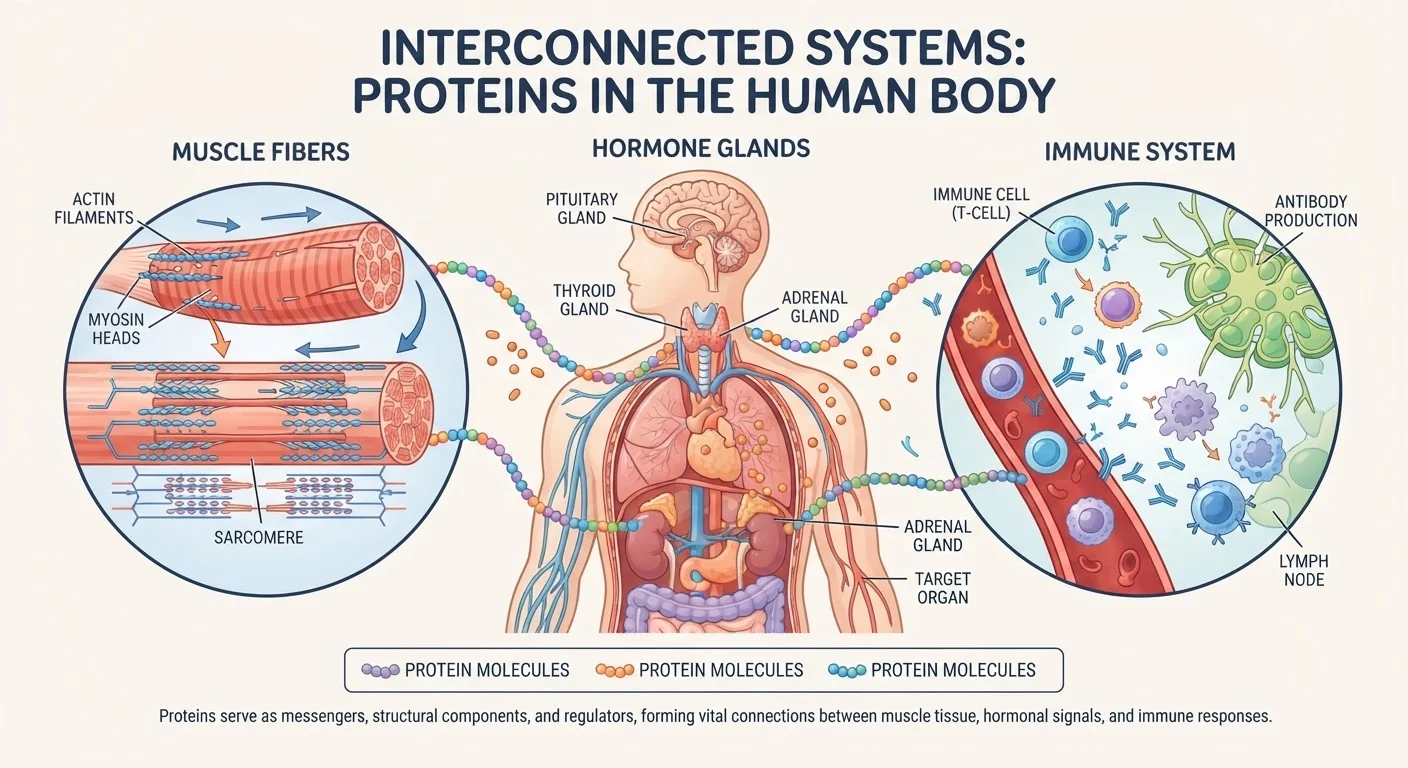
Protein Is a Builder, Not Just a Gym Supplement
Most conversations about protein center on muscle — how much to eat after a workout, whether a shake counts. But that framing misses most of the story. Protein is the structural backbone of nearly every tissue and fluid in your body: skin, hair, nails, tendons, cartilage, and organs are all assembled from protein. Your blood itself relies on hemoglobin, a protein, to carry oxygen to every cell.
What makes protein so versatile is its amino acid composition. These smaller units are rearranged by the body into thousands of different proteins, each with a specific purpose. The sequence of amino acids in a protein chain determines its shape — and its shape determines its job. It is a remarkably precise system that runs continuously, whether you are exercising or asleep.
Understanding protein's full scope helps clarify why adequate intake matters for everyone — not just athletes. It also helps explain why the completeness of your protein sources affects how well your body can do all of these jobs.
Muscle Repair Is Just the Beginning
Muscle repair is the most visible function of protein, and it is genuinely important. When you exercise, especially with resistance training, you create microscopic tears in muscle fibers. Your body repairs and rebuilds those fibers using amino acids from dietary protein, often producing slightly stronger tissue in the process — this is the basis of physical adaptation to exercise.
However, muscle tissue is also broken down and rebuilt constantly in ordinary life, independent of exercise. This ongoing process, called protein turnover, means your muscles are always in a state of remodeling. Meeting your protein needs supports this cycle even on rest days.
Spread Protein Intake Throughout the Day
Research suggests the body can only use a certain amount of protein for muscle synthesis at one sitting. Distributing your protein intake across meals — rather than concentrating it in one large meal — may support more consistent amino acid availability for repair and production throughout the day. Speak with a registered dietitian if you have specific goals or health conditions.
Beyond skeletal muscle, the heart — also a muscle — depends on protein synthesis for its continuous repair. Connective tissues like tendons and ligaments are largely built from collagen, a protein that requires specific amino acids and key micronutrients like vitamin C for proper formation.
Enzymes, Hormones, and the Chemical Signals Running Your Body
Enzymes are proteins that accelerate virtually every chemical reaction in the body — from digesting food to replicating DNA. Without them, reactions that take milliseconds would take years. Every time you break down a carbohydrate, detoxify a compound in your liver, or copy a strand of genetic material, enzymes built from amino acids are doing that work.
Many hormones are also proteins or peptides (short amino acid chains). Insulin, which regulates blood sugar, is a peptide hormone. Growth hormone, which supports tissue repair and metabolism across the lifespan, is a protein. These molecules are synthesized from dietary amino acids, which is one reason protein intake has broad metabolic relevance beyond muscle alone.
~50,000+
Distinct proteins estimated in the human body
According to biochemistry research, the human body is thought to contain tens of thousands of unique proteins, each assembled from combinations of 20 amino acids.
9
Essential amino acids required from food
The National Institutes of Health identifies nine amino acids as essential, meaning they cannot be manufactured by the body and must be supplied through diet.
~0.8 g/kg
General adult protein RDA per body weight
The Recommended Dietary Allowance for protein in sedentary adults, per the National Academy of Medicine, is approximately 0.8 grams per kilogram of body weight per day — though individual needs vary.
Neurotransmitters — the chemical messengers your brain and nervous system use to communicate — are often derived from amino acids as well. Serotonin is synthesized from tryptophan, and dopamine comes from tyrosine, both of which are amino acids obtained through food. This connection between dietary protein and neurological function is an active area of nutrition research.
Immune Defense, Transport, and More
Antibodies, the frontline defenders of your immune system, are specialized proteins called immunoglobulins. They identify foreign invaders — bacteria, viruses, toxins — and tag them for destruction. Producing sufficient antibodies requires a steady supply of amino acids. Chronic low protein intake is associated in research with reduced immune competence, though the relationship is complex and multi-factorial.
Proteins also serve as transporters throughout the body. Hemoglobin carries oxygen; albumin, made in the liver, shuttles hormones, fatty acids, and drugs through the bloodstream; lipoproteins (such as LDL and HDL) carry cholesterol and fats. These transport roles are often overlooked but have direct implications for cardiovascular and metabolic health.
Protein even plays a role in fluid balance. Proteins in the blood help maintain oncotic pressure — the force that keeps fluid inside blood vessels rather than leaking into surrounding tissues. This is why severe protein deficiency can lead to visible fluid accumulation, a condition called edema.
This article is for general informational and educational purposes only and does not constitute medical advice. For guidance specific to your health, dietary needs, or medical condition, please consult a qualified healthcare professional.
Frequently Asked Questions
Protein serves as the raw material for muscles, organs, skin, and hair, but also drives enzymatic reactions, transports molecules through the bloodstream, and supports immune function. It participates in producing hormones like insulin and signaling molecules that regulate bodily processes. Essentially, it is a structural and functional workhorse operating throughout every system.
Yes. Eggs, dairy, legumes, tofu, tempeh, edamame, and whole grains all contribute protein. While some plant sources are lower in certain essential amino acids, eating a varied diet across the day consistently provides what the body needs. See our <a href="/nutrition-basics/macronutrients/getting-enough-protein-without-centering-every-meal-around-meat">practical guide to non-meat protein sources</a> for food-first strategies.
Antibodies — the proteins your immune system uses to identify and neutralize pathogens — are literally made of amino acids. Without adequate protein intake, the body's ability to manufacture these immune defenders is compromised. Protein also supports the production of white blood cells and signaling compounds involved in the immune response.
Not automatically. Muscle protein synthesis requires both adequate protein intake and a physical stimulus, typically resistance exercise. Beyond a certain intake threshold, additional protein does not meaningfully increase muscle growth and may simply be used for energy or excreted. For a fact-check on common protein beliefs, see <a href="/nutrition-basics/macronutrients/protein-myths-that-refuse-to-die">Protein Myths That Refuse to Die</a>.
Research suggests older adults may need relatively more protein to maintain muscle mass and prevent the gradual loss of muscle tissue called sarcopenia. Protein also continues to support bone health and hormone function across the lifespan. For a broader look at how the body changes with age, see <a href="/healthy-aging/body-changes-with-age/skin-bones-and-hormones-a-decade-by-decade-overview-of-physical-aging">our decade-by-decade aging overview</a>.
No. Protein sources differ in their amino acid profiles, digestibility, and the other nutrients they carry. Animal proteins are generally considered complete — supplying all nine essential amino acids — while many plant proteins are lower in one or more. Learn more in our article on <a href="/nutrition-basics/macronutrients/complete-vs-incomplete-proteins-getting-the-full-picture-on-amino-acids">complete vs. incomplete proteins</a>.
The content on this site is for informational purposes only and is not a substitute for professional advice. Always consult a qualified professional for guidance specific to your situation.