

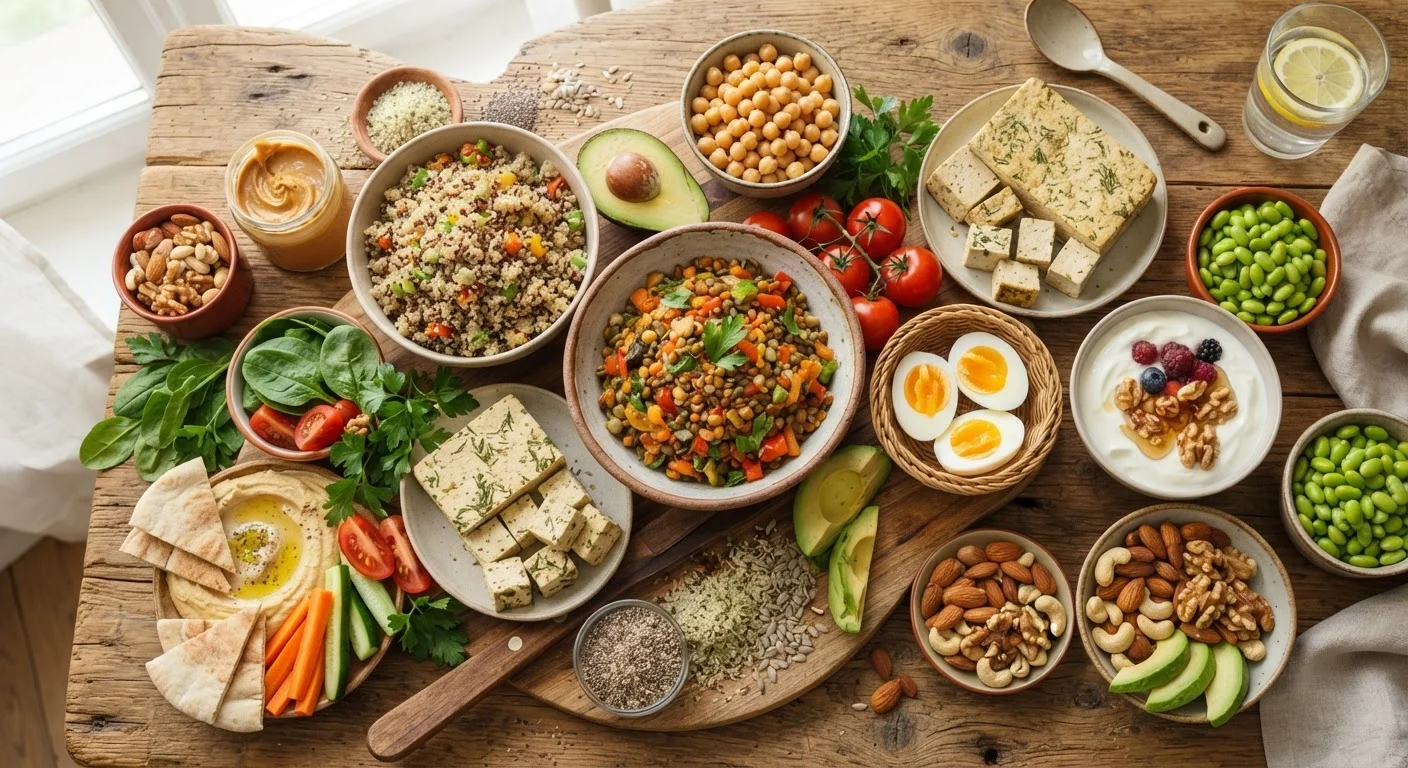
Why Protein Matters — and Why Meat Isn't the Only Answer
Protein is essential for building and repairing tissue, supporting immune function, producing enzymes and hormones, and maintaining muscle mass — particularly as we age. Most dietary guidance for healthy adults centers on an adequate daily intake, though individual needs vary considerably based on body size, age, and activity level.
The persistent cultural association between protein and meat is understandable — animal products tend to be concentrated sources — but it leads many people to overlook the substantial protein available in everyday plant and dairy foods. A well-constructed diet built around legumes, eggs, dairy, soy, whole grains, and nuts can meet the protein needs of most healthy adults. This is not a fringe position: it reflects broad consensus in mainstream nutrition science.
Understanding which non-meat foods deliver the most protein per serving — and how to work them into meals without overhauling your cooking routine — is the practical challenge this guide addresses. For a broader look at how protein fits alongside carbohydrates and fat, see building balanced macronutrient habits.
Think Across the Day, Not Per Meal
Research suggests that spreading protein intake fairly evenly across meals — rather than loading it all at dinner — may support muscle maintenance and satiety more effectively. Aim to include at least one solid protein source at breakfast, lunch, and dinner rather than relying on a single large serving.
Your Non-Meat Protein Toolkit
Before working through the steps below, it helps to understand the protein density of the foods you will be using. The following are practical anchor points — approximate values for common non-meat sources:
- Greek yogurt (plain, 1 cup): approximately 15–20 grams
- Cottage cheese (½ cup): approximately 12–14 grams
- Eggs (2 large): approximately 12 grams
- Cooked lentils (½ cup): approximately 9 grams
- Cooked chickpeas or black beans (½ cup): approximately 7–8 grams
- Firm tofu (3 oz): approximately 8–9 grams
- Edamame, shelled (½ cup): approximately 9 grams
- Quinoa, cooked (1 cup): approximately 8 grams
- Hemp seeds (3 tablespoons): approximately 10 grams
These numbers are approximate and can vary by brand, preparation method, and specific variety. Use them as general reference points rather than precise targets.
Legumes (lentils, chickpeas, black beans, edamame)
Provide substantial plant-based protein alongside fiber and complex carbohydrates.
Eggs
Offer a complete, highly bioavailable protein source that cooks quickly and pairs with almost any meal.
Greek yogurt or cottage cheese
Deliver concentrated protein in a ready-to-eat dairy format suitable for snacks or meal add-ins.
Tofu, tempeh, or edamame
Provide complete soy protein — a plant source containing all essential amino acids.
Whole grains (quinoa, farro, oats)
Contribute modest but meaningful protein alongside complex carbohydrates and micronutrients.
Nuts and seeds (hemp seeds, pumpkin seeds, almonds)
Add protein, healthy fats, and texture as easy-to-use toppers or mix-ins.
For strategies on meeting your broader nutrient needs through everyday food choices, see building micronutrient intake through everyday meals.
This Is General Nutrition Information
The guidance in this article is educational and is not a substitute for personalized medical or dietetic advice. Protein needs vary based on age, body size, health status, activity level, and other individual factors. If you have a chronic condition, are pregnant, or are managing a specific health goal, consult a registered dietitian or your healthcare provider before making significant changes to your diet.
Step-by-Step: Building Protein Into Your Meals Without Meat
What you will need
Audit what protein sources you already eat
Before adding anything new, take stock of what you currently eat over a typical week. List every protein-containing food you consume regularly — this includes obvious sources like chicken or fish, but also eggs, yogurt, cheese, beans, peanut butter, and bread. Many people are surprised to find they already eat a broader range of protein sources than they assumed. This baseline helps you identify natural gaps rather than overhauling your entire diet.
Identify which meals are protein-light
Look at your list and flag any meals that lack a concentrated protein source. Common culprits include a plain bagel for breakfast, a salad with only vegetables at lunch, or pasta with marinara at dinner. These are the meals where a targeted swap will have the biggest impact. Focus on one or two of these meals rather than trying to overhaul everything at once.
Add legumes as a base or side in at least two meals per week
Cooked lentils, canned chickpeas, or black beans are among the most cost-effective and versatile protein sources available. A half-cup of cooked lentils provides roughly 9 grams of protein. Stir them into soups, mash them into a grain bowl base, fold them into tacos, or blend them into a dip. Canned varieties require no advance preparation — rinse and they are ready to use. Gradually increasing how often legumes appear in your meals builds a sustainable habit without requiring complex cooking skills.
Upgrade your breakfast with an egg or dairy anchor
Breakfast is the meal most often skipped or made protein-poor. Two eggs provide around 12 grams of protein and take under five minutes to prepare. Plain Greek yogurt typically delivers 15–20 grams per cup depending on the brand and style. Cottage cheese is similarly concentrated. These foods work as a meal centerpiece or as an add-on alongside fruit, whole grains, or vegetables. Swapping a plain toast breakfast for toast with eggs or yogurt on the side is a minimal-effort change with meaningful nutritional payoff.
Incorporate soy foods for a complete plant protein option
Soy is one of the few plant proteins that contains all nine essential amino acids in sufficient amounts, making it nutritionally comparable to animal proteins in this respect. Tofu absorbs flavors well and works in stir-fries, scrambles, and soups. Tempeh has a firmer texture and nuttier flavor suited to grain bowls or sandwiches. Shelled edamame serves as a quick snack or salad addition. Rotating these into your weekly routine broadens your protein variety without relying on meat. For more on how plant proteins fit into the bigger picture, see common protein myths debunked.
Use whole grains and seeds to fill in the gaps
While no single grain or seed will carry a meal's protein needs on its own, they contribute meaningfully when stacked together. Quinoa provides about 8 grams per cooked cup and is a complete protein. Oats offer around 5 grams per cooked cup. Hemp seeds add roughly 10 grams per three tablespoons and can be sprinkled on yogurt, oatmeal, or salads with no preparation. Pumpkin seeds and almonds are similarly easy to incorporate. These small additions compound across the day to help you reach adequate intake without a single dramatic change. For strategies on fitting these habits into a busy schedule, see eating well on a packed schedule.
Special Populations Need Individualized Guidance
Children, older adults, pregnant or breastfeeding individuals, and people with kidney disease have protein needs that differ significantly from general population recommendations. Do not apply the general strategies in this article as personal prescriptions for these groups. Always consult a qualified healthcare professional for individualized guidance.
The content on this site is for informational purposes only and is not a substitute for professional advice. Always consult a qualified professional for guidance specific to your situation.