

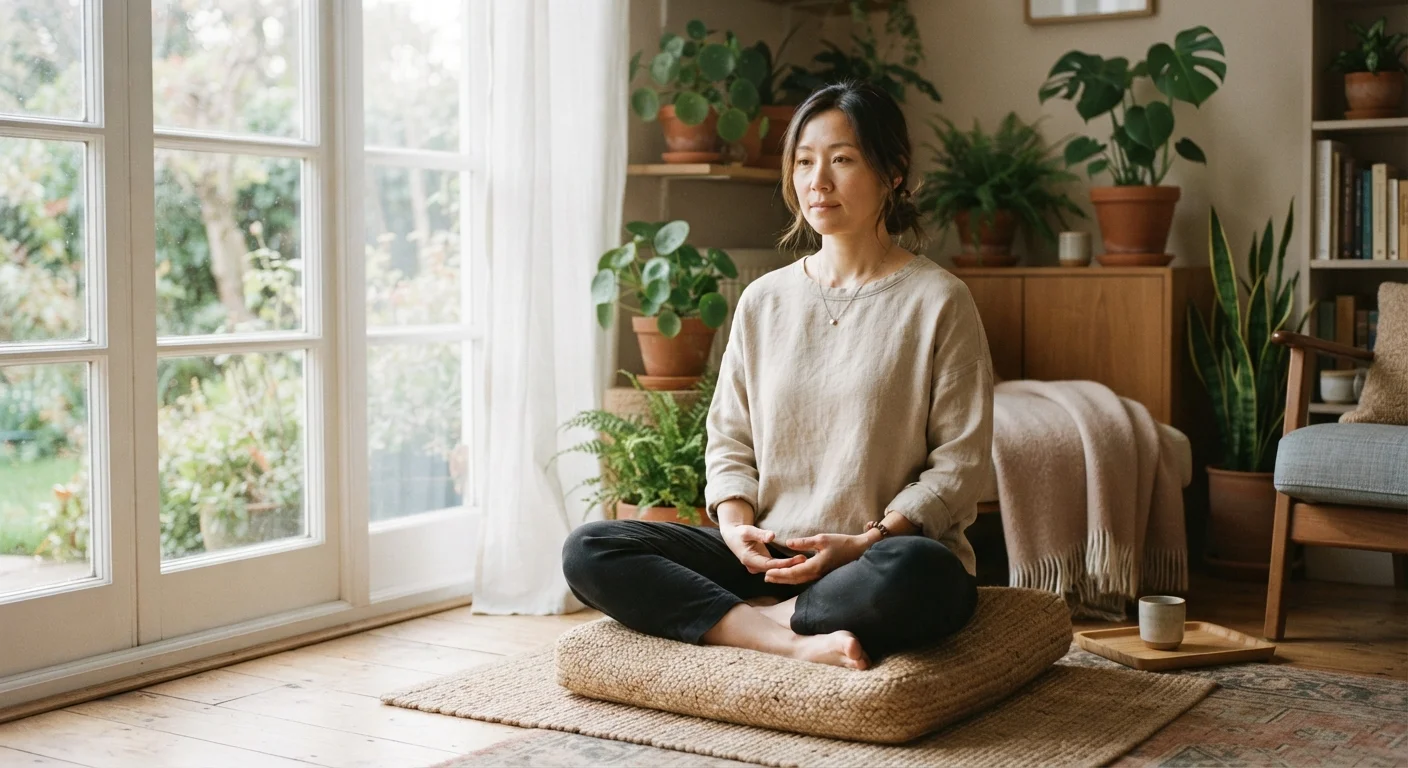
Why the Confusion Is So Common
It's easy to understand why relaxation and mindfulness get lumped together. Both involve slowing down, stepping away from the noise of the day, and giving your nervous system a break. Many mindfulness practices — like deep breathing or a guided body scan — also produce feelings of calm and ease. But equating the two can lead you to reach for one when the other is actually what you need.
The difference comes down to intent and attention. Relaxation is a destination — a state your body and mind arrive at. Mindfulness is a practice — an active, ongoing orientation toward your present experience. One is about feeling better in the moment; the other is about seeing more clearly.
This distinction matters especially if you've ever tried a mindfulness exercise and thought, "This isn't relaxing at all." You were right — and that's completely normal. What mindfulness actually involves is often surprising to newcomers who expect it to feel like a mental spa day.
What Relaxation Actually Does
When you relax — whether through a warm bath, a slow walk, or listening to music you love — your body shifts into a lower-arousal state. Heart rate slows, muscle tension eases, and the nervous system moves away from its stress response. This is genuinely restorative. Rest and recovery are essential, not optional, parts of mental and physical health.
Relaxation techniques such as progressive muscle relaxation, slow diaphragmatic breathing, or simply sitting quietly can all reduce feelings of tension effectively. The goal is comfort and ease — and there's nothing passive or trivial about that.
70%+
Adults who report stress affecting physical health
According to the American Psychological Association's Stress in America surveys, a significant majority of U.S. adults consistently report that stress has a noticeable impact on their physical well-being.
8 weeks
Duration of standard Mindfulness-Based Stress Reduction programs
MBSR, the most widely researched mindfulness program, was developed at the University of Massachusetts and runs over eight weeks — reflecting that mindfulness is a skill built over time, not a quick state change.
But here's the catch: relaxation doesn't require you to pay attention to what's happening inside you. You can zone out watching a show, drift off during a massage, or lose yourself in a daydream — and emerge feeling refreshed. That's relaxation. Your mind is less active, but it isn't more aware.
What Mindfulness Adds — and Demands
Mindfulness asks something different of you. The core instruction is deceptively simple: pay attention to your present experience — thoughts, sensations, emotions, sounds — without judging what you find or trying to change it. That attentive, non-reactive stance is the practice, whether you're doing it for two minutes or forty.
Because mindfulness involves turning toward experience rather than away from it, it can surface feelings that relaxation helps you avoid. Sitting quietly with your own mind might reveal restlessness, grief, or anxiety. That's not the practice going wrong — it's the practice working. Over time, this kind of honest attention builds what researchers describe as psychological flexibility: the ability to respond to difficulty rather than automatically react to it.
This is also why mindfulness is increasingly studied as a support for conditions like chronic stress and low mood — not because it makes those feelings disappear, but because it changes your relationship to them. If you're curious how stress and anxiety differ in that relationship, our article on anxiety vs. stress can help clarify the landscape.
This article is for general informational purposes only and is not a substitute for professional medical or mental health advice. If you are experiencing significant distress, please consult a qualified healthcare provider.
Using Both Practices Intentionally
The most useful framing is to treat relaxation and mindfulness as complementary tools, not competing ones. Relaxation is often what you need when your body is exhausted and your nervous system is overloaded — it restores capacity. Mindfulness is often what you need when you want to understand your patterns, build resilience, or respond more skillfully to what life brings.
A practical approach might look like this: use a brief relaxation technique to settle your body before a mindfulness session, so you're not fighting acute physical tension. Or use an informal mindfulness moment — noticing the temperature of your coffee, the sounds around you at lunch — to bring presence to ordinary parts of your day without needing a formal practice at all.
For a broader foundation, the complete overview of mindfulness and rest covers how these practices fit together across everyday life. And if you're exploring how recovery fits into the bigger picture, the Rest & Recovery hub offers a useful starting point.
Neither practice requires a special setting, a subscription, or a lot of time. What they require is understanding what each one actually is — and choosing accordingly.
Frequently Asked Questions
Yes — but it's not guaranteed. During a body scan meditation, for example, you may feel deeply relaxed while also being fully attentive to physical sensations. The overlap is possible, but each state has its own purpose and mechanism.
Not exactly. Mindfulness is a quality of awareness you can bring to any moment, while meditation is a formal practice used to develop that awareness. See our article on <a href="/stress-and-recovery/stress-management/mindfulness-vs-meditation-sorting-out-two-frequently-confused-practices">mindfulness vs. meditation</a> for a deeper look.
Because mindfulness involves observing whatever is present — including difficult thoughts, emotions, or physical sensations — without avoiding them. That honest attention can feel challenging, especially at first, but it is also part of what makes the practice effective over time.
Both can help, but in different ways. Relaxation techniques tend to offer faster, more immediate physiological relief. Mindfulness builds longer-term resilience by changing how you relate to stress, rather than simply reducing its symptoms in the moment.
No. Mindfulness can be practiced informally throughout your day — while eating, walking, or washing dishes — by simply bringing your full attention to what you are doing. See our guide on <a href="/mental-wellness/mindfulness-and-rest/moments-in-the-day-you-can-use-for-informal-mindfulness">everyday mindfulness moments</a> for practical starting points.
The content on this site is for informational purposes only and is not a substitute for professional advice. Always consult a qualified professional for guidance specific to your situation.