

Why Age Changes Your Relationship With Sodium
For many younger adults, moderate sodium consumption has a limited effect on blood pressure because healthy kidneys efficiently excrete excess sodium. With age, that mechanism becomes less reliable. Kidney function naturally declines over time — by some estimates, filtration capacity drops by roughly 1% per year after age 40 — making it harder to shed surplus sodium through urine. The result is that the same sodium intake that was manageable at 40 may push blood pressure meaningfully higher at 65 or 70.
This phenomenon, known as salt sensitivity, is more common in older adults and in people with existing hypertension, chronic kidney disease, or diabetes. Research suggests that more than half of older adults with high blood pressure are salt-sensitive, meaning their blood pressure responds more dramatically to changes in sodium intake than the general population does.
Compounding this, the U.S. diet is structurally high in sodium. The Centers for Disease Control and Prevention estimate that Americans consume an average of about 3,400 mg of sodium per day — well above the Dietary Guidelines for Americans recommendation of less than 2,300 mg per day. For adults over 50 with hypertension, many cardiologists consider a target closer to 1,500 mg per day appropriate, though individual guidance should come from a personal healthcare provider.
How Potassium Counteracts Sodium's Effects
Potassium plays a direct physiological role in moderating blood pressure. It promotes the excretion of sodium through the kidneys, helps relax the walls of blood vessels, and counteracts some of the fluid-retaining effects of high sodium intake. In this sense, potassium and sodium function as a biological seesaw: when one rises without the other, balance is disrupted.
“Increasing potassium intake is as important as decreasing sodium intake for blood pressure control. The ratio between these two nutrients may matter more than either one alone.”
— Paul K. Whelton, Epidemiologist and lead author of the 2017 ACC/AHA Hypertension Guidelines
Epidemiological research has consistently found that populations consuming diets naturally high in potassium — particularly those eating plant-rich, minimally processed foods — tend to have lower rates of hypertension. The DASH diet (Dietary Approaches to Stop Hypertension), which is high in potassium-rich fruits, vegetables, and low-fat dairy while low in sodium, has been one of the most studied dietary approaches for blood pressure management.
It's worth understanding that the ratio of sodium to potassium in the diet may matter as much as either mineral in isolation. A diet low in sodium but also low in potassium offers less benefit than one that genuinely improves both sides of the equation. As discussed in our piece on where older adults' diets tend to fall short, potassium is among the most commonly underconsumed nutrients in adults over 60.
Practical Dietary Patterns That Support the Balance
The most effective strategies for improving sodium-potassium balance don't require rigid calorie counting or eliminating entire food groups. Instead, they involve shifting toward whole foods and reducing reliance on processed products, which supply roughly 70% of dietary sodium in the American diet.
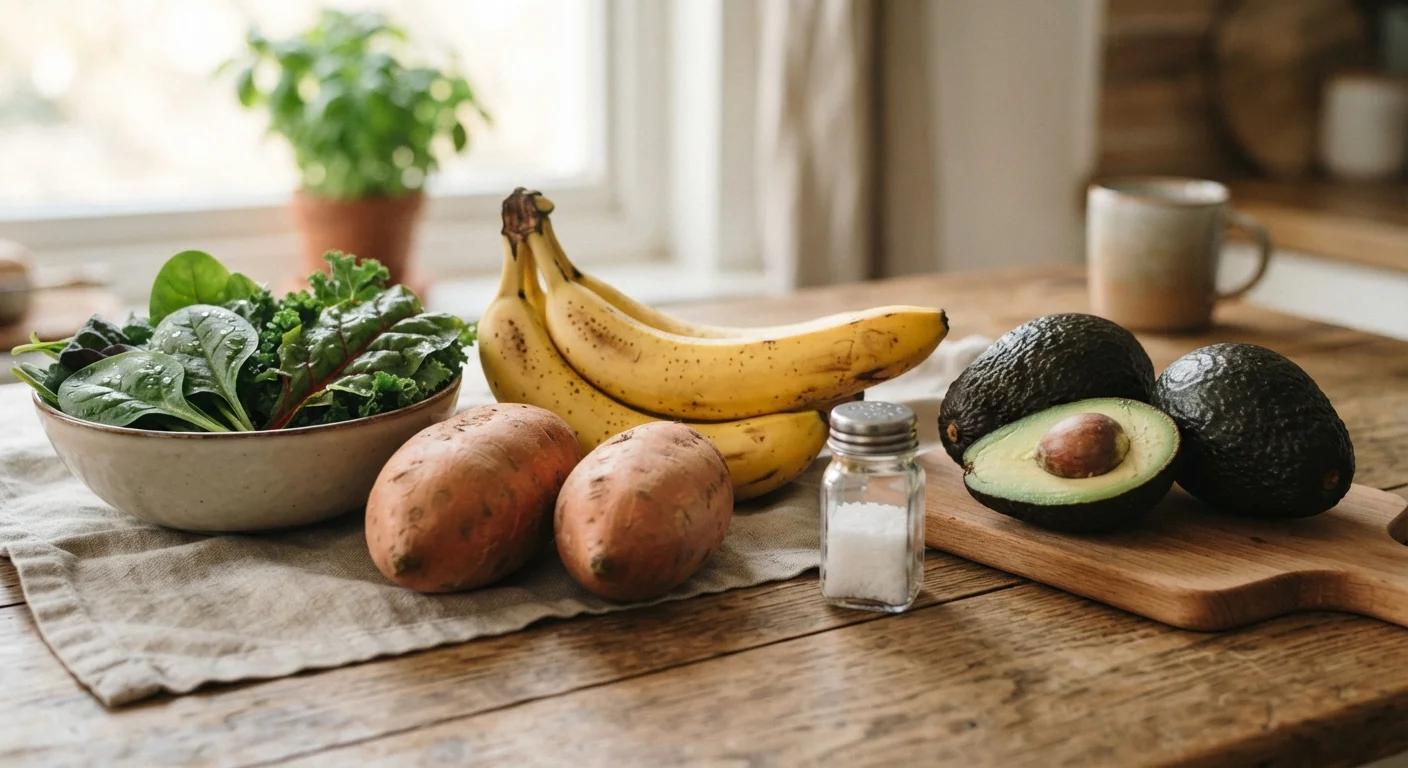
Foods naturally high in potassium include:
- Vegetables: sweet potatoes, white potatoes (with skin), spinach, beet greens, and broccoli
- Legumes: white beans, lentils, kidney beans, and edamame
- Fruits: bananas, avocados, oranges, and dried apricots
- Dairy: low-fat yogurt and milk
For sodium reduction, the most impactful step is reading nutrition labels on packaged foods — canned soups, bread, deli meats, condiments, and frozen meals are among the highest contributors. Choosing low-sodium or no-salt-added versions of pantry staples and flavoring food with herbs, citrus, garlic, and spices instead of salt are well-supported strategies.
Older adults interested in plant-based eating after 65 may find that a produce- and legume-forward diet naturally improves potassium intake, though it's worth monitoring other nutrient gaps at the same time.
This article is for general informational purposes only and is not a substitute for personalized medical advice. Consult a qualified healthcare provider before making significant dietary changes, especially if you have existing health conditions or take prescription medications.
Important Considerations for Older Adults on Medications
Dietary changes involving potassium require particular care for older adults managing chronic conditions. Certain commonly prescribed medications interact directly with potassium levels:
- ACE inhibitors and ARBs (used for hypertension and heart failure) can raise potassium levels, meaning high-potassium diets may compound this effect.
- Potassium-sparing diuretics (such as spironolactone) similarly retain potassium, raising the risk of hyperkalemia — a potentially dangerous elevation in blood potassium.
- Loop diuretics (such as furosemide), by contrast, can deplete potassium, sometimes making supplementation or dietary increases appropriate.
Because of these interactions, potassium supplements are generally not appropriate to take without medical direction. Dietary potassium from whole foods is generally considered safer and more gradually absorbed, but even food-based changes should be discussed with a provider when relevant medications are involved.
Kidney function also matters greatly: impaired kidneys may not excrete excess potassium efficiently, making hyperkalemia a real risk. For more on how aging affects nutrient absorption and processing generally, see our guide on nutrients that become harder to absorb as you age.
Frequently Asked Questions
As the kidneys age, they become less effective at filtering and excreting excess sodium. This causes sodium to accumulate in the bloodstream, drawing in more fluid and raising blood pressure. The term for this is 'salt sensitivity,' and it becomes more prevalent after age 60.
The Adequate Intake for potassium is 2,600 mg per day for women and 3,400 mg per day for men, according to the National Academies of Sciences. Most Americans fall short of these targets. Individual needs vary, so discuss specific targets with a healthcare provider, especially if you take medications affecting potassium levels.
No meaningful evidence supports the idea that sea salt or pink Himalayan salt is healthier for blood pressure than standard table salt. All forms of salt contain similar amounts of sodium by weight. The total sodium content of your diet matters more than the type of salt used.
Research, including findings summarized in guidelines from the American Heart Association, suggests that increased dietary potassium intake is associated with lower blood pressure in people with hypertension. The effect appears strongest when sodium intake is also moderated. Food sources of potassium are generally preferred over supplements.
Good dietary sources of potassium include sweet potatoes, white potatoes, bananas, avocados, cooked spinach, beans, lentils, low-fat dairy, and oranges. Incorporating a variety of these foods into regular meals is a practical way to improve potassium intake through diet.
Potassium supplements are generally not recommended without medical supervision. High potassium levels (hyperkalemia) can be dangerous, particularly for people with kidney disease or those taking certain medications like ACE inhibitors or potassium-sparing diuretics. Always consult a healthcare provider before starting supplements.
The content on this site is for informational purposes only and is not a substitute for professional advice. Always consult a qualified professional for guidance specific to your situation.