

Why Intensity Is the Engine of Your Workout
You can exercise for an hour and barely stress your cardiovascular system, or you can transform your fitness in 20 minutes of focused effort. The difference isn't time — it's intensity. Intensity is the variable that tells your body how hard it's working relative to its maximum capacity, and it determines which physiological adaptations actually occur.
As explained in our piece on the science behind why exercise works, the body adapts to stress. Intensity controls how much and what kind of stress you apply. Too little, and you plateau. Too much too soon, and you risk injury or burnout. Getting it right means knowing how to measure it accurately.
Three tools make that possible: heart rate monitoring, Rate of Perceived Exertion (RPE), and effort zones. Together they give you a complete picture of your workout intensity — whether you prefer data-driven feedback or a simple feel-based check-in.
Heart Rate: Numbers That Guide Your Effort
Your heart rate — measured in beats per minute (bpm) — rises and falls in direct proportion to how hard your body is working. During aerobic exercise, heart rate is one of the most reliable objective indicators of effort available without lab equipment.
Estimating Your Maximum Heart Rate
A commonly used formula is 220 minus your age to estimate maximum heart rate (MHR). For example, a 40-year-old would estimate an MHR of roughly 180 bpm. This formula has meaningful individual variation, so treat the result as a starting estimate, not a precise ceiling.
Target Heart Rate Ranges
Once you have an estimated MHR, you can identify working ranges:
- 50–60% MHR — Very light effort; warm-up or recovery walks
- 60–70% MHR — Light to moderate; comfortable conversation possible
- 70–80% MHR — Moderate to vigorous; breathing is elevated but manageable
- 80–90% MHR — Hard effort; speaking in short phrases only
- 90%+ MHR — Near-maximal; sustainable only briefly
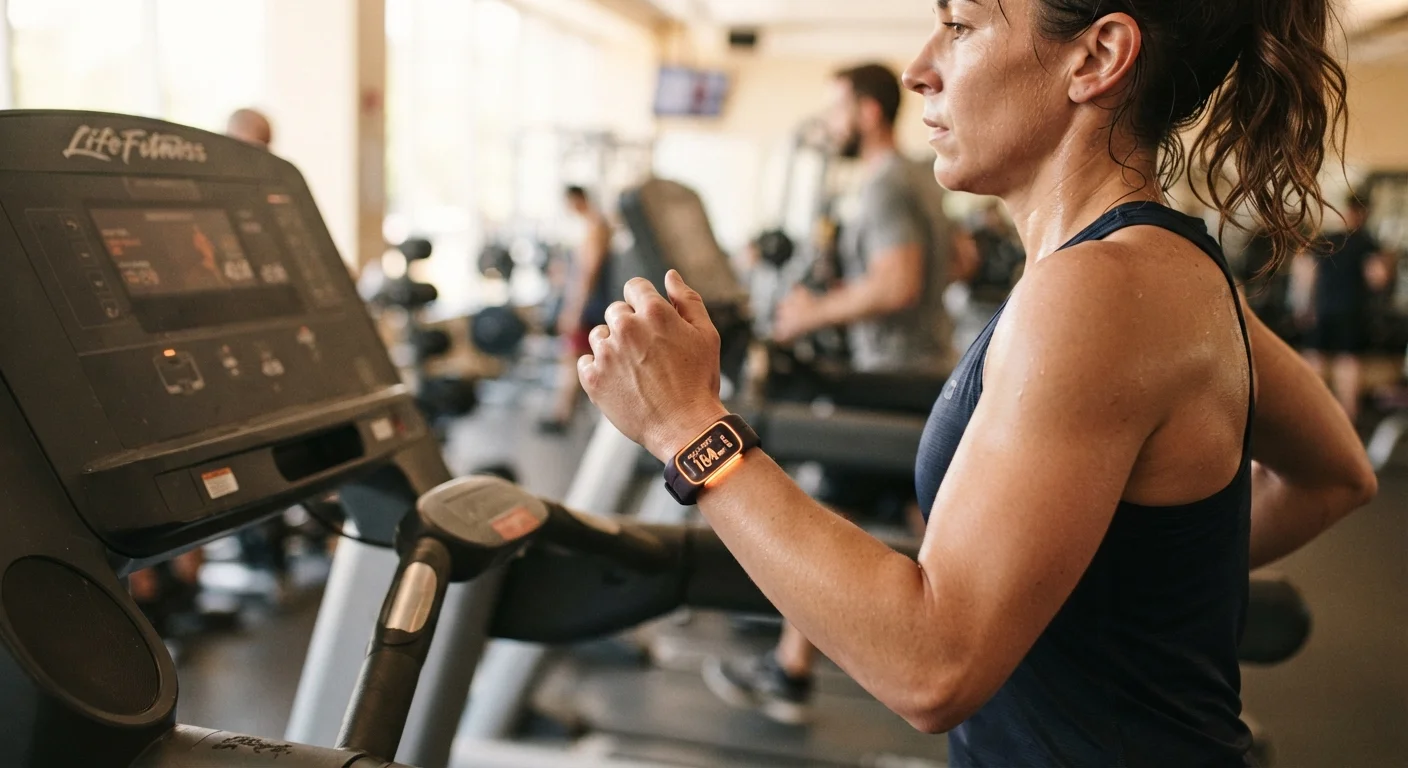
Wearable fitness devices estimate heart rate continuously, making zone tracking practical during activity. Keep in mind these devices vary in accuracy, particularly during high-intensity intervals.
Use the 'talk test' as a quick RPE check without any equipment: if you can speak in full sentences comfortably, you're in Zone 2; if you can only manage a few words, you're approaching Zone 4.
The talk test is a well-established, evidence-supported method for gauging ventilatory threshold and aligns closely with heart rate zone boundaries in most healthy adults.
Don't neglect Zone 2 training in favor of always going hard — easy, aerobic sessions build the mitochondrial density that makes all higher-intensity work more sustainable.
Exercise physiologists often call Zone 2 the 'forgotten zone' because its benefits accrue slowly and feel deceptively easy, yet research consistently shows it underpins long-term endurance capacity.
RPE: The Built-In Body Gauge You Already Have
Rate of Perceived Exertion (RPE) is a subjective scale — typically 1 to 10 — that asks you to rate how hard you feel you're working right now. Despite being subjective, RPE correlates well with objective physiological markers like heart rate and oxygen consumption in exercise science research.
A simplified 1–10 RPE scale looks like this:
| RPE | How It Feels |
|---|---|
| 1–2 | Barely moving; resting or very slow walk |
| 3–4 | Light effort; easy conversation |
| 5–6 | Moderate; slightly breathless, still conversational |
| 7–8 | Hard; full sentences are difficult |
| 9–10 | Maximum; unsustainable beyond seconds |
RPE works across all fitness levels because it's relative to your current capacity — a brisk walk might be a 6 for one person and a 3 for another, and both readings are correct for that individual. You can learn more about how this translates to everyday activity guidelines in our overview of what moderate-intensity activity really means.
Understanding Effort Zones
Effort zones combine heart rate ranges and RPE into a practical framework that helps you plan workout variety. Different zones produce different outcomes:
- Zone 1 — Recovery (RPE 2–3 / ~50–60% MHR)
- Used for active recovery days. Promotes circulation without adding training load.
- Zone 2 — Aerobic Base (RPE 4–5 / ~60–70% MHR)
- The foundation of endurance. Trains your body to use fat as fuel efficiently. Research increasingly supports spending a large portion of cardio time here.
- Zone 3 — Tempo (RPE 6–7 / ~70–80% MHR)
- Sustained, challenging effort that builds cardiovascular efficiency. This is the pace many people default to for most runs or rides.
- Zone 4 — Threshold (RPE 8 / ~80–90% MHR)
- Hard, purposeful work near your lactate threshold. Improves the ability to sustain high-intensity efforts longer.
- Zone 5 — Maximal (RPE 9–10 / 90%+ MHR)
- Brief, all-out intervals. Used sparingly in structured HIIT or sprint work.
Understanding zones also helps you decode workout programming. When you read about how reps, sets, and rest intervals work, intensity zones are the cardio equivalent of those same training variables.
How to Apply Intensity in Your Routine
Most exercise guidelines — including those from the U.S. Department of Health and Human Services — recommend adults aim for a mix of moderate and vigorous-intensity activity each week. In zone language, that generally means time in Zones 2–3, with some Zone 4 work for those ready for it.
A practical weekly pattern might look like:
- 2–3 sessions at Zone 2 (longer, comfortable efforts that build your aerobic base)
- 1 session at Zone 3–4 (a tempo run, steady cycling effort, or sustained swim)
- 1 optional Zone 4–5 session (interval training, only after you've built a solid base)
Beginners should spend several weeks establishing Zone 2 fitness before adding higher-intensity sessions. For context on the broader fundamentals, our fitness terminology guide for beginners covers key concepts like HIIT, lactate threshold, and aerobic capacity in plain language.
If you're unsure where to start — or if you have any cardiovascular conditions, recent injuries, or are new to vigorous exercise — consult a qualified healthcare professional before significantly increasing your workout intensity. Intensity is a powerful tool, but it should be applied progressively and safely.
This article is for general informational and educational purposes only and does not constitute medical advice. Always consult a qualified healthcare provider before beginning or modifying an exercise program, especially if you have existing health conditions.
The content on this site is for informational purposes only and is not a substitute for professional advice. Always consult a qualified professional for guidance specific to your situation.