

Our Verdict
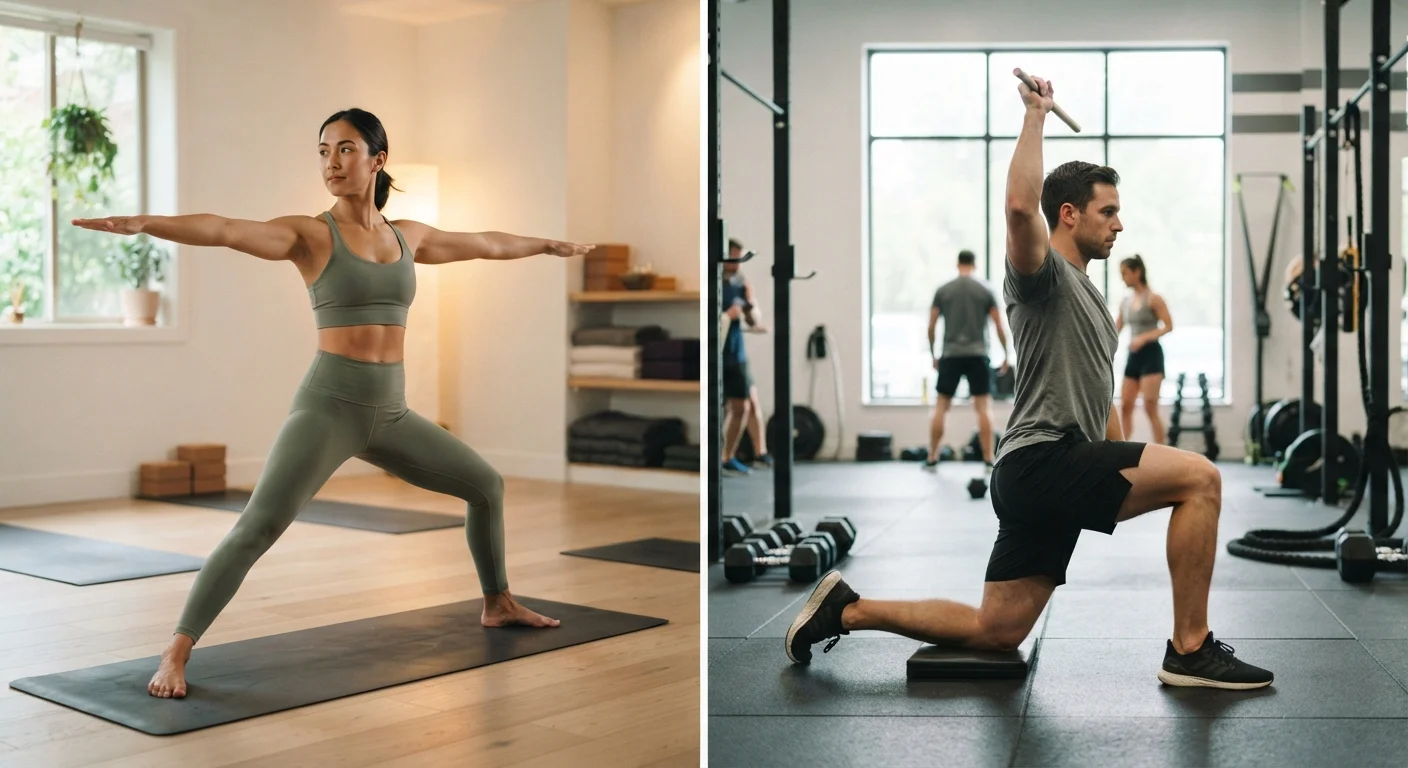
Yoga and dedicated mobility training both support long-term physical health, but they do so through different frameworks. Yoga integrates movement with breath and mindfulness, making it a holistic practice with well-documented mental and physical benefits. Dedicated mobility work is more clinical in structure, targeting specific joints and movement patterns with deliberate control. Many everyday movers benefit from elements of both.
| Best for | Recommended |
|---|---|
| Those seeking a holistic mind-body practice with community or ritual elements | Yoga |
| Those with specific movement limitations or joint-function goals | Dedicated Mobility Training |
| Those who want structured, measurable progress in functional movement | Dedicated Mobility Training |
| Those looking for a low-barrier entry to daily movement habits | Yoga |
How Each Practice Defines Its Goals
At first glance, yoga and dedicated mobility training look similar: both involve slow, deliberate movement, often targeting tight hips, stiff shoulders, or a restricted lower back. But their underlying goals differ considerably.
Yoga - across its many styles - is a holistic system rooted in breath, posture, and mindful awareness. Physical flexibility and strength are byproducts of the practice, not always the primary target. Dedicated mobility training, by contrast, is specifically designed to improve active joint control: your ability to move through a full range of motion with strength and stability, not just passively stretch into a position.
Understanding the distinction between flexibility and mobility is foundational here. As explained in our article on mobility, flexibility, and range of motion, these terms describe different physical qualities - and confusing them can lead to training that misses the mark.
How They Work in Practice
A typical yoga session follows a sequence of postures (called asanas) held for several breaths each. Instruction varies by style - a restorative class emphasizes long, passive holds; a vinyasa class links movement to breath in continuous flow. The social and philosophical dimensions of yoga are part of its appeal for many practitioners.
Dedicated mobility training looks more like targeted physical therapy homework than a class. Common formats include:
- Controlled articular rotations (CARs) - slow, deliberate circles through a joint's full range
- End-range strengthening - using muscles at the limits of their range, not just mid-range
- Positional isometrics - holding tension in stretched positions to build active control
These exercises are typically organized around specific joints - hip, shoulder, thoracic spine - rather than full-body sequences. Sessions can be as short as 10-15 minutes and slotted into a broader strength or cardio routine.
| Yoga | Dedicated Mobility Training | |
|---|---|---|
| Primary goal | Holistic mind-body integration | Functional joint control and range |
| Structure | Sequenced postures with breath cues | Joint-specific drills and exercises |
| Mindfulness component | Central to practice | Not typically emphasized |
| Session length | Usually 45-90 minutes | Can be 10-20 minutes |
| Measurable joint progress | Indirect and gradual | Often targeted and trackable |
| Evidence base | Broad research history | Growing, especially in rehab contexts |
| Accessibility for beginners | Wide range of entry-level styles | Requires some coaching to learn form |
Where They Overlap - and Where They Diverge
Both practices can improve joint health, reduce stiffness, and support injury resilience over time. Research broadly supports regular movement - including both yoga and targeted mobility work - for musculoskeletal health, though the evidence base for specific mobility training protocols is still growing compared to yoga's longer research history.
The key divergence is in intent and structure. Yoga asks you to follow a sequence and be present in the moment. Mobility training asks you to isolate a joint, assess its current range, and deliberately expand it through controlled effort. One is more experiential; the other is more diagnostic.
For a broader view of how these practices fit into everyday physical health, see our complete reference on movement and mobility.
Try Combining Both Approaches
You don't have to choose one or the other. Many movement practitioners recommend using yoga for overall body awareness and stress relief, while layering in 10-15 minutes of targeted mobility drills for joints that feel limited or restricted. Starting your day with a few controlled hip or shoulder rotations before a yoga session can sharpen your awareness of where restrictions actually live in your body.
Choosing What Fits Your Life
There's no reason to treat these approaches as mutually exclusive. Many people find yoga serves their recovery days and stress management, while short mobility sessions before or after strength training address specific joint limitations.
If you've never explored structured mobility work, our beginner's guide to mobility training is a practical starting point. If joint health is a concern related to aging or chronic conditions, always consult a qualified healthcare professional before starting a new movement practice - especially one targeting specific joint limitations.
For older adults weighing gentler options, the comparison between chair yoga and floor-based stretching may also be worth reviewing.
This article is for general informational purposes only and does not constitute medical advice. Consult a qualified healthcare provider before beginning any new exercise program, particularly if you have existing injuries, joint conditions, or other health concerns.
The content on this site is for informational purposes only and is not a substitute for professional advice. Always consult a qualified professional for guidance specific to your situation.