

The Core Idea: Alternating Roles
Your body is not a single moving part - it's a stack of joints, each with a distinct job. The joint-by-joint approach, developed in the strength and conditioning field, organizes those jobs into two categories: mobility and stability. Mobility joints are built for range of motion. Stability joints are built to resist unwanted movement and transfer force efficiently.
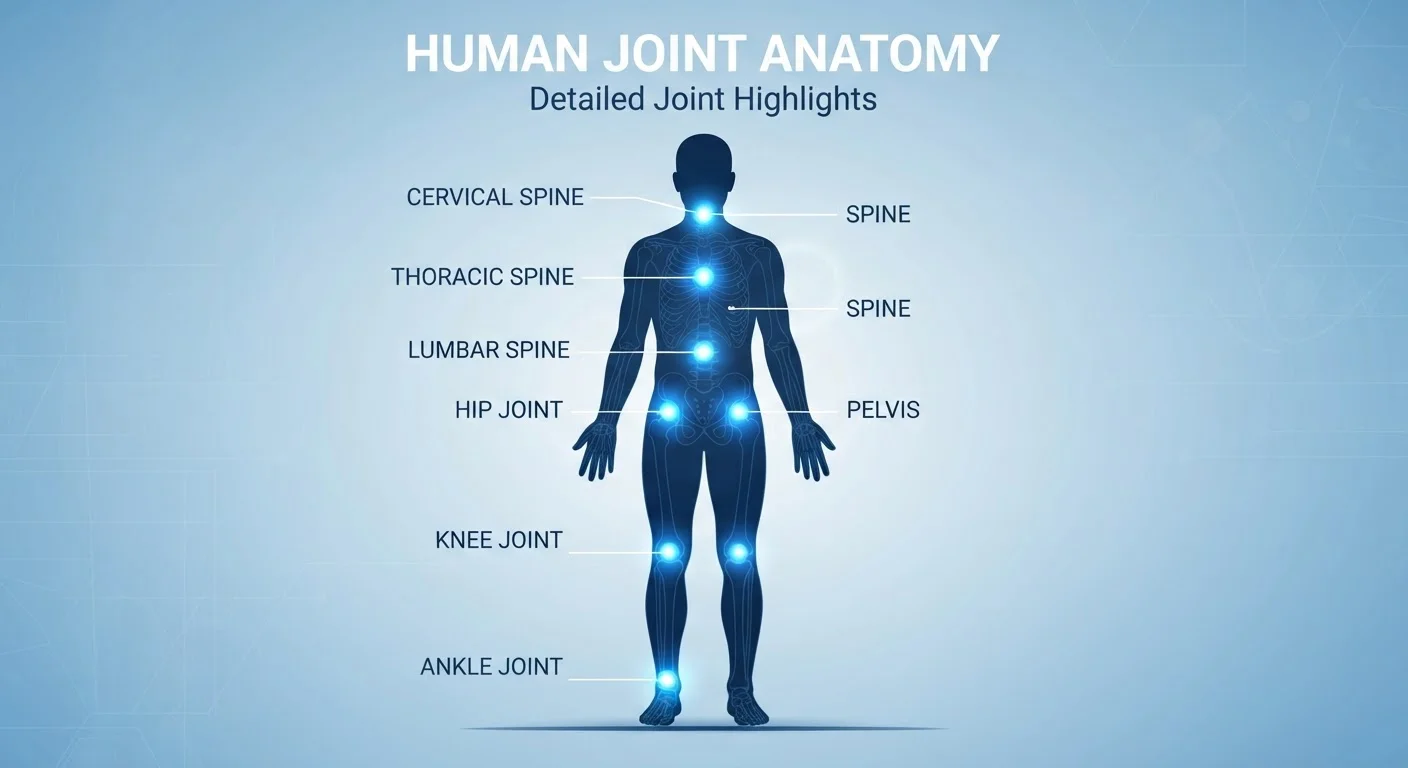
What makes this framework powerful is the pattern: these roles alternate as you move up the body. Starting from the ground:
- Ankle - mobility
- Knee - stability
- Hip - mobility
- Lumbar spine (lower back) - stability
- Thoracic spine (mid-back) - mobility
- Scapula (shoulder blade) - stability
- Glenohumeral joint (shoulder ball-and-socket) - mobility
- Elbow - stability
- Wrist - mobility
This alternating design is not arbitrary. It allows the body to generate and absorb force along a chain without overloading any single structure. Learn more in our broader movement and mobility reference guide.
What Happens When the Pattern Breaks Down
The framework's most practical insight is this: when a mobility joint becomes stiff, the nearest stability joint pays the price. The body always finds a way to complete a movement - if the intended joint can't contribute, another one will. That compensation works in the short term but creates wear and stress over time.
The most common example involves the hip and lower back. The hip is a mobility joint designed for large ranges of rotation, flexion, and extension. The lumbar spine is a stability joint - it's structurally built to resist rotation, not produce it. When hip mobility decreases (from prolonged sitting, for example), the lower back starts rotating and extending more than it should. The result is the kind of chronic low-back stress that many people experience without understanding its origin.
Similarly, restricted thoracic (mid-back) mobility often forces the shoulder or neck to compensate, contributing to overhead pain and tension headaches. Stiff ankles can shift stress upward into the knee.
Pain Location Is Not Always the Problem Source
One of the key insights of the joint-by-joint approach is that pain often appears at stability joints that are being overworked - not at the mobility joints causing the dysfunction. If you're experiencing lower back or knee pain, the source of the stress may be an adjacent stiff joint. A physical therapist can conduct a movement assessment to identify where compensations are happening.
Addressing only the painful site often doesn't resolve the root issue. If your lower back is chronically stiff or sore, it may be worth examining your hip and thoracic mobility - not just your lumbar region. A qualified physical therapist can help identify where compensations are occurring.
Practical Habits That Support the Pattern
You don't need a specialized gym routine to start supporting this system. Small, consistent movement habits - performed daily - help each joint maintain its intended role. Here are some practical starting points:
- Hip mobility: Regular hip flexor stretches, 90/90 hip rotations, or deep squat holds can restore range of motion lost from extended sitting.
- Thoracic mobility: Foam roller extensions over the mid-back or seated rotation exercises support the thoracic spine's role as the primary rotational segment of the trunk.
- Ankle mobility: Simple ankle circles and wall-supported calf stretches help maintain dorsiflexion (the ability to pull your toes toward your shin), which supports proper knee and hip mechanics during walking and squatting.
- Scapular stability: Rows, face pulls, and scapular retraction drills help train the shoulder blade to function as a stable base for shoulder movement.
The goal is not dramatic flexibility - it's maintaining enough range of motion that each joint can do its job without borrowing from a neighbor. For terminology used in this kind of training, our mobility terminology reference is a helpful resource.
It's also worth recognizing that many daily habits quietly accelerate breakdown of this pattern. Prolonged sitting, repetitive asymmetrical postures, and limited movement variety are among the most common contributors. See our article on movement habits that quietly damage joints for a closer look at what to watch for.
This article is for general informational and educational purposes only and is not a substitute for professional medical advice, diagnosis, or treatment. If you are experiencing pain or movement limitations, consult a qualified healthcare professional before beginning any new exercise program.
Frequently Asked Questions
It's a framework that categorizes each joint as needing either mobility or stability. Joints alternate between these roles as you move up the body. Understanding this pattern helps explain how dysfunction in one joint causes problems in adjacent joints.
The hip is designed to be a mobile joint, while the lumbar spine is meant to be stable. When the hip loses range of motion, the lower back compensates by moving more than it should, placing excess stress on spinal structures over time.
In general: the ankle, hip, thoracic spine, and shoulder joint (glenohumeral) need mobility. The knee, lumbar spine, and scapula (shoulder blade) need stability. The pattern alternates as you move from the ground up.
Yes. Regular targeted movement - such as hip flexor stretches, thoracic rotation drills, or ankle mobility exercises - can meaningfully improve range of motion. Consistency matters more than intensity for long-term results.
The principles still apply, but the approach needs to be adapted. People with arthritis should work with a qualified healthcare provider to identify which movements are appropriate. See our article on <a href="/healthy-aging/staying-active-longer/staying-active-with-arthritis-approaches-that-help-and-patterns-that-hurt">staying active with arthritis</a> for more context.
For general awareness and basic daily mobility habits, you can apply the principles yourself. However, if you're dealing with pain, recurring injury, or significant movement limitations, consulting a physical therapist or certified movement specialist is strongly recommended.
The content on this site is for informational purposes only and is not a substitute for professional advice. Always consult a qualified professional for guidance specific to your situation.