

Start here
What Is Sleep Architecture?
Next
The Four Stages of Sleep
Then
How Sleep Cycles Repeat Through the Night
When you're ready
Why Sleep Architecture Matters for How You Feel
Going deeper
What Disrupts Your Sleep Structure
What Is Sleep Architecture?
Most people think of sleep as a simple on/off switch — you close your eyes and your brain goes quiet until morning. The science tells a different story. Sleep is a highly structured biological process, and the term sleep architecture describes the specific pattern of stages and cycles your brain moves through during a night of rest.
Think of it as a blueprint. Just as a building's blueprint defines where walls, rooms, and foundations go, your sleep architecture maps when and for how long your brain spends in each distinct phase of sleep. This structure isn't random — it's governed by internal biological clocks and brain systems that have been shaped over millions of years of evolution.
For a broader look at the biology underlying all of this, our complete sleep science guide covers the hormones, circadian biology, and systems that work together every night.
Sleep Architecture
The organized pattern of sleep stages and cycles that the brain moves through during a night of sleep. It describes both the sequence and the proportion of time spent in each stage.
NREM Sleep
Non-rapid eye movement sleep — the category covering the first three sleep stages (N1, N2, N3). It is generally characterized by slower brain waves and reduced body activity compared to wakefulness.
REM Sleep
Rapid eye movement sleep — the stage marked by high brain activity, vivid dreaming, and temporary muscle paralysis. It plays a central role in memory and emotional processing.
Sleep Cycle
One complete pass through all four sleep stages (N1, N2, N3, and REM), lasting approximately 90 minutes. Most adults complete four to six cycles per night.
Slow-Wave Sleep
Another name for N3, the deepest stage of NREM sleep. The brain produces large, slow electrical waves, and this is when physical restoration and growth hormone release peak.
Sleep Spindles
Brief bursts of rhythmic brain activity that occur during N2 sleep. They are thought to be involved in consolidating memories and protecting sleep from disruption.
Circadian Rhythm
Your body's internal 24-hour biological clock that regulates the timing of sleep, wakefulness, hormone release, and many other processes. Light exposure is its primary external cue.
Adenosine
A chemical that accumulates in the brain the longer you are awake, building 'sleep pressure.' Caffeine works by blocking adenosine receptors, temporarily masking this pressure.
The Four Stages of Sleep
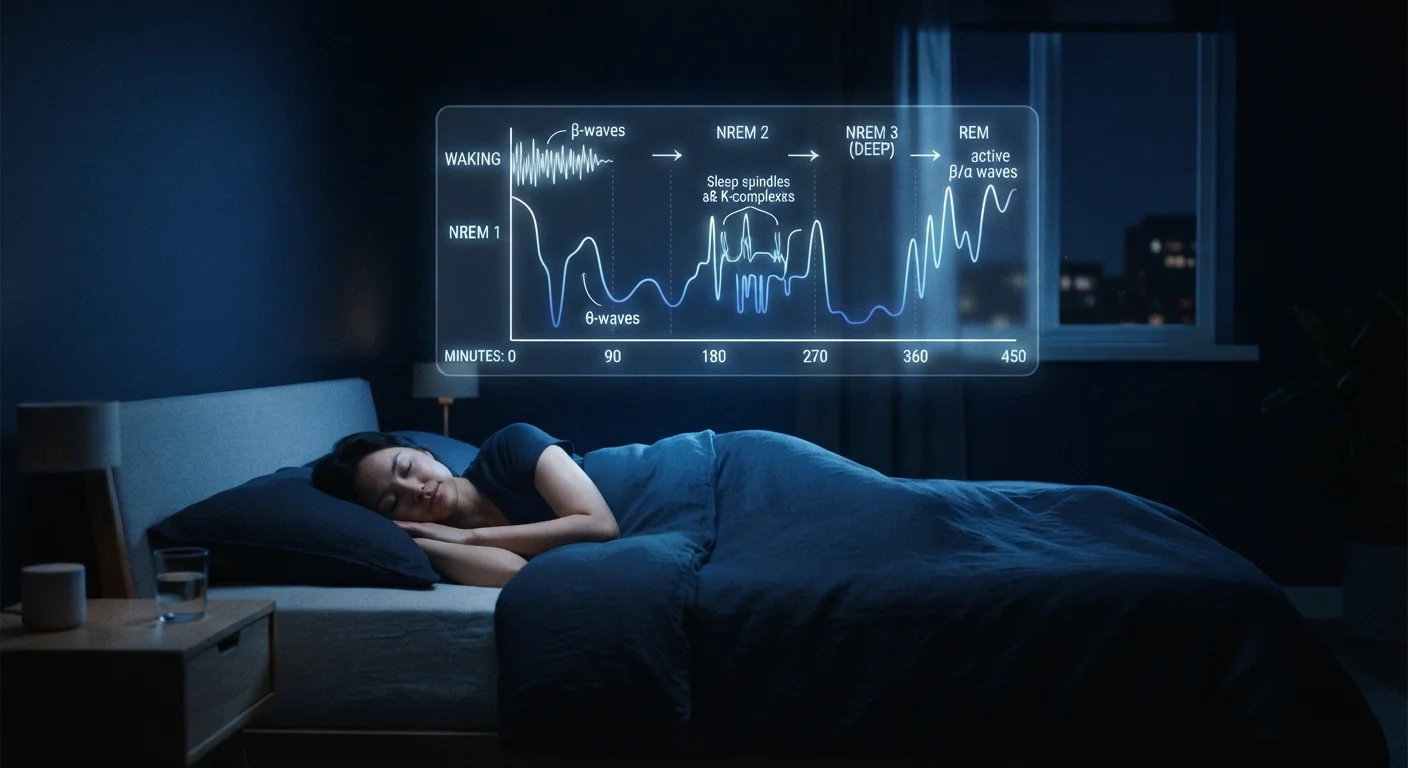
Sleep researchers classify sleep into two broad types: NREM (non-rapid eye movement) sleep and REM (rapid eye movement) sleep. NREM is further divided into three stages, giving us four distinct phases in total.
- N1 (Light Sleep): The transition from wakefulness to sleep. Muscle activity slows, and you can be easily roused. This stage typically lasts just one to seven minutes.
- N2 (Light-to-Moderate Sleep): Body temperature drops, heart rate slows, and the brain begins producing sleep spindles — bursts of activity thought to play a role in memory consolidation. N2 makes up the largest share of total sleep time in adults.
- N3 (Deep or Slow-Wave Sleep): The most physically restorative stage. Brain waves slow dramatically, and this is when growth hormone is released and cellular repair occurs. It is hardest to wake someone from N3.
- REM Sleep: Brain activity increases sharply — sometimes rivaling wakefulness — while the body's voluntary muscles are temporarily paralyzed. Most vivid dreaming occurs here, and this stage is strongly linked to emotional regulation and learning.
For a closer look at what each stage does to your brain and body in real time, see Sleep Stages Decoded.
How Sleep Cycles Repeat Through the Night
One pass through all four stages constitutes a single sleep cycle, which lasts roughly 90 minutes on average. A typical night of seven to nine hours contains four to six of these cycles — though not every cycle is identical.
The distribution of stages shifts meaningfully as the night progresses:
- Early night: Cycles are heavier in N3 deep sleep. This is when your body prioritizes physical repair and immune maintenance.
- Later night: Deep sleep shortens and REM periods grow longer. By the final cycles before waking, you may spend 45 to 60 minutes in a single REM episode.
This shifting balance explains why cutting sleep short — even by an hour or two — disproportionately reduces REM sleep, since most of it occurs in the hours just before natural waking. It also means that waking abruptly in the middle of the night can interrupt a deep or REM phase, affecting how restored you feel.
Inside the Sleep Cycle explores the neurological mechanics of each phase in more detail.
Why Sleep Architecture Matters for How You Feel
Sleep quantity — the number of hours — gets most of the public attention. But sleep quality, shaped largely by the integrity of your sleep architecture, is equally important. Spending eight hours in bed while cycling poorly through the stages can leave you just as fatigued as getting five hours of well-structured sleep.
Research in sleep medicine consistently links healthy sleep architecture to:
- Memory and learning: Both N2 spindles and REM sleep are involved in consolidating new information from the day into long-term memory.
- Emotional regulation: REM sleep in particular appears to help the brain process emotional experiences, which may explain why poor sleep is associated with heightened anxiety and irritability.
- Physical recovery: Growth hormone released during N3 supports muscle repair, immune function, and metabolic regulation.
- Cognitive performance: Deep sleep is linked to clearing metabolic waste from the brain, a process researchers believe may support long-term brain health.
Protect Your Morning REM Sleep
Because REM sleep is concentrated in the final hours before waking, even modest sleep curtailment can substantially reduce the amount you get. If you are trying to improve your sleep quality, prioritizing a consistent, adequate sleep window — rather than just falling asleep earlier — helps ensure you cycle through all stages fully. Aim to wake at the same time each day to anchor your sleep architecture to a stable rhythm.
What Disrupts Your Sleep Structure
Many everyday factors fragment or compress the stages of sleep without causing a full awakening — meaning you may not even realize your architecture is being disrupted. Common culprits identified in sleep research include:
- Alcohol: While it may help you fall asleep faster, alcohol suppresses REM sleep, especially in the first half of the night, and causes fragmented sleep as it metabolizes.
- Caffeine: Adenosine — the chemical that drives sleep pressure — is blocked by caffeine. Late consumption can delay sleep onset and reduce deep sleep.
- Irregular sleep schedules: Shifting your sleep and wake times disrupts the circadian timing that orchestrates when each stage should occur.
- Light exposure at night: Blue-wavelength light suppresses melatonin and can delay the onset of deeper sleep stages.
- Sleep disorders: Conditions such as sleep apnea cause repeated micro-arousals that shatter architecture across the night, often without the person's awareness.
If you suspect a sleep disorder is disrupting your rest, speaking with a qualified healthcare provider is the most appropriate course of action. Explore the basics of common sleep disorders to learn what to look out for.
Building healthier routines is one of the most evidence-supported ways to protect your sleep structure. Better Sleep Habits offers practical, research-informed strategies to help you get started.
This article is for general informational and educational purposes only and is not a substitute for professional medical advice, diagnosis, or treatment. If you have concerns about your sleep or health, please consult a qualified healthcare provider.
Frequently Asked Questions
Sleep architecture refers to the organized pattern of sleep stages — N1, N2, N3, and REM — that your brain cycles through each night. This structure matters because each stage performs specific restorative work, from physical tissue repair in deep sleep to memory consolidation in REM. Disruptions to this pattern can leave you feeling unrefreshed even after a full night in bed.
Most adults complete four to six sleep cycles per night, each lasting approximately 90 minutes. The proportion of deep sleep versus REM sleep shifts across the night — deep sleep is heavier in the first half, while REM periods grow longer toward morning.
REM (rapid eye movement) sleep is the stage most associated with vivid dreaming. During this phase, brain activity increases sharply while the body's muscles are temporarily paralyzed. Research links REM sleep to emotional processing, learning consolidation, and creative problem-solving.
Consistent sleep schedules, reducing alcohol and caffeine, and creating a dark, cool sleep environment are all associated with more stable sleep structure, based on general sleep science findings. However, if you suspect a sleep disorder is disrupting your cycles, consulting a healthcare provider is the appropriate next step.
Deep sleep, or slow-wave sleep (N3), is when the body releases growth hormone and carries out cellular repair. It is also believed to be essential for immune function and clearing metabolic waste products from the brain. This is why feeling physically restored after sleep depends heavily on getting enough of this stage.
The content on this site is for informational purposes only and is not a substitute for professional advice. Always consult a qualified professional for guidance specific to your situation.