

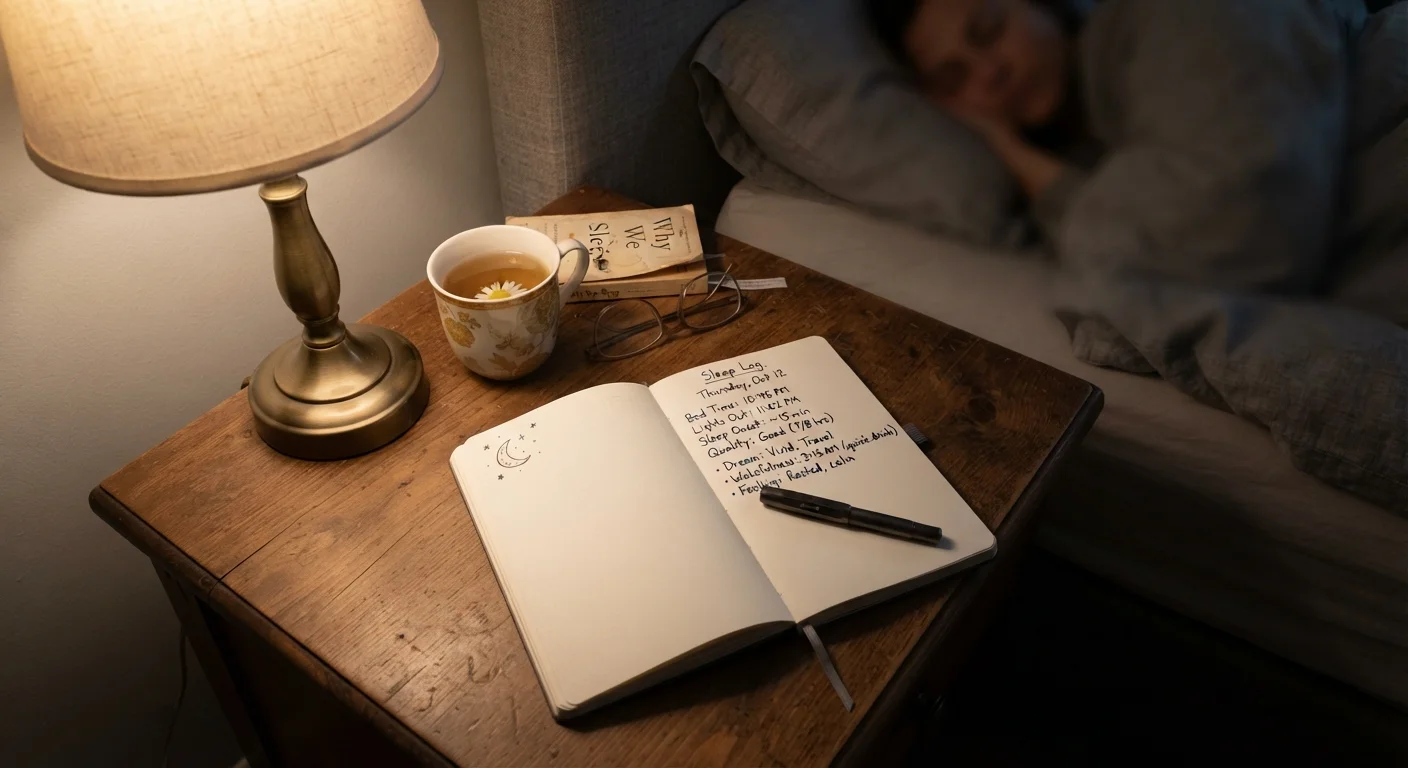
Why a Sleep Diary Works
Human memory is a poor recorder of sleep. Most people struggle to accurately recall how many times they woke up, how long it took to fall asleep, or whether they felt rested — especially when disruptions have been happening for weeks or months. A sleep diary solves this by capturing observations close to when they happen, building an objective picture over time.
That picture is genuinely useful. Sleep medicine clinicians routinely ask patients to complete a two-week diary before or between appointments because it surfaces patterns that a single office visit cannot. You might notice, for instance, that your worst nights consistently follow evenings with alcohol, or that your wake time drifts later on weekends — a pattern associated with what researchers call social jetlag. Without written records, these correlations remain invisible.
If you are new to thinking deliberately about your rest, the introduction to sleep health provides helpful grounding before you begin. And if you suspect your disruptions may point to something more complex, understanding what sleep disorders are and why they matter can help you frame what you're experiencing.
This Is Not a Diagnostic Tool
A sleep diary helps you and your provider recognize patterns — it does not diagnose any condition. If you are experiencing significant disruptions to your sleep, excessive daytime sleepiness, or symptoms that concern you, consult a qualified healthcare professional. Do not use diary findings to self-diagnose or self-treat.
What You Need Before You Start
The format truly does not matter — a paper notebook, a printed template, or a simple note-taking app all work equally well. What matters is that it lives somewhere you will reliably access it each morning and evening. Choose one location and commit to it.
What you will need
Dedicated notebook or journal
Provides a single, low-distraction place to log nightly and morning sleep entries.
Printed sleep diary template
Standardized templates (available from sleep medicine organizations) prompt the right questions and simplify pattern review.
Note-taking or spreadsheet app
Allows digital logging that can be easily shared, searched, or formatted for a provider visit.
Analog or digital clock visible from bed
Enables accurate time estimates for lights-out, awakenings, and final wake time without reaching for a stimulating screen.
How to Fill In Your Diary: Step by Step
Follow these steps each day for a minimum of two weeks. Consistency in timing is more important than perfect recall — a reasonable estimate recorded promptly is more valuable than a precise number recorded hours later.
Record your evening routine before bed
Each evening — ideally within 30 minutes of your intended bedtime — note the following:
- Bedtime: The time you turn off the light and intend to sleep
- Caffeine consumption: Last intake and approximate amount
- Alcohol consumption: Whether you had any and roughly how much
- Exercise: Whether you exercised, and at what time of day
- Screen use: Estimated time spent on screens in the two hours before bed
- Stress or mood: A simple 1–5 scale is enough
Keep this entry brief. You are not writing an essay — a few words or numbers per item is sufficient.
Log your nighttime experience upon waking
First thing each morning — before checking your phone or leaving the bedroom — record your sleep experience while it is still fresh:
- Estimated time to fall asleep: How long did it take after lights out?
- Number of awakenings: How many times did you wake during the night?
- Longest stretch of uninterrupted sleep: Your best estimate
- Final wake time: When you got out of bed for the day
- Total sleep estimate: Rough total hours of sleep (not time in bed)
Precision is less important than consistency. Write what you genuinely believe happened — not what you wish had happened.
Rate your sleep quality and daytime energy
After your morning log, add two brief ratings:
- Sleep quality: 1 (very poor) to 5 (excellent) — how would you describe overall sleep quality?
- Daytime energy: 1 (exhausted) to 5 (fully alert) — how do you feel an hour after waking?
These two numbers are among the most valuable items in your diary. They allow you — and your provider — to quickly scan weeks of data and spot which nights correlated with poor daytime function.
Note any notable disruptions or unusual factors
Once a day — morning is usually easiest — add a brief free-text note for anything unusual that might affect interpretation:
- Illness, pain, or physical discomfort
- Significant life stress or emotional events
- Travel or a change in sleeping environment
- Naps taken (time and approximate duration)
- Medications taken, including over-the-counter sleep aids
This context is what transforms a list of numbers into a story a clinician can actually interpret.
Review for patterns after two weeks
After 14 days of consistent entries, spend 10–15 minutes reviewing the full diary before sharing it with a provider:
- Highlight any nights rated 1 or 2 for sleep quality — do they share common factors?
- Calculate your average estimated sleep duration across the two weeks
- Note whether your bedtime and wake time are consistent or highly variable
- Look for any recurring daytime energy dips that follow specific night patterns
You do not need to draw conclusions — that is your provider's role. Your job is to surface the data clearly and completely.
Making the Data Useful
Raw entries are only the starting point. After two weeks, review your diary looking for repeating patterns rather than individual bad nights. Ask yourself: Do poor sleep nights cluster around specific days, activities, or stressors? Does sleep quality shift based on when you exercised or what you ate? Is your average time in bed consistent, or does it vary widely?
When you bring your diary to a medical appointment, it becomes a shared clinical resource. Your provider can quickly identify patterns that warrant further inquiry — whether that is a referral for a formal evaluation or a focused lifestyle adjustment. See how to talk to a doctor about sleep problems for guidance on preparing for that conversation, including how to describe symptoms clearly. If a provider subsequently recommends a sleep study, what a polysomnography actually measures explains what to expect.
It is also worth noting what a diary cannot do. It captures your subjective experience, not your physiology. Wearable trackers and apps measure different data points — and carry their own limitations. For a grounded comparison, what sleep tracking tools measure and what they miss offers a balanced look at how technology-based tracking and diary-keeping can complement each other. Additional evidence-based sleep habits are covered across the Better Sleep Habits topic hub.
This article is for informational purposes only and does not constitute medical advice. Always consult a qualified healthcare professional about personal health concerns or before making changes to your sleep routine or care plan.
The content on this site is for informational purposes only and is not a substitute for professional advice. Always consult a qualified professional for guidance specific to your situation.