

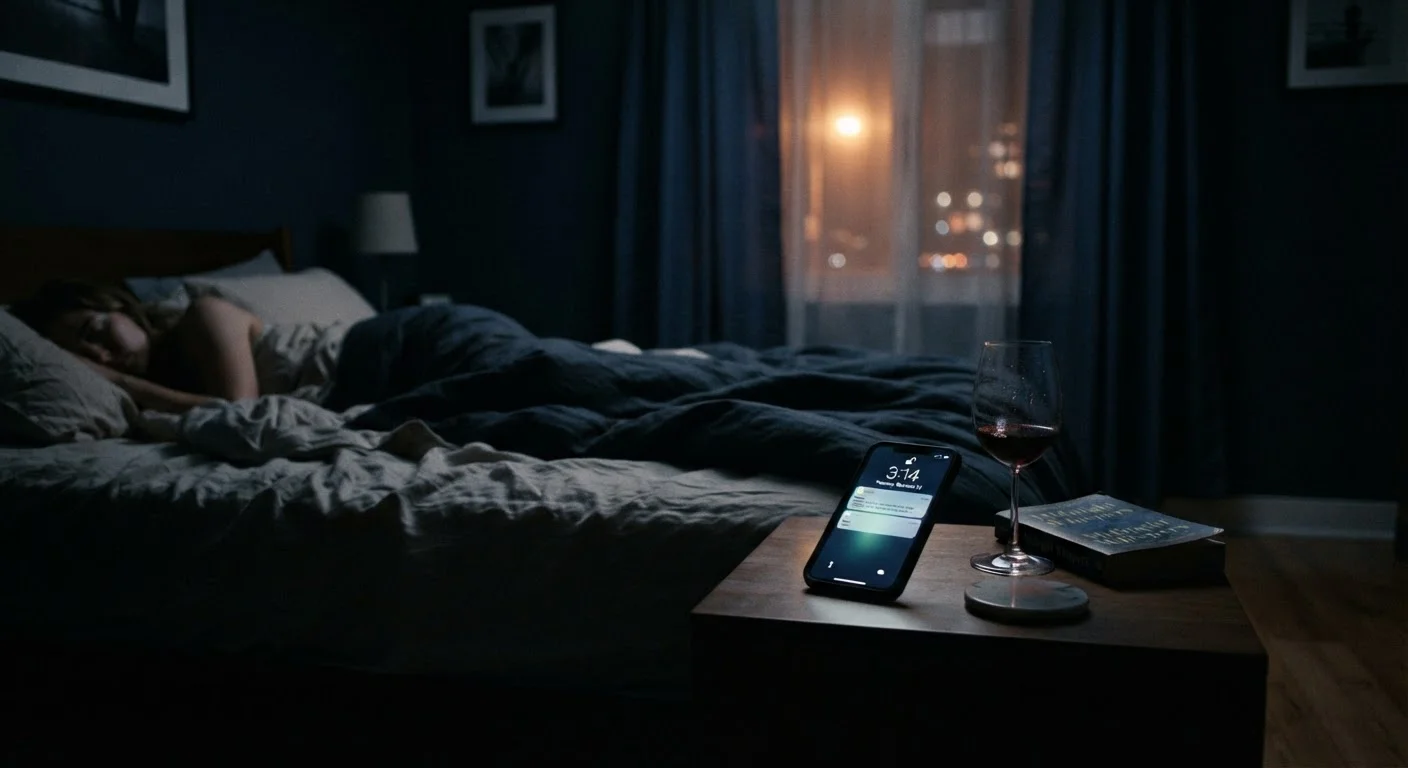
The Hidden Erosion Most Sleepers Miss
Poor sleep doesn't always announce itself dramatically. More often, it creeps in through routines that feel entirely ordinary — a nightcap to wind down, a late dinner with friends, the habit of scrolling until your eyelids finally give out. These behaviors rarely trigger an obvious, sleepless night. Instead, they quietly chip away at sleep quality over weeks and months, leaving you chronically under-rested without a clear culprit in sight.
Research in sleep medicine consistently shows that sleep architecture — the precise cycling through light, deep, and REM (rapid eye movement) sleep — is surprisingly fragile. It responds to temperature, light, timing, and stress in ways most people never learn about. The result is that well-intentioned people can follow what they think is a reasonable nighttime routine and still wake up feeling unrefreshed. If you've noticed that pattern, the list below may point to why. For a broader look at how everyday routines can compound into larger health consequences, see our piece on small daily habits that quietly undermine long-term health.
Evening alcohol consumption
Alcohol is among the most misunderstood sleep aids in common use. While it does accelerate the onset of sleep, it disrupts the sleep cycle in the second half of the night — the period when REM sleep is most abundant. As the body metabolizes alcohol, it produces a rebound effect: lighter sleep, more frequent awakenings, and suppressed dreaming. Over time, relying on alcohol to fall asleep can degrade sleep quality significantly without the person recognizing the connection. Even one or two drinks within a few hours of bedtime can measurably alter sleep architecture.
Alcohol accelerates sleep onset but fragments the restorative second half of the night.
Inconsistent sleep and wake times
The body's circadian rhythm — its internal 24-hour clock — governs when you feel sleepy, when you feel alert, and when core body temperature rises and falls. Shifting your sleep and wake times by even an hour or two on weekends disrupts this rhythm in ways that mirror mild jet lag. Sleep researchers sometimes call this "social jet lag." The result is difficulty falling asleep on Sunday nights, grogginess on Monday mornings, and a chronic mismatch between biological timing and daily demands. Consistency in wake time, in particular, is one of the most evidence-supported levers for improving sleep quality. For more on related pitfalls, see recovery traps that undermine even the best sleep schedules.
Shifting sleep times by even an hour on weekends can induce a social jet lag effect.
Low-level artificial light exposure at night
The human brain is exquisitely sensitive to light as a signal for wakefulness. Light — including the blue-spectrum light emitted by smartphones, tablets, and LED overhead lighting — suppresses melatonin production through the retinohypothalamic tract, effectively telling the brain it isn't yet time to sleep. Many people don't realize this suppression can occur at relatively low light intensities, not just from bright overhead bulbs. Even a glowing standby indicator, a streetlight through thin curtains, or a charging phone face-up on a nightstand can register. Dimming or eliminating artificial light sources in the two hours before bed is among the most straightforward interventions supported by sleep science.
Even low-intensity artificial light can suppress melatonin and delay natural sleep onset.
Late or heavy meals close to bedtime
Digestion is an active physiological process that elevates core body temperature and keeps the gastrointestinal system working — both of which are at odds with the drop in body temperature that supports deep sleep. High-fat meals take longer to digest and have been associated with reduced slow-wave (deep) sleep in research settings. Spicy foods can trigger acid reflux when lying down, causing micro-awakenings that the sleeper often doesn't consciously register. Eating the last substantial meal of the day at least two to three hours before bed is a practical way to reduce these effects. For context on how eating patterns affect broader health, our article on food habits that tend to quietly undermine a healthy diet explores related themes.
Heavy meals close to bedtime elevate body temperature and reduce slow-wave sleep.
Chronic low-grade psychological stress
The body's stress response — mediated largely by cortisol and adrenaline — is fundamentally incompatible with deep sleep. Acute stress is well recognized as a sleep disruptor, but chronic, low-grade stress is subtler and arguably more damaging because it persists without obvious peaks. Worry about work deadlines, financial pressure, or relationship friction keeps the sympathetic nervous system in a mild state of activation, raising arousal thresholds and compressing the slow-wave and REM stages of sleep. Many people in this state describe sleeping "lightly" or feeling like they never fully switch off. Practices rooted in mindfulness and relaxation have a reasonable evidence base for addressing this type of sleep interference — the Mindfulness & Rest hub covers approaches worth exploring.
Low-grade chronic stress keeps the nervous system activated, compressing the deepest sleep stages.
Ambient bedroom temperature extremes
Core body temperature naturally decreases as part of the physiological transition into sleep. A bedroom that is too warm interferes with this process, delaying sleep onset and increasing the proportion of lighter sleep stages through the night. Research generally identifies a cool room — roughly in the mid-60s Fahrenheit range for most adults — as conducive to sleep, though individual comfort varies. Conversely, sleeping in an overly cold environment can trigger stress responses that fragment sleep. Small adjustments to thermostat settings or bedding weight are often underestimated as sleep interventions but can produce noticeable results.
A bedroom that's too warm prevents the core temperature drop essential for deep sleep.
Afternoon and evening caffeine intake
Caffeine works by blocking adenosine receptors — adenosine is a neurochemical that accumulates throughout the day and gradually increases sleep pressure. With caffeine blocking these receptors, the brain doesn't register the full extent of its sleep drive. Caffeine has a half-life of approximately five to six hours in most adults, meaning that a 3 p.m. coffee still has a significant portion active at 9 p.m. Individual metabolism varies considerably, and some people are markedly more sensitive to caffeine's sleep-disrupting effects than others. Cutting off caffeine intake in the early afternoon is a low-cost habit adjustment with meaningful sleep benefits for many people. For a deeper look at similar patterns, habits that quietly erode sleep quality over time covers the mechanisms in more detail.
Caffeine's five-to-six-hour half-life means an afternoon coffee can still disrupt evening sleep.
Reclaiming the Rest You're Silently Losing
Start with one change at a time
Attempting to overhaul every sleep habit simultaneously often leads to frustration and abandonment. Sleep researchers and clinicians generally recommend identifying the one or two most likely disruptors in your routine and addressing those consistently for two to three weeks before making further changes. Small, sustained adjustments tend to produce more durable improvements than sweeping short-term efforts.
Most of these sleep disruptors share a common thread: they either suppress melatonin production, elevate core body temperature, activate the stress response, or fragment the sleep cycle at its most restorative stages. The encouraging reality is that none of them require dramatic lifestyle overhauls to address — awareness and modest, consistent adjustments tend to produce meaningful improvements over time.
If you've made reasonable changes and still struggle with persistent daytime fatigue, that's worth exploring further. Some underlying sleep disorders are easily mistaken for lifestyle-driven poor sleep. Our guide on signs your daytime fatigue may be more than poor sleep outlines patterns worth discussing with a qualified healthcare provider. Similarly, the most common sleep disorders in American adults provides a useful overview of what clinically diagnosable conditions actually look like.
This article is for general informational purposes only and does not constitute medical advice. If you have concerns about your sleep or health, please consult a qualified healthcare professional.
The content on this site is for informational purposes only and is not a substitute for professional advice. Always consult a qualified professional for guidance specific to your situation.