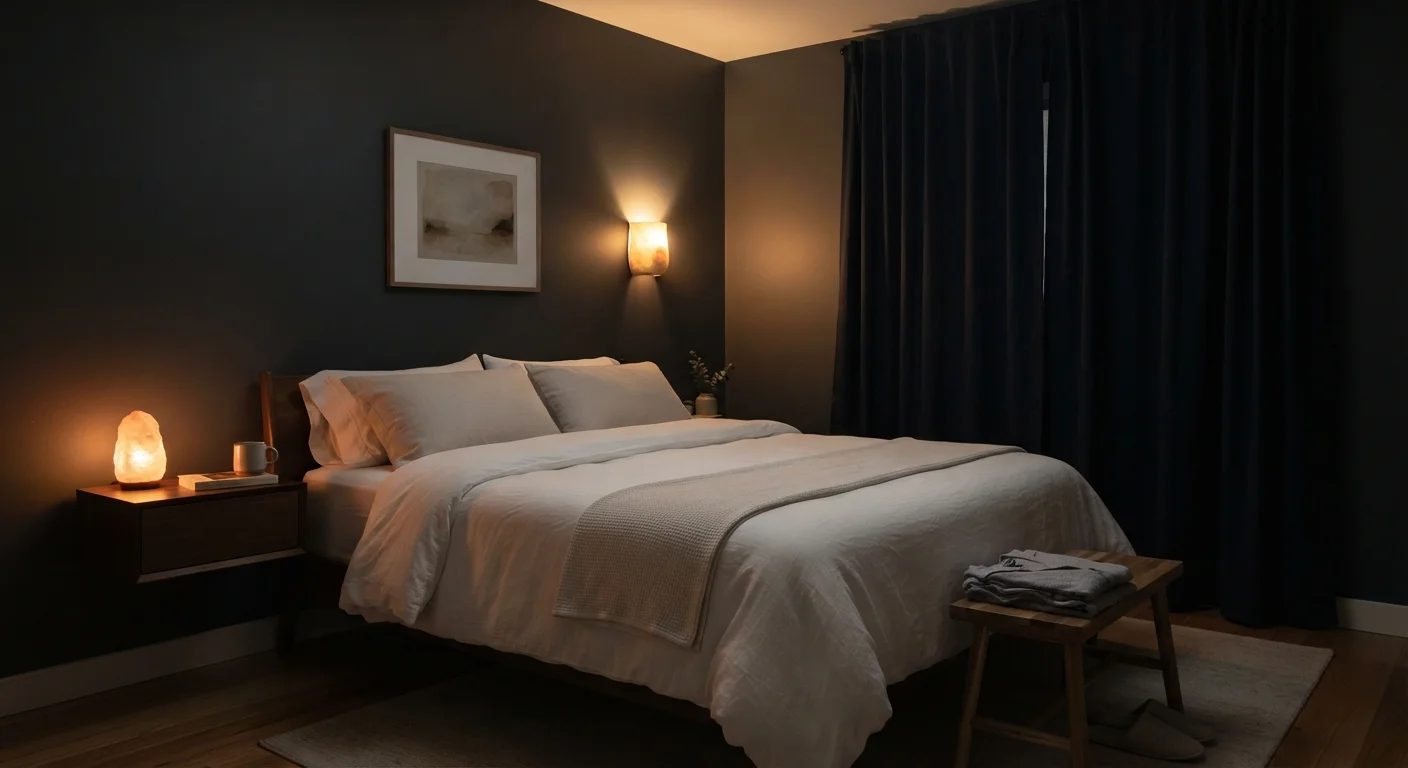
Why Your Bedroom Environment Matters More Than You Think
Sleep science consistently points to the sleep environment as one of the most modifiable factors affecting sleep quality. Unlike genetics or shift-work schedules, your bedroom is largely within your control — yet most people never systematically evaluate it. Research published in sleep medicine literature shows that temperature, light, noise, and perceived safety all influence how quickly you fall asleep, how deeply you sleep, and how often you wake during the night.
This checklist is designed as a practical audit tool. Work through it room by room, ideally during daylight hours, so you can observe conditions objectively before night falls. For a broader foundation on sleep-supporting habits, see our comprehensive sleep hygiene guide. If racing thoughts are part of your challenge, pairing this checklist with our before-bed mental wind-down checklist can address both environmental and psychological barriers simultaneously.
Required
Room thermometer
Measure your actual bedroom temperature rather than relying on thermostat readings, which can differ from ambient room temperature.
Required
Blackout curtains or blinds
Block external light sources that suppress melatonin and disrupt sleep architecture.
Optional
White noise machine or fan
Provide consistent background sound to mask unpredictable noise spikes that fragment sleep.
Optional
Sleep mask
Serve as a portable backup for light blocking when blackout curtains are unavailable or insufficient.
Optional
Earplugs (25 dB NRR or higher)
Reduce high-volume noise intrusions on nights when ambient sound control is not enough.
Optional
HEPA air purifier
Filter airborne allergens and particulates that can cause nighttime congestion and disrupted breathing.
The Complete Bedroom Environment Checklist
Use the checklist below to identify gaps in your current setup. Items marked must represent changes with the strongest evidence base. Should items offer meaningful improvements for most sleepers. Nice to have items can further optimize an already solid environment. For deeper context on the biology behind these recommendations, explore our science-backed guide to sleep environments.
Temperature Control
Set your thermostat to between 65°F and 68°F before bed, as this range supports the core body temperature drop associated with sleep onset.Must
Use breathable bedding materials such as cotton or linen that allow airflow and reduce heat retention overnight.Must
If you share a bed with someone who runs hotter or cooler, consider separate blankets or a dual-zone temperature solution to avoid compromising either person's sleep.Should
Crack a window slightly if outdoor air quality and noise levels allow, to introduce fresh, cooler air without mechanical cooling.Nice to have
Light Management
Install blackout curtains or blinds that fully block streetlights, car headlights, and early morning sunlight from entering the room.Must
Cover or remove all sources of artificial light in the room, including LED indicator lights on electronics, digital clock displays, and charging cables.Must
Switch any remaining necessary lights (such as nightlights for navigation) to red or amber wavelengths, which have less impact on melatonin suppression than blue or white light.Should
Use a sleep mask as a backup on nights when light control is incomplete, such as during travel or in temporary sleeping situations.Nice to have
Noise Reduction
Identify your main noise sources — traffic, neighbors, HVAC, or a snoring partner — and address the loudest one first with a targeted solution.Must
Use a white noise machine, fan, or a consistent low-level sound source to mask unpredictable noise spikes that cause micro-arousals during sleep.Should
Add soft furnishings such as rugs, curtains, and upholstered furniture to absorb sound and reduce echo in the bedroom.Should
Keep earplugs rated at 25 dB or higher on your nightstand for nights with elevated external noise that your standard setup cannot absorb.Nice to have
Clutter and Mental Association
Remove work materials, laptops, and paperwork from the bedroom entirely to preserve the brain's association between this space and rest.Must
Limit TV watching and non-sleep screen use in bed so your nervous system consistently pairs the bedroom environment with winding down.Must
Tidy visible surfaces before bed each night — research in environmental psychology suggests visual clutter elevates cortisol and cognitive arousal.Should
Designate a specific area outside the bedroom for charging all devices overnight so notifications and screen glow don't reach the sleep space.Should
Air Quality and Scent
Ensure adequate ventilation by opening a window or running air circulation periodically during the day to maintain fresh, oxygen-rich air overnight.Should
Avoid strong synthetic air fresheners or scented candles with volatile organic compounds near bedtime, as chemical irritants can affect respiratory comfort during sleep.Should
Consider a HEPA air purifier if you have allergies, asthma, or live in an area with elevated particulate matter — cleaner air supports unobstructed breathing during sleep.Nice to have
Bedding and Surface Comfort
Wash bed linens regularly — at least every one to two weeks — to reduce allergen accumulation from dust mites that can trigger nighttime congestion.Must
Evaluate your pillow's support level: a pillow that keeps your head and neck in neutral alignment for your sleep position reduces the chance of pain-related awakenings.Should
Assess your mattress for visible sagging or discomfort — a surface that no longer provides appropriate support may contribute to restless sleep and morning pain.Should
Persistent Sleep Problems Need Professional Evaluation
A well-optimized bedroom environment supports better sleep for most people, but it is not a substitute for clinical evaluation. If you regularly take more than 30 minutes to fall asleep, wake frequently without being able to return to sleep, or feel unrefreshed despite adequate time in bed, speak with a qualified healthcare provider. Conditions such as sleep apnea, insomnia disorder, and restless legs syndrome require professional assessment and, where indicated, treatment — not just environmental adjustments.
This article is for general informational purposes only and does not constitute medical advice. If you experience persistent sleep difficulties, consult a qualified healthcare professional.
Sleep Health Editorial Team is the collective byline for our editorial team and contributor network. Articles published under this byline or an editorial pen name are researched, written, and reviewed according to our editorial standards for clarity, consistency, and independence before publication.
The content on this site is for informational purposes only and is not a substitute for professional advice. Always consult a qualified professional for guidance specific to your situation.