

Why the Old Food Pyramid Failed Us
For decades, the food pyramid told Americans to eat 6–11 servings of bread and grains daily, with vegetables and fruits secondary. Nutritional research has since shown that model was overly simplified and poorly communicated — it treated all carbohydrates equally and gave little guidance on food quality. The result was widespread confusion about what a genuinely healthy meal actually looks like.
Today, evidence-based frameworks like the plate method replace abstract pyramids with something visual and immediate: your actual dinner plate. For a deeper look at the broader principles behind long-term healthy eating, see our comprehensive guide to sustainable healthy eating.
9 in 10
Americans fall short on daily vegetable intake
According to the CDC, only about 1 in 10 adults meets federal recommendations for vegetable consumption, making it the most common nutritional gap in the American diet.
~50%
Of grain intake in the U.S. is refined, not whole
The Dietary Guidelines for Americans note that most Americans consume far more refined grains than whole grains, missing out on fiber, B vitamins, and minerals found in whole-grain foods.
1.5 cups
Daily fruit intake recommended for adults
The 2020–2025 Dietary Guidelines for Americans recommend 1.5–2 cups of fruit per day for most adults, yet average intake consistently falls below this level across all age groups.
The Four Sections of a Balanced Plate
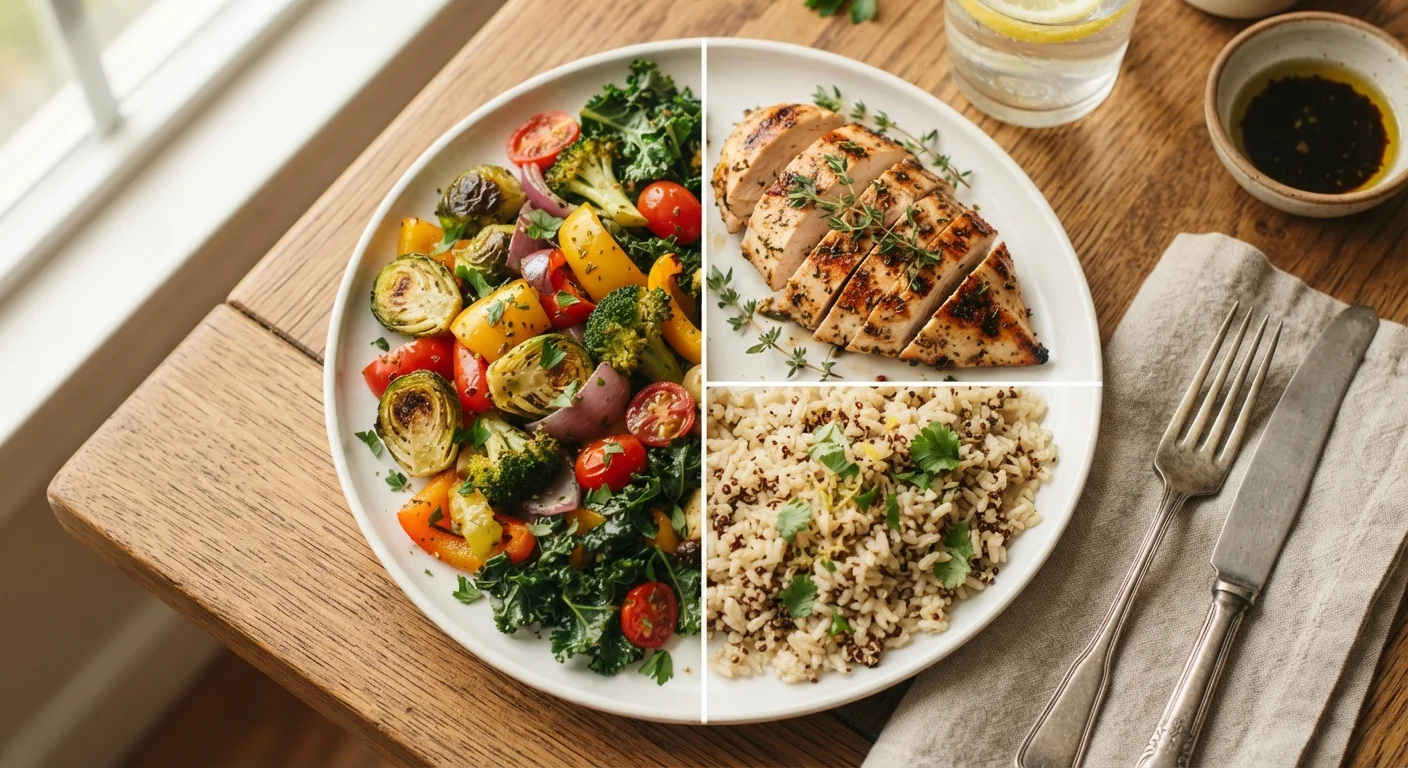
Think of your plate as having four functional zones, each serving a specific nutritional role:
- Half the plate — vegetables and fruit: This is the foundation. Non-starchy vegetables like broccoli, spinach, peppers, and carrots provide fiber, vitamins, minerals, and antioxidants with relatively few calories. Fruit adds natural sugars alongside valuable micronutrients. Prioritizing this half is one of the most consistent findings in dietary research.
- One quarter — quality protein: Protein supports muscle maintenance, immune function, and satiety. Options include grilled chicken, fish, eggs, Greek yogurt, tofu, lentils, or black beans. Varying your protein sources across the week — including plant-based options — broadens your nutrient intake.
- One quarter — whole grains or starchy vegetables: Brown rice, quinoa, sweet potato, whole wheat pasta, and oats provide complex carbohydrates that digest more slowly than refined grains, supporting steadier blood sugar and longer-lasting energy.
- A side of healthy fat: Fats aren't shown as a plate section, but they matter. A drizzle of olive oil, a handful of walnuts, or a few slices of avocado helps your body absorb fat-soluble vitamins (A, D, E, and K) and increases meal satisfaction.
What This Looks Like in Real Life
Balanced eating doesn't require elaborate meal prep or unusual ingredients. It adapts to everyday American meals and busy schedules.
To learn how to meet your vitamin and mineral needs through everyday food choices rather than supplements, explore our article on building micronutrient intake through everyday meals.
Common Mistakes That Throw Off the Balance
Even well-intentioned meals can miss the mark. A few patterns to watch for:
- Protein-heavy, vegetable-light plates: Many American meals are built around a large protein portion with a token side salad. Shifting the proportions — reducing protein to one quarter and doubling vegetables — is one of the highest-impact adjustments you can make.
- Refined carbs filling the grain quarter: White rice, dinner rolls, and pasta made from refined flour digest quickly and lack the fiber of whole-grain alternatives. Swapping even half your refined grains for whole-grain versions is a meaningful step.
- Forgetting about beverages: Sugary drinks alongside an otherwise balanced meal can significantly shift its overall nutritional profile. Water, sparkling water, or unsweetened tea are natural complements to any plate.
For practical habits around combining proteins, carbohydrates, and fats at meals, see our guide on putting macronutrients together.
This article is for general informational and educational purposes only and is not a substitute for personalized medical or nutritional advice. Consult a qualified healthcare professional or registered dietitian for guidance specific to your health needs.
Frequently Asked Questions
No — balance is best viewed across an entire day or week, not every single meal. If lunch is mostly grains, aim to load up on vegetables at dinner. Consistent overall patterns matter far more than perfection at each sitting.
Current general guidance suggests roughly one quarter of your plate come from protein sources. The Dietary Guidelines for Americans recommend varying protein choices to include seafood, poultry, eggs, beans, nuts, and seeds rather than relying on a single source.
Absolutely. Plant proteins like lentils, chickpeas, tofu, and edamame can occupy the protein quarter of your plate just as effectively as animal sources. Pairing varied plant proteins across meals helps cover essential amino acid needs.
No. Whole-food carbohydrates — including vegetables, fruits, legumes, and whole grains — are foundational to a balanced diet. The key distinction is choosing minimally processed carbohydrates over refined options like white bread or sugary drinks.
Yes. Healthy fats from foods like avocado, olive oil, nuts, and fatty fish support vitamin absorption and help you feel satisfied. They aren't shown as a quarter of the plate, but they're an important part of meals — used in cooking or as additions to vegetables and grains.
The plate method naturally helps with portions by distributing space visually rather than requiring precise measurements. Using a standard 9-inch dinner plate as your guide makes it easier to keep proportions consistent without weighing or tracking food.
The content on this site is for informational purposes only and is not a substitute for professional advice. Always consult a qualified professional for guidance specific to your situation.