

Why Busy Schedules Undermine Eating Well
When work deadlines pile up and commutes eat into your day, nutrition is often the first thing to slip. You skip breakfast, grab fast food at lunch, and order takeout by dinner — not because you don't care, but because the path of least resistance is whatever is fastest. This pattern is extremely common among American adults and is less a willpower problem than a systems problem.
Research consistently shows that people make hundreds of food-related decisions daily, and decision fatigue is real. When mental energy is low, the brain defaults to convenience over quality. The solution isn't motivation — it's reducing the number of in-the-moment choices you have to make. Building a few structural habits into your week can dramatically shift what you eat without requiring more time or effort each day.
Understanding your own schedule honestly is the first step. Are your hardest days Monday through Wednesday? Do you have ten minutes in the morning but nothing at noon? Tailoring your approach to your actual life — rather than an idealized version of it — is what makes habits stick. For a broader look at how daily structure supports wellness, see our daily wellness audit for busy adults.
This Is General Education, Not Medical Advice
The strategies in this article are general nutrition information for healthy adults. They are not a substitute for personalized guidance from a registered dietitian, physician, or other qualified healthcare provider. If you have a chronic condition, food allergy, or specific health concern, please consult a professional before making significant changes to your diet.
What You'll Need Before You Start
You don't need a fully stocked professional kitchen to eat well on a busy schedule. The prerequisites below are about mindset and basic resources — not equipment or cooking skill.
What you will need
Stock Your 'Anchor' Ingredients
Choose three to five versatile ingredients each week — like canned beans, eggs, whole-grain bread, frozen vegetables, and rotisserie chicken — that can anchor multiple meals. When you always have these on hand, assembling a nutritious meal takes minutes rather than a full cooking session.
Step-by-Step: Building Habits That Hold
Follow these steps in order the first time. Once any habit feels automatic — usually after two to four weeks — move on to layering in the next one. Trying to implement everything at once is one of the most common reasons people abandon healthy eating routines.
Map Your Week Before You Shop
Before buying groceries, spend five minutes reviewing your upcoming week. Identify your two or three busiest days — these are the days that need the most support. Note any meals where you'll definitely be eating out or skipping cooking entirely. This prevents over-buying food that goes to waste and ensures your prep effort targets the moments that matter most.
Do One Batch-Prep Session Per Week
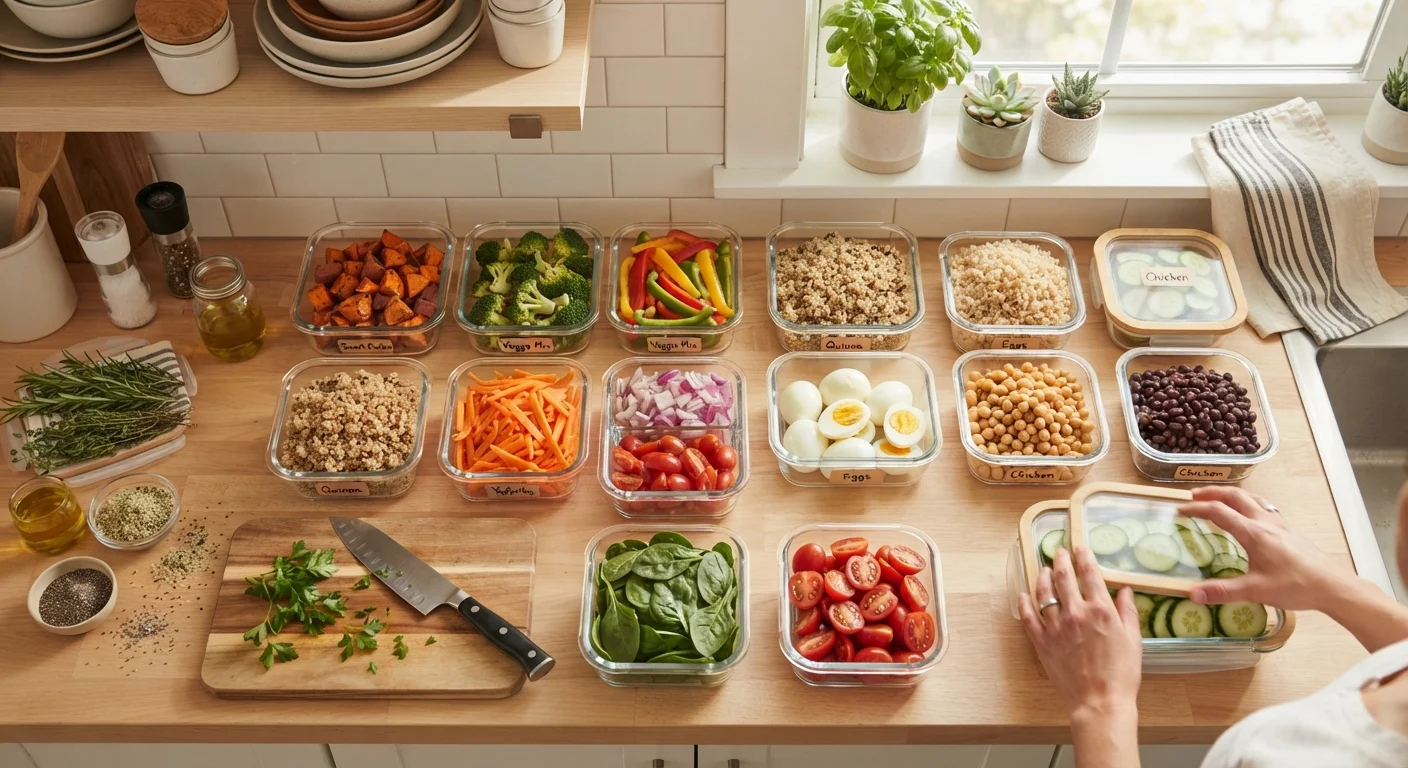
Choose a single 45–60 minute window — often Sunday afternoon or Monday morning — to prepare a handful of core ingredients. This doesn't mean cooking complete meals. Instead, focus on components: cook a pot of grains (brown rice, quinoa, oats), hard-boil a batch of eggs, wash and chop raw vegetables, and rinse canned or dried legumes. These components can be mixed and matched into different meals across the week with almost no additional effort.
Building a longer-term weekly routine around this kind of prep is covered in depth in our guide to building a weekly eating routine that actually sticks.
Build a No-Cook Breakfast Default
Breakfast is the meal most often skipped on busy mornings — and a skipped breakfast often cascades into poor choices by midday. Identify one or two no-cook breakfasts you genuinely like and that take under five minutes to assemble. Greek yogurt with fruit, overnight oats, whole-grain toast with nut butter, or a boiled egg with cheese are examples that provide a useful mix of protein and carbohydrates without requiring any cooking in the morning.
Create a Snack System, Not Just a Snack Drawer
Having snacks available isn't enough if they require searching through a cabinet when you're already hungry. Designate a specific shelf in your fridge and one in your pantry exclusively for ready-to-eat snacks. Stock these proactively each week. Good options include washed fruit, pre-portioned nuts, string cheese, hummus with cut vegetables, or whole-grain crackers. When hunger hits unexpectedly, you'll reach for what's immediately visible and accessible.
Meeting your micronutrient needs through regular snacking on whole foods is more effective than most people realize — see our article on building micronutrient intake through everyday meals for more on this approach.
Set a Hydration Anchor
Dehydration is frequently mistaken for hunger and can amplify fatigue on busy days, making unhelpful food choices more likely. Attach water intake to existing habits — a full glass when you wake up, one before each meal, and one mid-afternoon. A reusable water bottle kept at your desk or in your bag makes this automatic rather than deliberate.
As you establish your routine, you may find it useful to think about meal frequency. Whether three structured meals or smaller, more frequent eating works better for you depends on your schedule and hunger patterns — our article on three meals versus grazing throughout the day walks through the trade-offs clearly.
Navigating Restaurants and Takeout Without Losing Ground
Eating out is a normal part of American life and doesn't have to derail consistent nutrition. The key is having a few default strategies ready before you open the menu. Prioritize meals that include a lean protein source, a vegetable, and a minimally refined carbohydrate — this simple framework narrows choices quickly and reduces decision fatigue at the table.
Portion sizes at restaurants are often larger than necessary. Splitting an entrée, boxing half before eating, or ordering an appetizer as a main are all practical approaches. For a more detailed look at navigating restaurant nutrition, see our piece on the trade-offs of eating out frequently.
Protein is often the hardest nutrient to hit on a busy day. If you're relying mostly on takeout and packaged foods, you may be getting less than you think — and it doesn't have to come from meat. See getting enough protein without centering every meal around meat for practical alternatives. For a broader view of how all three macronutrients fit together day-to-day, our guide on habits that support balanced eating is a useful next read.
This article is for general informational and educational purposes only and does not constitute medical or dietary advice. Consult a qualified healthcare professional for guidance tailored to your individual health needs.
The content on this site is for informational purposes only and is not a substitute for professional advice. Always consult a qualified professional for guidance specific to your situation.