

Why Routines Work Better Than Meal Plans
Most people abandon rigid meal plans within a week or two — not because they lack willpower, but because detailed plans don't flex around real life. Research on habit formation consistently shows that repeatable, low-effort behaviors are what actually stick over time. A weekly eating routine works differently: instead of prescribing exactly what to eat every day, it builds a reliable structure around when and how you eat, leaving room for variety and improvisation.
This approach is grounded in the same behavioral science behind other sustainable habits. If you've explored how habit stacking supports daily wellness, you'll recognize the same principle here — anchoring new behaviors to existing ones reduces the mental load of change. For food, that means connecting meals and prep tasks to things you already do consistently.
The goal isn't optimization. It's reducing the number of decisions you have to make under pressure so that reasonably nourishing choices become the default.
What You'll Need Before You Start
Before building your routine, gather a realistic picture of your current week. You don't need a nutrition app or a spreadsheet — a simple written audit is enough.
What you will need
Once you have this baseline, you're ready to build a structure that fits your actual life rather than an idealized version of it.
Step-by-Step: Building Your Weekly Eating Routine
Follow these steps in order. Each one is designed to be completed in a single sitting — about 20 to 45 minutes total — and revisited briefly each week as you refine the routine.
Audit Your Current Eating Patterns
Write down what you typically eat Monday through Sunday — not what you wish you ate, but what you actually eat. Note which meals are consistent and which are chaotic. Look for two or three meals that already work reasonably well; these become the anchors of your new routine rather than things you need to fix.
Choose Two or Three Repeating Breakfast Options
Mornings set the tone for daily eating patterns. Pick two or three breakfasts you genuinely like and can prepare in under ten minutes. Rotate among them each week. Repetition here reduces decision fatigue when you're least alert, making it far more likely you'll eat something nourishing before leaving the house.
Identify Your Two Hardest Meal Moments
Most people have one or two predictable points in the week when healthy eating falls apart — a Wednesday evening after a long day, or Friday lunch when everyone orders takeout. Name those moments explicitly. These are your highest-priority targets for a simple plan: either a pre-decided fallback meal or a small prep step done earlier in the week.
Pick One Weekly Prep Task
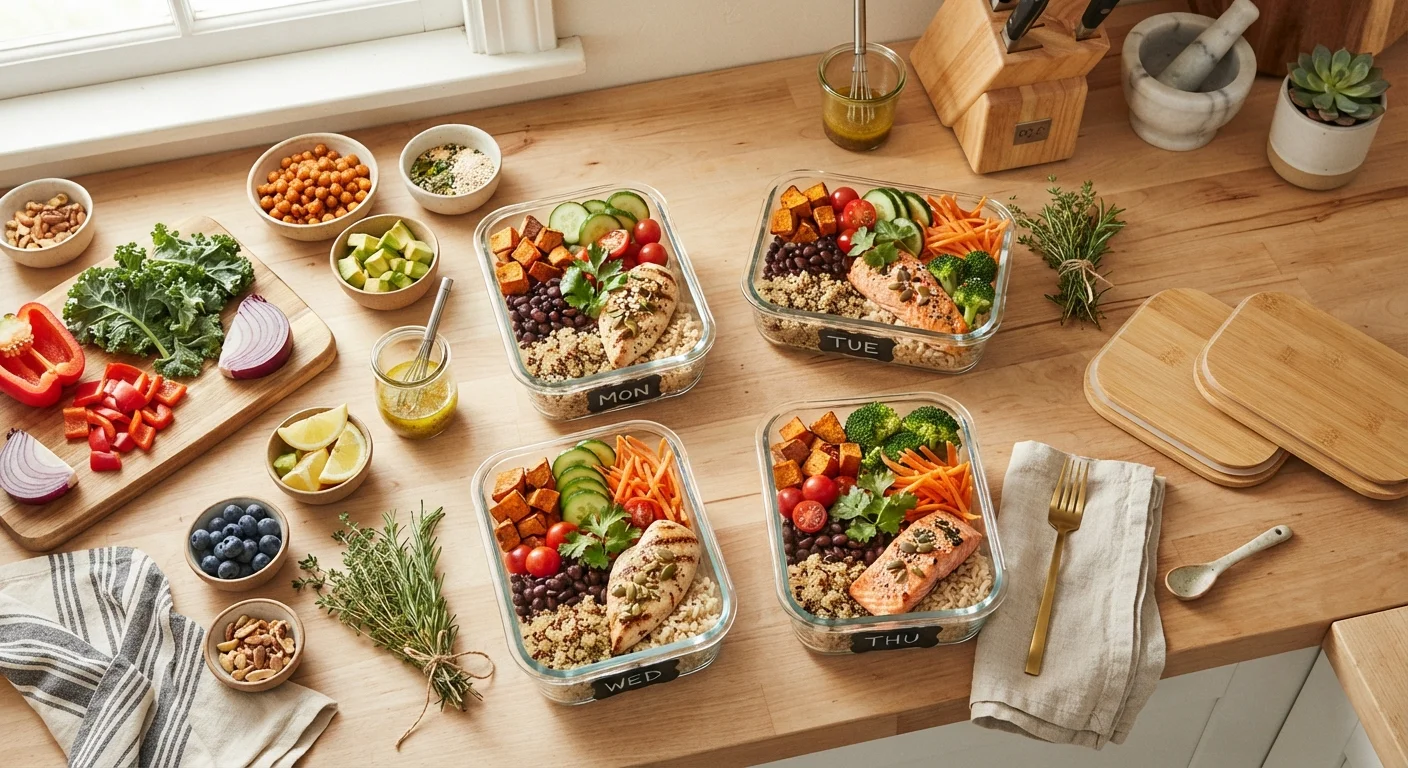
Choose a single prep task — not a full meal-prep session — that takes 30 to 45 minutes on a weekend or low-pressure weekday evening. Examples: cook a batch of grains, roast a tray of vegetables, or hard-boil a carton of eggs. One versatile ingredient prepared in advance dramatically expands your weeknight options without requiring a major time investment.
Build a Short, Flexible Grocery List
Based on your anchored breakfasts, your fallback meals, and your one prep ingredient, create a core grocery list of 10 to 15 items you buy every week. This list should cover roughly 70 to 80 percent of what you'll eat, leaving room for whatever looks good or is on sale. A stable list reduces shopping time and minimizes food waste.
Schedule Your Grocery Run and Prep Window
Treat your weekly grocery trip and prep task like any other appointment. Assign them a consistent time slot — the same day and time each week if possible. Behavioral research consistently finds that time-specific implementation intentions (deciding when and where you'll act) significantly improve follow-through compared to open-ended intentions.
Pair Your Eating Routine With Morning Movement
A consistent morning movement habit and a predictable eating routine reinforce each other. If you're working on both simultaneously, keep each one simple enough to maintain independently. See building a morning mobility routine for a practical framework that pairs well with an eating routine.
For practical guidance on how to balance protein, carbohydrates, and fat across these meals, see habits that support balanced eating. Pairing a solid eating routine with a consistent movement schedule also compounds the benefits — building your first weekly workout schedule is a helpful companion resource.
Keeping the Routine Going
The most common reason eating routines collapse isn't motivation — it's that the routine was built for an ideal week, not a typical one. Build in two or three fallback meals: simple, reliable options (like scrambled eggs, canned beans and rice, or a rotisserie chicken) that require almost no effort and can substitute for any planned meal when things go sideways.
Review your routine briefly every Sunday — not to judge how you did, but to adjust for the week ahead. Did one prep step feel like too much? Scale it back. Did a particular breakfast anchor your mornings well? Keep it. Consistent small refinements produce routines that genuinely hold up over months and years.
Stress and sleep also affect eating patterns more than most people realize. Disrupted sleep, for instance, tends to increase appetite and shift food preferences toward higher-calorie options. Strategies covered in better sleep habits and daily stress-relief routines complement a food routine by addressing the environmental factors that undermine it.
This article is for general informational and educational purposes only and is not a substitute for professional medical or dietary advice. If you have specific health conditions or nutritional concerns, consult a qualified healthcare provider or registered dietitian.
The content on this site is for informational purposes only and is not a substitute for professional advice. Always consult a qualified professional for guidance specific to your situation.