

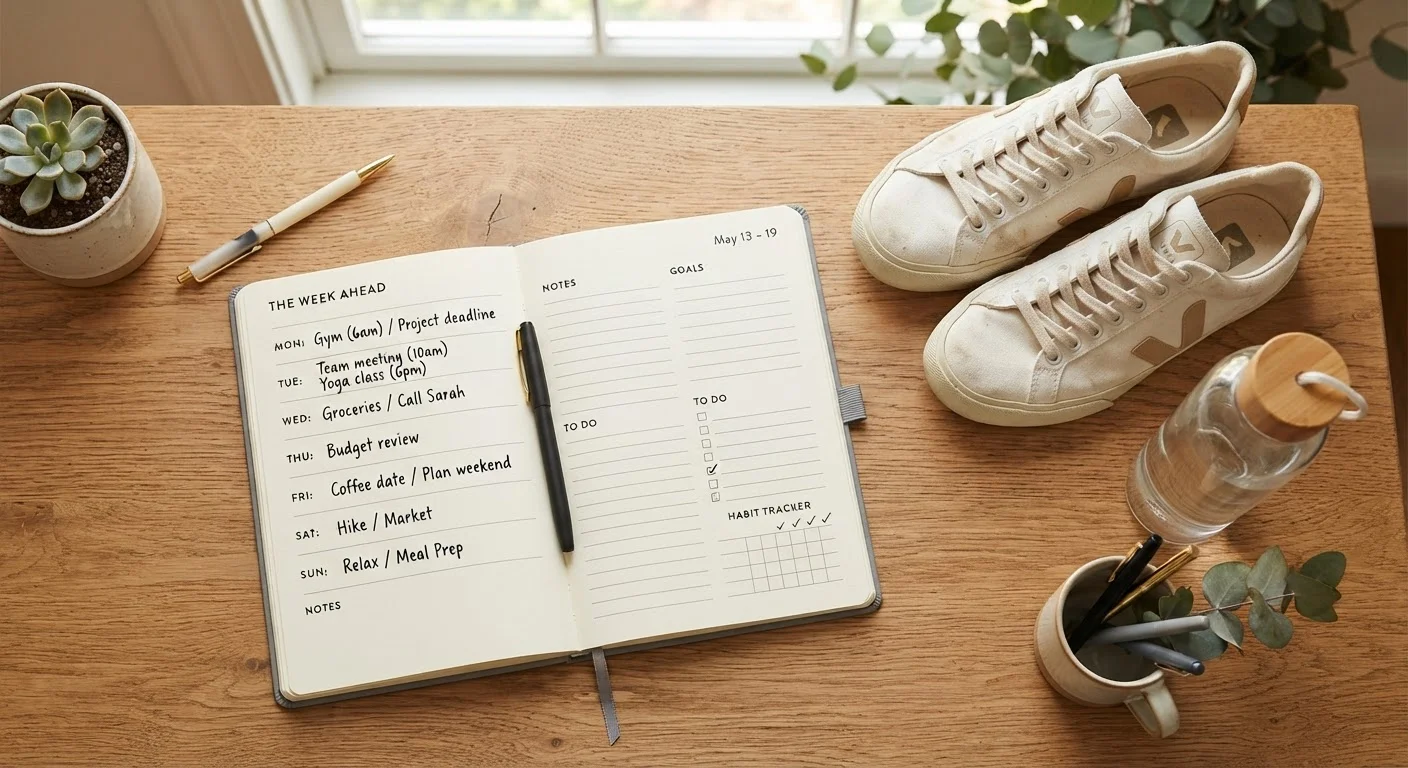
Why Structure Matters More Than Motivation
Most people approach fitness with a burst of motivation that fades within days. The antidote isn't more motivation - it's a clear, repeatable structure. When the decision of what to do and when to do it is already made, you remove the mental friction that leads to skipped sessions.
Research in behavioral science consistently shows that pre-committed plans outperform intention alone. A written weekly schedule functions as that commitment device. Before building your schedule, it helps to understand the movement basics - see our complete beginner foundation guide for a solid starting point.
Check With a Doctor Before Starting
If you have a chronic health condition, a recent injury, or haven't been physically active for an extended period, consult a qualified healthcare professional before beginning any new exercise program. This article provides general educational guidance and is not a substitute for personalized medical advice.
For a broader view of how exercise fits into daily wellness habits, the article on building evidence-based daily health habits offers useful context.
What You'll Need Before You Begin
Good news: you don't need a gym membership or expensive equipment to build an effective beginner schedule. What you do need is a clear picture of your available time, a basic space to move, and the right mindset going in.
What you will need
Weekly Planner or Calendar App
Used to map out and commit to your workout days, rest days, and session types each week.
Timer or Stopwatch
Helps you track workout duration and rest intervals during sessions.
Resistance Bands or Light Dumbbells
Provides resistance for basic strength exercises without requiring a full gym setup.
Foam Roller
Supports post-workout muscle recovery and complements mobility work on rest days.
Once you know your available days and have your basics in place, you're ready to build the schedule step by step.
Building Your Schedule Step by Step
Decide How Many Days Per Week You Can Realistically Train
Start by looking at your actual weekly schedule - not the one you wish you had. For most beginners, 3 to 4 days of intentional exercise per week is both effective and sustainable. This frequency allows adequate recovery while building the habit of regular movement.
Avoid the temptation to schedule 6 or 7 days immediately. Overcommitting is one of the most common reasons beginners abandon routines within the first few weeks.
Choose Your Three Core Training Categories
A balanced beginner schedule draws from three categories:
- Cardiovascular exercise - walking, jogging, cycling, or swimming to build heart and lung capacity.
- Strength training - bodyweight or resistance exercises that build muscle and support bone density.
- Mobility and flexibility work - stretching and movement drills that improve range of motion and reduce injury risk.
You don't need to do all three in every session. The goal is to include each category at least once across your week.
Map Out a Sample Week With Rest Days
A simple and effective structure for a 3-day beginner week might look like this:
- Monday: Full-body strength training (30-40 minutes)
- Wednesday: Moderate cardio - a brisk walk or light jog (20-30 minutes)
- Friday: Full-body strength training or a combined cardio + mobility session
- Tuesday, Thursday, Saturday, Sunday: Active rest - light walking, gentle stretching, or simply taking the stairs
Non-consecutive training days give your muscles time to recover and adapt, which is where fitness gains actually occur.
Set a Realistic Session Length
Beginners often overestimate how long workouts need to be. A focused 30 to 45-minute session is entirely sufficient when you're starting out. What matters most is quality of movement and showing up consistently - not the number of hours spent.
As your fitness improves over several weeks, you can gradually increase session length or intensity. This principle - called progressive overload - is a cornerstone of exercise science.
Write It Down and Commit to Two Weeks
Once your schedule is drafted, write it down and commit to following it for exactly two weeks without judgment. Two weeks is long enough to assess what's working but short enough to feel manageable. After that period, review honestly: Which days felt natural? Which sessions did you skip, and why?
Use that data to adjust - maybe Wednesday never works, but Saturday morning does. Flexibility in scheduling is not failure; it's intelligent design.
Anchor Workouts to Existing Habits
One of the most effective scheduling strategies is habit stacking - attaching your workout to something you already do, like exercising right after work or before your morning shower. This removes the decision of 'when,' making it far easier to stay consistent over weeks and months.
Remember: the best schedule is the one you'll actually follow. Perfection is less important than consistency.
Supporting Your Schedule With the Right Habits
A workout schedule doesn't exist in isolation. What you do before and after each session shapes how effective and sustainable the whole routine becomes. Before each workout, a short preparation ritual helps your body and mind transition into exercise mode - our pre-workout checklist covers exactly what that should include.
Nutrition also plays a supporting role. You don't need a strict meal plan, but eating in a consistent, repeatable pattern makes energy levels more predictable. The guide on building a weekly eating routine is a practical companion to this one.
Finally, if your schedule includes mobility work - which it should - this first look at mobility training explains how to approach it without overcomplicating things.
This article is for general informational and educational purposes only and does not constitute medical advice. Always consult a qualified healthcare professional before beginning a new exercise program, especially if you have any existing health conditions or concerns.
The content on this site is for informational purposes only and is not a substitute for professional advice. Always consult a qualified professional for guidance specific to your situation.