

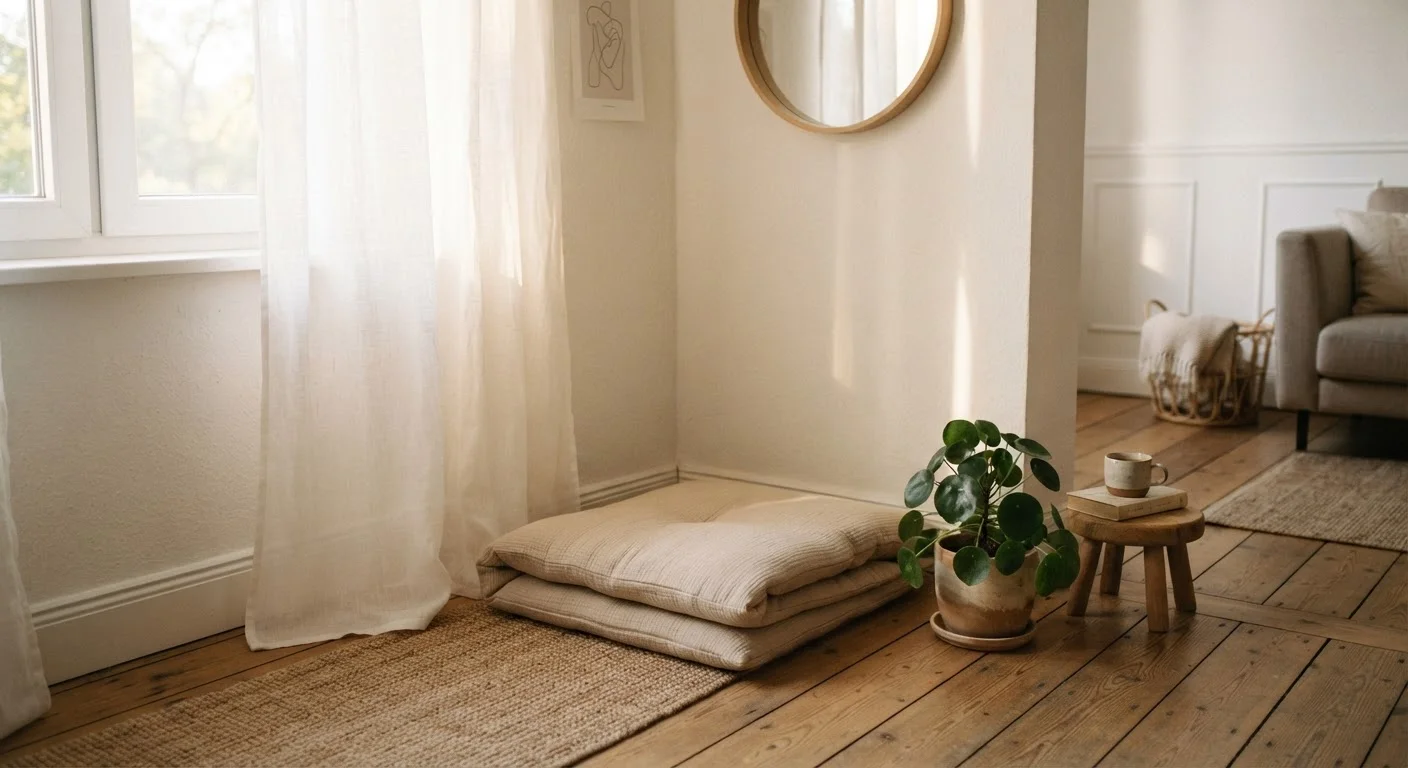
Why Your Environment Shapes Your Practice
Most people who struggle to meditate consistently aren't lacking willpower — they're lacking a reliable cue. Research in behavioral psychology suggests that environmental triggers are among the most powerful forces behind habit formation. When your brain repeatedly associates a specific place with a specific action, showing up becomes easier because the decision is already half-made.
Formal meditation is one of the most evidence-supported tools for reducing perceived stress and improving emotional regulation. If you're still getting clear on the difference between mindfulness and meditation as practices, our overview of mindfulness vs. meditation is a helpful starting point. Once you understand what you're trying to cultivate, dedicating a space to it becomes a meaningful act — not just a decorating project.
The goal here is simple: lower the friction between your intention and your practice.
What you will need
How to Set Up Your Meditation Space
Follow these steps at whatever pace suits your schedule. You can complete the whole setup in an afternoon or refine it gradually over several days.
Choose a specific, repeatable location
Identify one spot you can return to daily — a corner of a bedroom, a section of a living room floor, even a spot on a balcony. Consistency of location matters more than size or style. Avoid spaces you associate strongly with work or high stimulation if possible.
Clear physical clutter from the area
Clutter competes for attention. Before adding anything, remove items that don't belong to your practice — stray laundry, screens, paperwork. You're not aiming for a magazine photo; you're reducing visual noise so your mind has less to process when you arrive.
Choose a comfortable seat
Physical discomfort is one of the fastest ways to abandon a session early. Options include a firm cushion (zafu) on the floor, a folded blanket, a low bench, or an upright chair. There is no posture requirement that makes meditation valid — what matters is that your spine can be relatively upright and your body reasonably still.
Adjust lighting for a calm, non-stimulating atmosphere
Bright overhead lighting can feel alerting and clinical. Soft, warm-toned light — a lamp, natural daylight through a sheer curtain, or candlelight — tends to support a more inward, relaxed state. Experiment with what feels right at your preferred practice time, since morning and evening light needs differ.
Add a simple sensory anchor
A single sensory cue — a specific scent, a small meaningful object, or a particular piece of instrumental music played softly before you begin — can act as a conditioned trigger that primes your nervous system for stillness. Keep it simple: one element is enough. Over time, your brain begins to associate that cue with the mental state you're cultivating.
Minimize digital intrusions
Silence your phone or place it in another room before sitting. If you use a guided meditation app, queue it up and place the phone face-down. Notifications during practice don't just interrupt — they reinforce the habit of checking, which is the exact mental pattern many people meditate to counteract.
Sustaining the Space — and the Practice
A meditation space only works if you return to it. A few habits keep the momentum going:
- Protect it lightly. You don't need rigid rules, but gently discouraging the space from becoming a laundry chair or charging station preserves its signal value.
- Adjust seasonally. Lighting, temperature, and your schedule all shift across the year. Revisit your setup when something starts to feel off.
- Pair it with adjacent habits. Many people find meditation easiest when it follows an existing routine — morning coffee, an evening wind-down, or a post-workout cool-down. Daily habits that support a calmer mind explores exactly this kind of habit stacking for mental well-being.
If a dedicated space simply isn't feasible every day, informal moments throughout your day can carry the practice forward. See everyday moments you can use for informal mindfulness for practical alternatives. And when you're ready to think about keeping the habit alive for the long haul, sustaining a mindfulness practice over time offers honest, research-grounded strategies.
Start Small to Build the Cue
Even two to five minutes in your dedicated space daily is enough to begin building the environmental association. Longer sessions can come later. The habit of arriving at the space — and sitting — is the foundation everything else rests on. For a broader framework on making mindfulness part of daily life, the complete overview of mindfulness and rest is a solid companion resource.
This article is for informational purposes only and is not a substitute for professional medical or mental health advice. If you have concerns about your mental health, please speak with a qualified healthcare provider.
The content on this site is for informational purposes only and is not a substitute for professional advice. Always consult a qualified professional for guidance specific to your situation.