

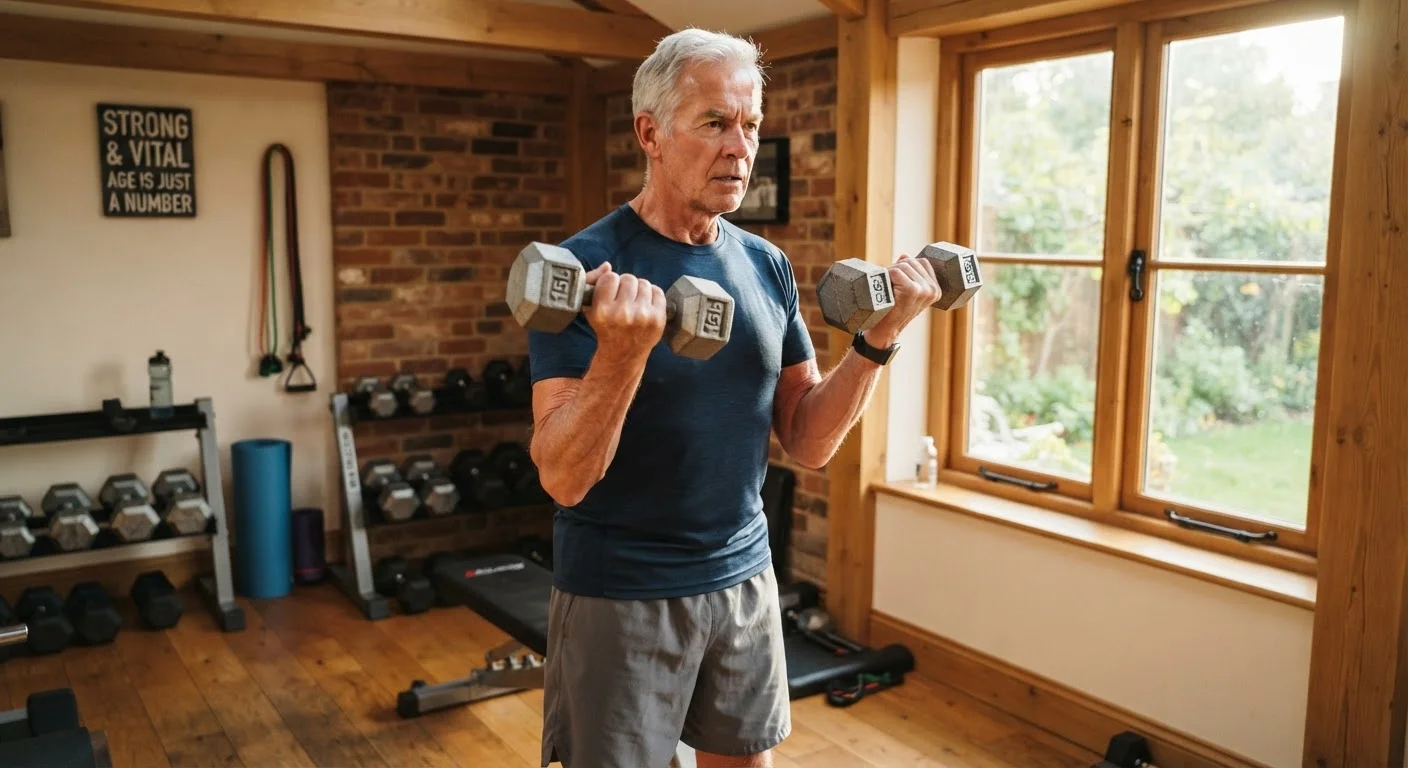
Why Muscle Loss Speeds Up After 60
Losing some muscle mass is a normal part of aging — adults begin a gradual decline in skeletal muscle as early as their 30s. But the trajectory changes sharply after 60, when several biological shifts converge to accelerate the process. Understanding those shifts is the first step toward countering them.
Three major drivers account for the acceleration:
- Hormonal changes: Testosterone, estrogen, and growth hormone — all of which support muscle protein synthesis — decline with age. These changes reduce the body's ability to build and repair muscle tissue efficiently.
- Anabolic resistance: Older muscles become less responsive to the protein signals that normally trigger muscle building. Even when adequate protein is consumed, the anabolic (muscle-building) response is blunted compared to younger adults.
- Motor neuron loss: Aging reduces the number of motor neurons — the nerve cells that activate muscle fibers. Fewer motor neurons means less muscle fiber recruitment, which contributes directly to strength loss.
Physical inactivity compounds all three. As mobility declines and activity levels drop, muscles that aren't regularly challenged atrophy faster. This is why sarcopenia often accelerates alongside reduced daily movement — a pattern that can become a self-reinforcing cycle. For a broader look at how the body changes across decades, see what science says is actually normal after 40.
3–8%
Muscle mass lost per decade after age 30
According to research published in the journal Current Opinion in Clinical Nutrition & Metabolic Care, the rate of decline accelerates significantly after age 60.
~50%
Muscle mass lost by age 80 vs. peak
Studies estimate that adults may lose up to half of their peak skeletal muscle mass by their 80s in the absence of targeted intervention.
10–15%
Strength gain possible in older adults after resistance training
Clinical trials involving adults aged 65 and older consistently show meaningful strength improvements following structured resistance exercise programs.
What the Research Says Actually Works
The evidence on slowing sarcopenia points clearly to two pillars: resistance exercise and adequate protein intake. Neither alone is as effective as both together.
Resistance Training
Progressive resistance training — exercises that challenge muscles under load, whether through free weights, machines, resistance bands, or bodyweight — remains the most consistently supported intervention in the clinical literature. Studies across age groups including adults in their 70s and 80s show that structured resistance programs can increase muscle mass, improve grip strength, and enhance functional mobility.
Two to three sessions per week targeting major muscle groups is a common evidence-based framework. However, older adults with existing health conditions should always consult a physician or physical therapist before starting a new program.
Dietary Protein
Muscle tissue is built from amino acids — the building blocks found in dietary protein. Because older adults experience anabolic resistance, they generally need more protein per meal to achieve the same muscle-synthesizing effect as a younger person. Distributing protein intake across meals, rather than concentrating it in one, appears to be more effective for muscle maintenance.
For a deeper look at the role of protein specifically, see our article on why your body needs more protein after 60.
Supporting Habits That Reinforce Muscle Health
Beyond structured exercise and protein, several other lifestyle factors influence the rate of muscle loss in older adults.
- Sleep quality: Growth hormone is released predominantly during deep sleep. Poor or fragmented sleep — common in older adults — can reduce muscle repair and recovery efficiency.
- Vitamin D status: Low vitamin D levels are associated with reduced muscle function and increased fall risk in older populations. Many older adults are deficient; a physician can test levels and recommend appropriate steps.
- Managing chronic conditions: Conditions such as type 2 diabetes, heart failure, and chronic inflammation are linked to accelerated muscle loss. Effective disease management supports muscle preservation as a secondary benefit.
- Staying generally active: Even non-structured movement — walking, gardening, household tasks — helps maintain baseline muscle engagement and metabolic health.
It's worth noting that many assumptions about aging and strength don't hold up to scrutiny. As explored in common misconceptions about growing older, the idea that you simply cannot build or maintain muscle past a certain age is not supported by the evidence.
Sarcopenia also intersects with bone health — reduced muscle activity contributes to bone density loss, and the two conditions often progress together. See bone density and joint health across the decades for more on that relationship.
This article is for general informational and educational purposes only and is not a substitute for professional medical advice, diagnosis, or treatment. Always consult a qualified healthcare provider before making changes to your diet, exercise routine, or health management plan.
Frequently Asked Questions
Muscle mass starts declining gradually from around age 30–40, but the rate accelerates noticeably after 60. By age 70 and beyond, some adults lose up to 1–2% of muscle mass per year without intervention. The good news is that targeted resistance exercise can slow or partially reverse this trend at any age.
Yes. Research consistently shows that older adults — including those in their 70s and 80s — can increase muscle mass and strength through resistance training. The gains may be more modest than in younger adults, but they are meaningful and functionally significant.
Many nutrition researchers suggest older adults need more protein than younger people — often cited in the range of 1.0 to 1.2 grams per kilogram of body weight per day, compared to the general RDA of 0.8 g/kg. However, individual needs vary; consult a registered dietitian or physician for personalized guidance.
Not exactly. While physical inactivity worsens sarcopenia, the condition also involves hormonal and neurological changes that occur with aging regardless of fitness level. It is a distinct clinical condition, not simply a lack of exercise.
Common signs include noticeable reductions in grip strength, difficulty rising from a chair without using hands, slower walking speed, and increased fatigue during routine tasks. A healthcare provider can perform simple assessments to evaluate muscle strength and function.
Walking supports cardiovascular health and general activity levels, but it is not sufficient on its own to prevent sarcopenia. Resistance training — using weights, resistance bands, or bodyweight exercises — is specifically necessary to stimulate muscle protein synthesis and counter muscle loss.
The content on this site is for informational purposes only and is not a substitute for professional advice. Always consult a qualified professional for guidance specific to your situation.