

Why Social Activity Matters as Much as the Movement Itself
Physical activity and social connection share a striking overlap in their health benefits for older adults — each supports cognitive function, emotional well-being, and long-term independence. When the two are combined, the effect can be especially meaningful. Research consistently shows that social isolation carries significant health risks for older adults, comparable in some analyses to the effects of physical inactivity. Group-based exercise addresses both concerns simultaneously.
The appeal isn't just physiological. People who exercise with others tend to stick with it longer. When a familiar face is expecting you at the Tuesday morning class or the weekend trail walk, attendance becomes a social commitment, not just a personal one. That accountability loop is one of the most underappreciated benefits of group movement.
For older adults navigating shifts in their activity capacity — whether from joint changes, balance concerns, or reduced stamina — structured social settings also offer a lower-pressure environment to adapt. Instructors who specialize in older populations understand how to scale movements safely. Understanding how movement needs evolve is foundational; Active Aging: How Movement Needs and Opportunities Shift After 50 explores that landscape in depth.
Start with what already interests you
The best group activity is one you'll actually return to. If you've always enjoyed music, dance classes may feel immediately engaging. If you prefer the outdoors, a walking or cycling group may be the better fit. Interest-aligned activities tend to produce better long-term participation, which is ultimately where the health benefits accumulate.
Below are eight activity formats that reliably deliver on both fronts — physical benefit and genuine human connection.
Eight Activities That Move the Body and Build Community
Group fitness classes designed for older adults
Classes such as SilverSneakers, senior yoga, and low-impact aerobics are specifically structured for older bodies, with instructors trained to offer modifications. Beyond the physical work, these classes create a recurring social touchpoint — the same people, same time each week. Many participants report that the friendships formed are as motivating as the exercise itself.
Recurring classes create social rituals that make skipping feel like letting someone down.
Water aerobics and lap swimming groups
Aquatic exercise is particularly well-suited to adults managing joint discomfort or reduced weight-bearing capacity. The buoyancy of water reduces impact while still providing meaningful resistance for cardiovascular conditioning and muscle maintenance. Community pools often run dedicated sessions for older adults, and the locker-room camaraderie that develops around these sessions is a quietly underrated social benefit.
Water's buoyancy makes movement accessible to those managing joint discomfort without sacrificing conditioning.
Walking clubs and trail groups
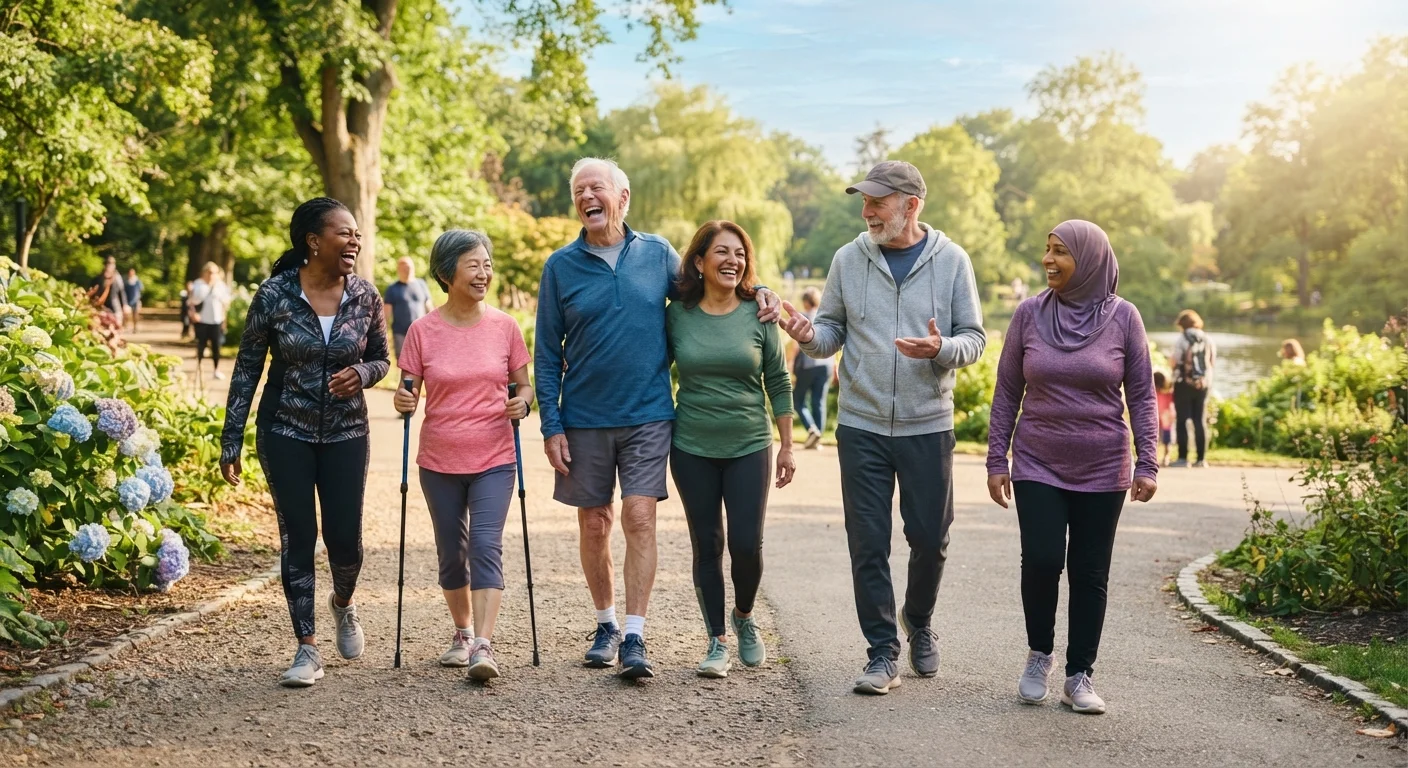
Walking remains one of the most studied and consistently recommended forms of physical activity for older adults. Organized walking clubs add structure, safety in numbers, and conversation — turning a solitary habit into a shared one. Local park systems, senior centers, and community organizations frequently host free or low-cost walking groups. Everyday movement that counts offers perspective on how even short walks accumulate genuine health value.
Walking clubs transform a solitary habit into a consistent, conversation-filled shared routine.
Dance classes — ballroom, line dancing, or folk
Dance combines aerobic conditioning, balance training, and coordination in a format that most people find genuinely enjoyable. Partner-based styles like ballroom or swing foster direct social interaction, while line dancing and folk formats work well for those who prefer not to pair up. Evidence suggests dance may also support cognitive function, as learning and remembering sequences challenges the brain alongside the body.
Dance challenges the brain and body simultaneously, making it one of the more cognitively rich group activities.
Tai chi and qigong groups
Both practices emphasize slow, controlled movement, breath awareness, and postural alignment — all areas of particular relevance for older adults. Tai chi in particular has been associated in research with improvements in balance and fall-risk reduction. Community groups, often held outdoors in parks, carry a calm, unhurried social dynamic that appeals to those who find high-energy classes overstimulating.
Tai chi's slow, deliberate sequences directly target balance — one of the most critical skills for aging adults.
Pickleball and bocce leagues
Pickleball has grown rapidly in popularity among older adults, and for good reason: it combines moderate-intensity movement with a social game structure that naturally generates interaction and friendly competition. Bocce requires less cardiovascular exertion but involves movement, outdoor time, and strong community culture. Both sports are accessible to a wide range of fitness levels and are frequently organized through parks and senior recreation programs.
Pickleball's social game structure naturally generates the kind of playful interaction that makes people come back.
Community or therapeutic gardening programs
Gardening is often overlooked as physical activity, but it involves squatting, lifting, carrying, and sustained low-level effort — all movements that support functional independence. Everyday movement habits that support independence discusses how these activity patterns matter beyond formal exercise. Community garden plots and therapeutic horticulture programs offered through senior centers provide both the physical engagement and a consistent social group working toward a shared goal.
Community garden programs combine purposeful physical effort with the satisfaction of working toward a shared goal.
Cycling groups and adaptive cycling programs
Group cycling — whether on traditional bikes, recumbents, or adaptive three-wheeled cycles — suits a range of mobility levels. Many areas have recreational cycling clubs with dedicated senior or slower-pace groups. Adaptive cycling programs specifically serve those with balance limitations or limited lower-body strength. The combination of cardiovascular benefit, outdoor exposure, and the social rhythm of riding together makes this a compelling option for those who enjoy it. Adapting movement as your body changes offers guidance on adjusting activity approaches across the decades.
Adaptive cycling expands access to group riding for those who may not manage a standard two-wheel bicycle.
The activities above span a wide range of intensity, cost, and physical demand — which is by design. Finding the right fit often means trying more than one. Community centers, senior centers, YMCAs, and local parks and recreation departments are good starting points for locating organized groups near you.
For those who want to assess whether their current routine covers the key physical domains — strength, balance, flexibility, and cardiovascular health — the Active Aging Checklist is a practical self-evaluation tool. And if you're thinking about how movement supports real daily tasks like carrying groceries or climbing stairs, Functional Fitness for Older Adults connects those dots directly.
This article is for general informational purposes only and does not constitute medical advice. Consult a qualified healthcare professional before beginning any new exercise program, particularly if you have existing health conditions or mobility concerns.
The content on this site is for informational purposes only and is not a substitute for professional advice. Always consult a qualified professional for guidance specific to your situation.