

Why Menopause Changes the Bone Equation
Bone is living tissue, constantly being broken down and rebuilt in a cycle called remodeling. Estrogen plays a key role in keeping this cycle balanced by limiting the activity of osteoclasts — the cells responsible for breaking down bone. When estrogen levels fall during and after menopause, this brake is released, and bone resorption outpaces formation.
The result is a measurable drop in bone mineral density, most rapid in the first five to seven years after the final menstrual period. Over a lifetime, women can lose 20–30% of their bone density in the years surrounding menopause, according to the National Osteoporosis Foundation. This is why nutritional strategies that were adequate before menopause may no longer be sufficient afterward. For a broader look at what drives these shifts, see how hormonal changes affect the body in midlife.
The Calcium–Vitamin D Partnership
Calcium is the primary mineral that gives bone its strength and density. But calcium cannot be efficiently absorbed by the intestines without adequate vitamin D. Specifically, vitamin D stimulates the production of calcium-binding proteins in the gut lining, allowing the body to extract calcium from food and supplements rather than letting it pass through unabsorbed.
Without sufficient vitamin D, even a calcium-rich diet may not deliver meaningful protection. The body compensates for low calcium absorption by drawing calcium out of bones — the opposite of what's needed. This is why these two nutrients are consistently discussed together in bone health guidelines. For a detailed look at their biological relationship, see how calcium and vitamin D function as a team.
1,200 mg
Daily calcium recommendation for women 51+
According to the National Institutes of Health Office of Dietary Supplements, the recommended dietary allowance for calcium rises to 1,200 mg per day for women aged 51 and older.
600 IU
Daily vitamin D recommendation for adults 51–70
The NIH recommends 600 IU of vitamin D per day for adults aged 51–70, rising to 800 IU for those 71 and older, though optimal levels remain an active area of research.
20–30%
Bone density potentially lost around menopause
The National Osteoporosis Foundation estimates that women may lose up to 20–30% of their bone density in the years surrounding menopause, with the most rapid loss occurring in the first five to seven years.
Meeting Nutritional Needs Through Diet
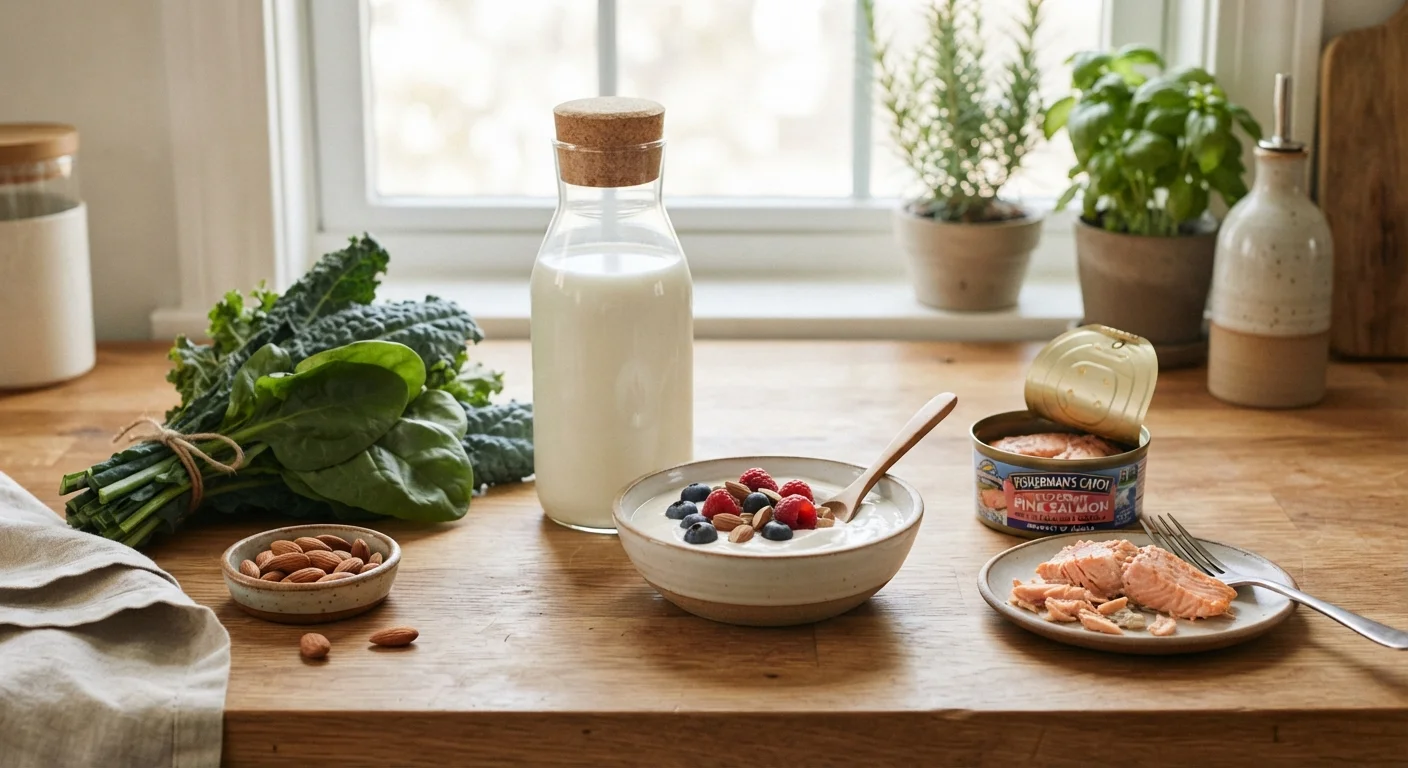
Dairy products — milk, yogurt, and hard cheeses — remain among the most concentrated and bioavailable sources of calcium in the American diet. But dairy isn't the only path. Canned fish with edible bones, calcium-set tofu, white beans, and calcium-fortified plant-based milks provide meaningful amounts for those who avoid dairy. Dark leafy greens such as bok choy and kale also contribute, though the calcium in spinach and Swiss chard is less accessible due to compounds called oxalates that bind to the mineral.
Vitamin D is harder to obtain from food alone. Fatty fish — salmon, mackerel, and sardines — are among the richest natural sources. Egg yolks and fortified dairy and plant milks add smaller amounts. Given that skin synthesis of vitamin D from sun exposure declines with age, and that many Americans are deficient regardless of diet, blood testing is the most reliable way to assess whether dietary intake is sufficient. A physician or registered dietitian can interpret results and advise accordingly.
Beyond Nutrition: Exercise and Bone Strength
Nutrition provides the raw materials, but mechanical stress from physical activity signals the body to use them. Weight-bearing exercises — walking, jogging, dancing, stair climbing — and resistance training both stimulate bone formation by creating the kind of loading forces that bone tissue responds to. Research consistently shows that physically active older adults maintain higher bone density than sedentary peers.
Balance training, while not directly building bone, reduces the risk of falls — the most common trigger for fractures in older adults. Programs that combine strength, balance, and weight-bearing activity offer the most comprehensive support for skeletal health. For more on how bone density changes across decades and what influences it most, explore bone density and joint health across the lifespan.
This article is for general informational purposes only and does not constitute medical advice. Consult a qualified healthcare provider for personalized guidance on nutrition, supplementation, or bone health screening.
Frequently Asked Questions
The National Institutes of Health recommends 1,200 mg of calcium daily for women aged 51 and older, compared to 1,000 mg for younger adults. Getting this amount primarily through food is preferred, as high-dose supplements have been associated with certain health risks in some individuals. A healthcare provider can help determine the right approach for your situation.
Very few foods naturally contain meaningful amounts of vitamin D, making it challenging to meet needs through diet alone. Fatty fish, egg yolks, and fortified dairy or plant milks are the main food sources. Most people rely on a combination of limited sun exposure, fortified foods, and supplementation — your doctor can order a blood test to check your current vitamin D level.
The evidence is mixed. Some studies suggest calcium supplements, particularly combined with vitamin D, modestly reduce fracture risk; others show limited benefit when diet is already adequate. The U.S. Preventive Services Task Force has noted uncertainty around routine supplementation for fracture prevention in postmenopausal women. Individual assessment by a healthcare provider is essential.
Non-dairy calcium sources include canned salmon and sardines with bones, firm tofu set with calcium sulfate, kale, bok choy, broccoli rabe, white beans, and calcium-fortified plant milks. Bioavailability varies — calcium from leafy greens is generally well absorbed, while spinach is high in oxalates that reduce absorption.
For most people, combined calcium and vitamin D supplementation is considered safe when taken at appropriate doses. However, excessive calcium supplementation has been linked to kidney stones and, in some research, cardiovascular concerns. Anyone with kidney disease, hypercalcemia, or a history of kidney stones should discuss supplementation carefully with a physician before proceeding.
The U.S. Preventive Services Task Force recommends bone density screening (DEXA scan) for women aged 65 and older. Younger postmenopausal women with known risk factors — such as family history of osteoporosis, low body weight, or long-term steroid use — may be screened earlier. Talk with your doctor about when screening is appropriate for you.
The content on this site is for informational purposes only and is not a substitute for professional advice. Always consult a qualified professional for guidance specific to your situation.