

The Science Behind Short Bursts of Activity
For decades, public health messaging emphasized continuous exercise - 30 minutes of sustained moderate activity most days of the week. That guidance remains well-supported. But accumulating research has revealed something equally important: the pattern of how we move throughout the day matters, not just the total volume.
Prolonged sitting is now recognized as an independent health risk, separate from whether someone exercises. Muscles go quiet during extended sedentary periods, blood flow slows, and blood glucose regulation becomes less efficient. Movement snacks directly counteract this. A short burst of activity - even two or three minutes - can restore circulation, activate large muscle groups, and prompt metabolic responses that reduce those risks.
Studies have specifically looked at stair climbing as a movement snack. Researchers found that brief, vigorous stair sessions repeated across the day improved cardiorespiratory fitness in sedentary adults. Other research has shown that short activity breaks after meals help moderate post-meal blood glucose spikes. These findings suggest that frequency and distribution of movement carry real physiological weight.
3×
Daily stair-climbing sessions studied for fitness gains
Research published in Applied Physiology, Nutrition, and Metabolism found that three short stair-climbing bouts per day improved cardiorespiratory fitness in previously sedentary adults.
150 min
Weekly moderate activity recommended by U.S. guidelines
The U.S. Department of Health and Human Services Physical Activity Guidelines for Americans note that even small amounts of movement are better than none, and that activity can be accumulated in bouts throughout the day.
~8 hrs
Average daily sitting time for American adults
Data from the National Health and Nutrition Examination Survey suggests many U.S. adults spend roughly eight or more hours per day sedentary, underscoring the importance of frequent movement breaks.
What Counts as a Movement Snack
A movement snack doesn't have to look like exercise in the traditional sense. The defining characteristic is intentionality - choosing to move your body in a way that gets your heart rate up or engages your muscles, rather than remaining stationary. This distinguishes movement snacks from background activity like fidgeting, though that low-level movement has its own value (explored in our article on NEAT).
Effective movement snacks include:
- A brisk 3-minute walk around the building or block
- Two flights of stairs climbed two or three times in a row
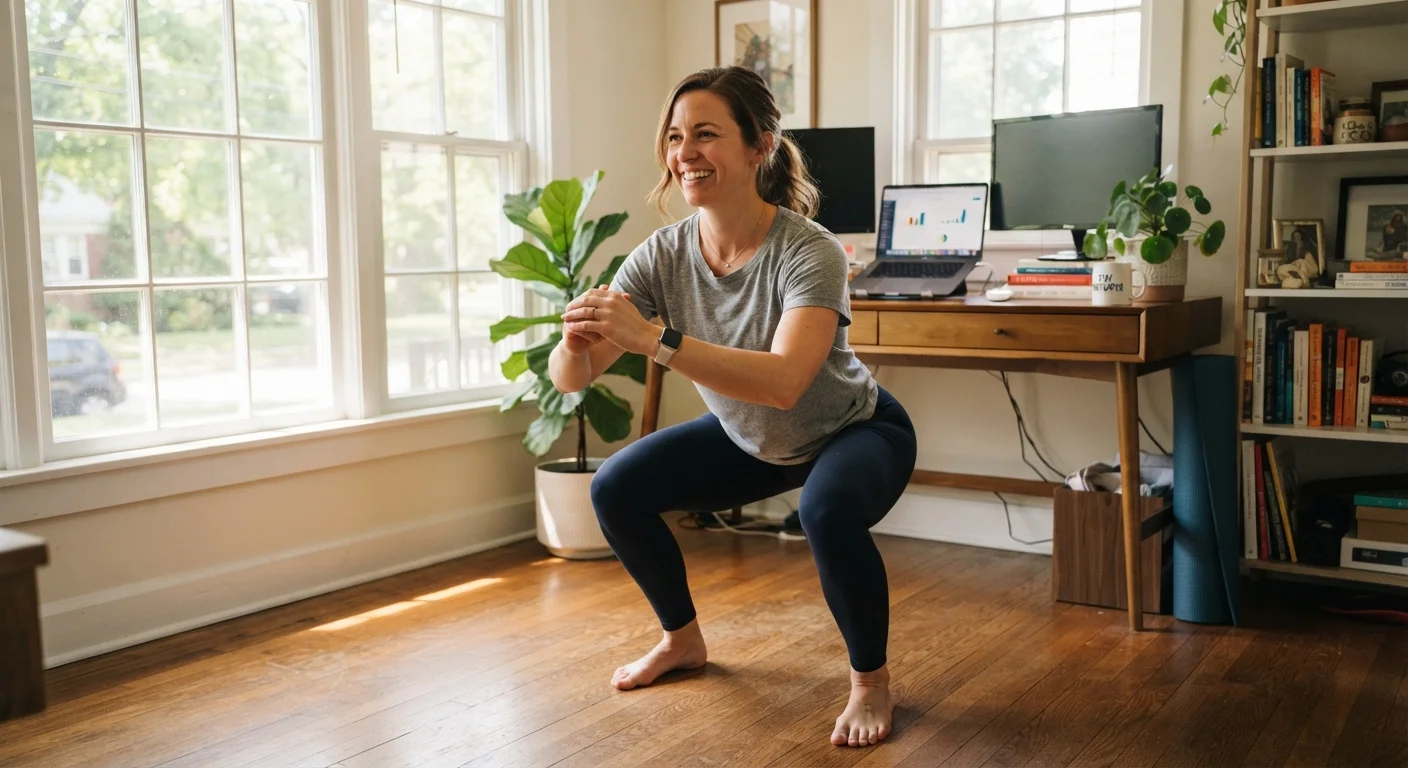
- Ten to fifteen bodyweight squats, lunges, or push-ups
- A short sequence of standing stretches targeting the hips and spine
- Marching in place or stepping side-to-side while on a phone call
These activities require no equipment and fit into natural transition points - after a meeting, before lunch, between tasks. For a broader look at how everyday activities contribute to your overall movement picture, see everyday situations that quietly count as physical activity.
How to Build Movement Snacks Into Your Day
The most reliable way to make movement snacks stick is to attach them to existing anchors in your schedule - what behavioral scientists call habit stacking. Pick two or three recurring daily events and pair a short movement bout with each one.
For example:
- After each video call ends: stand and do ten squats before sitting back down.
- Before brewing your morning coffee: walk up and down a flight of stairs twice.
- At the top of every hour: set a recurring reminder and take a three-minute walk.
Consistency matters more than intensity here. A moderate effort you repeat five times a day will likely deliver more cumulative benefit than one intense effort you skip because it feels too demanding. If you're interested in building a more structured morning routine around movement, the principles in building a morning mobility routine that actually sticks offer a useful complement.
Start With Just Two Snacks a Day
If the idea of adding multiple movement breaks feels overwhelming, begin with just two anchor points - one in the morning and one in the afternoon. Once those feel automatic, add a third. Building gradually reduces resistance and makes the habit far more likely to last.
Movement snacks are also well-suited to older adults, for whom sustained exercise can sometimes feel like a higher barrier. Short, frequent movement sessions can support functional strength and balance without requiring a gym or an extended time commitment. For more on this, see everyday movement habits that support independence as you age.
This article is for general informational purposes only and is not a substitute for professional medical advice. If you have a health condition or are new to physical activity, consult a qualified healthcare provider before making changes to your routine.
Frequently Asked Questions
Most research on movement snacks uses activity bouts ranging from one to ten minutes. Even one to three minutes of brisk movement - like stair climbing or bodyweight squats - has been shown to produce measurable physiological benefits when done multiple times daily.
Movement snacks are best understood as a complement to structured exercise, not a full replacement. Current public health guidelines still recommend at least 150 minutes of moderate-intensity activity per week. Movement snacks help fill the gaps between formal sessions and reduce the harms of prolonged sitting.
Common options include a set of bodyweight squats, a brisk walk around the block, climbing a flight of stairs several times, marching in place, or a short sequence of stretches. The key is that the activity elevates your heart rate or engages your muscles noticeably.
Yes - short, frequent movement breaks can be particularly valuable for older adults who may find sustained exercise challenging. Activities like standing up from a chair repeatedly, gentle walking, or light balance work count. Older adults should consult a healthcare provider before starting any new movement routine.
There is no single established prescription, but many researchers suggest three to six brief activity bouts per day as a reasonable starting point. The goal is simply to interrupt prolonged sitting regularly and build movement into your existing daily structure.
The content on this site is for informational purposes only and is not a substitute for professional advice. Always consult a qualified professional for guidance specific to your situation.