

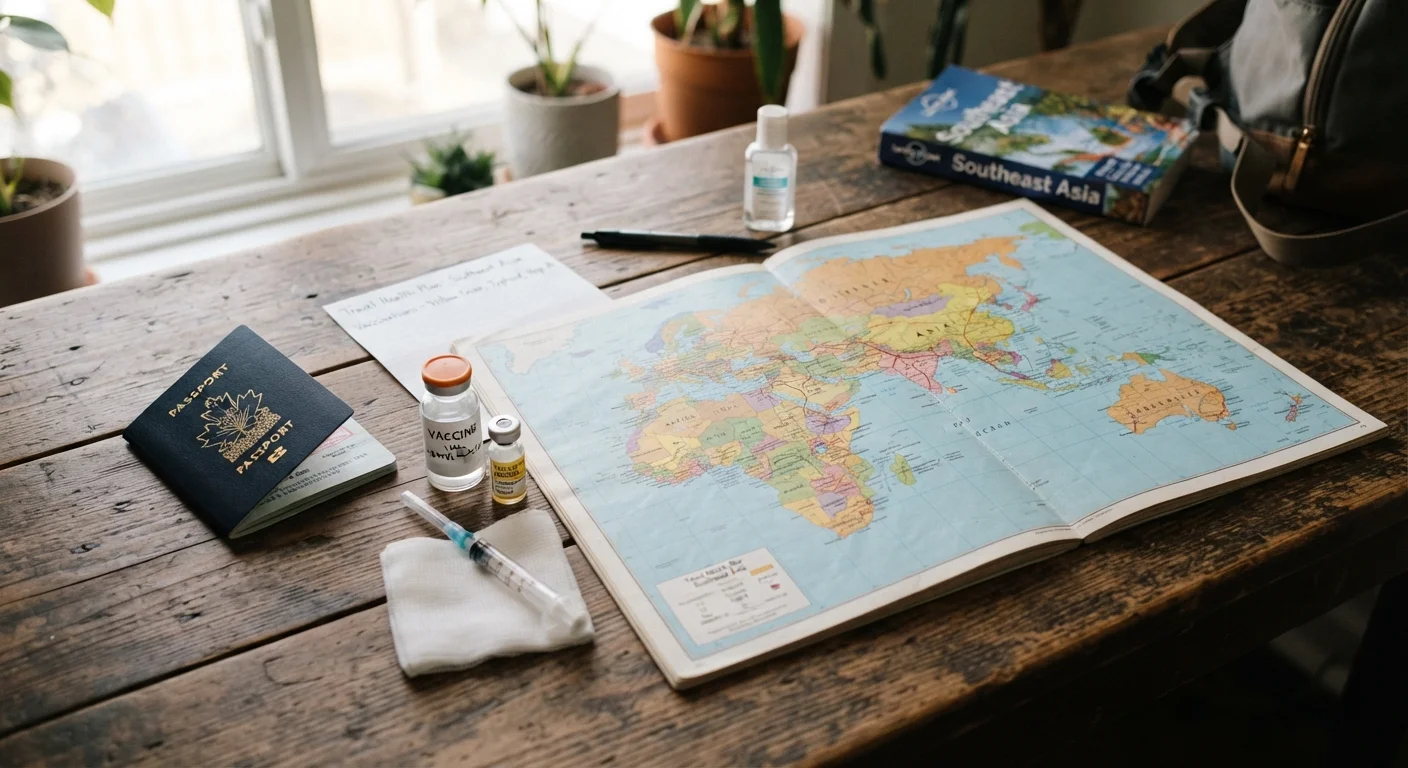
Why Travel Immunization Requires Active Planning
Everyday life in the United States involves background immunity — both from routine vaccines and from widespread herd protection in the population. When you travel internationally, that protective backdrop changes. You may encounter pathogens that are uncommon at home, consume food and water from different sanitation systems, or spend time in environments where insect-borne diseases are prevalent.
Travel medicine exists specifically to bridge this gap. Rather than a one-size-fits-all vaccine list, it applies a destination-and-traveler-specific framework: a backpacking trip through rural Southeast Asia carries different risks than a business trip to a major Western European city. Age, existing health conditions, pregnancy status, and prior vaccination history all further shape what is appropriate for a given individual.
This Is General Information, Not Medical Advice
The information in this article is for educational purposes only and does not substitute for personalized guidance from a healthcare provider. Vaccination needs depend on your specific health history, medications, and travel itinerary. Always consult a qualified travel medicine specialist or your primary care physician before making any vaccination decisions.
Planning ahead matters because immunization is not instantaneous. The immune system needs time — sometimes weeks after a final dose — to mount a protective response. Starting the process well before departure is the single most important habit a traveler can adopt.
Tools and Resources You Will Need
What you will need
Travel Medicine Clinic or Provider
Provides personalized vaccine recommendations and prescriptions based on your destination and health history.
Immunization Record / Yellow Card
Official documentation of your vaccinations, required for entry to some countries and useful for all international travel.
CDC Traveler's Health Website
Free government resource listing destination-specific vaccine recommendations, disease outbreaks, and travel advisories.
Travel Health Insurance
Covers medical evacuation and emergency care abroad, complementing your vaccine protection.
Step-by-Step: Building Your Travel Immunization Plan
Research Your Destination's Disease Risks
Before booking a clinic appointment, learn which infectious diseases are present at your destination. Risk varies by region, urban versus rural setting, season, and planned activities such as hiking, working with animals, or visiting healthcare facilities.
The CDC Traveler's Health portal and the World Health Organization's travel health resources are reliable starting points. Note any current outbreak alerts for your destination.
Schedule a Travel Medicine Consultation Early
Aim to see a travel medicine specialist or your primary care provider at least 4–6 weeks before departure, and ideally earlier for complex itineraries or multi-dose vaccines. Many health systems have dedicated travel medicine clinics; your insurer's website or the ISTM (International Society of Travel Medicine) clinic directory can help you locate one.
At the appointment, your provider will review your medical history, current immunizations, destination risks, and planned activities to build a tailored recommendation.
Review and Update Routine Vaccinations
International travel is an excellent trigger to confirm that standard adult vaccines are current. Providers commonly check for up-to-date status on influenza, COVID-19, MMR (measles, mumps, rubella), tetanus-diphtheria-pertussis (Tdap), and varicella. Measles outbreaks, for example, occur in many regions and can affect unvaccinated travelers.
Bring your immunization records to the appointment so your provider can identify genuine gaps rather than duplicating doses unnecessarily.
Discuss Destination-Specific Vaccines
Depending on where you are traveling, your provider may recommend vaccines beyond your routine schedule. Commonly discussed travel vaccines include:
- Hepatitis A — recommended for most international travel; two-dose series.
- Typhoid — recommended for travel to South Asia, parts of Africa, and Latin America.
- Yellow Fever — required for entry to certain countries in sub-Saharan Africa and tropical South America; only administered at authorized clinics.
- Japanese Encephalitis — considered for long-term travel or rural stays in parts of Asia.
- Meningococcal vaccines — required for Hajj pilgrimage and recommended for parts of sub-Saharan Africa.
- Rabies pre-exposure — considered for travelers with significant animal exposure risk.
This list is illustrative, not exhaustive. Your provider's recommendations will reflect your specific itinerary.
Get Vaccinated and Obtain Documentation
Once your provider finalizes recommendations, receive the vaccines according to the advised schedule. Ask for an updated International Certificate of Vaccination or Prophylaxis (ICVP) — commonly called the yellow card — which serves as your official travel vaccination record.
Some countries require you to present the yellow card at the border; without it, you may be denied entry or required to receive a vaccine on arrival under less controlled conditions. Before your appointment, review what to bring and expect at a vaccination appointment.
Plan Non-Vaccine Preventive Measures
Vaccines do not cover every travel health risk. Your provider may also discuss malaria prophylaxis medication for certain destinations, traveler's diarrhea prevention strategies, insect repellent use, food and water safety, and altitude sickness for high-elevation travel. These measures work alongside immunization to create a more complete protective approach.
Check the CDC Traveler's Health Portal
The U.S. Centers for Disease Control and Prevention maintains a destination-specific traveler's health website (wwwnc.cdc.gov/travel) that lists vaccine recommendations and current health notices for countries worldwide. Using this as a starting point before your clinic visit helps you arrive informed and ask better questions.
Don't Wait Until the Week Before You Depart
Several travel vaccines — including hepatitis A, hepatitis B, typhoid (injectable), and Japanese encephalitis — require multiple doses administered weeks apart to build full protection. Waiting too long may mean you cannot complete a full vaccine series before your trip. Some vaccines also need time after the final dose before immunity is established.
Common Questions About Travel Vaccines
Are travel vaccines covered by health insurance?
Coverage varies widely by plan. Some insurers cover vaccines deemed medically necessary for travel, while others classify them as elective. Contact your insurer before your appointment; travel medicine clinics often have experience navigating this and can advise on documentation that supports a coverage claim.
What if I am leaving in less than four weeks?
Still see a provider — partial protection from an abbreviated schedule is generally better than none, and some vaccines offer meaningful immunity after a single dose. Your provider will prioritize based on your specific risk profile and departure date.
Do I need to see a travel medicine specialist, or can my regular doctor help?
Many primary care physicians can handle straightforward travel vaccine needs, particularly for common destinations. For complex itineraries, immunocompromised status, or required vaccines like yellow fever (which must be given at authorized centers), a dedicated travel medicine clinic is preferable.
This article is for informational purposes only and does not constitute medical advice. Always consult a qualified healthcare professional for guidance tailored to your personal health situation and travel plans.
The content on this site is for informational purposes only and is not a substitute for professional advice. Always consult a qualified professional for guidance specific to your situation.