

Why Hydration Advice Gets Complicated
Water is essential to nearly every physiological process — from regulating body temperature to transporting nutrients and flushing waste. Yet the public guidance surrounding how much to drink, when to drink it, and what counts toward intake is riddled with oversimplifications that can leave people either over-focused on a number or dismissive of hydration altogether.
Fluid needs genuinely vary by body size, activity level, climate, health status, and diet. The National Academies of Sciences, Engineering, and Medicine set general adequate intake levels at roughly 3.7 liters (about 125 oz) of total water daily for men and 2.7 liters (about 91 oz) for women — but these figures account for all fluid sources, including food, not just beverages. Understanding this context is the first step toward making hydration a realistic, personalized habit rather than an arbitrary daily countdown. For a broader look at what truly constitutes a beneficial daily routine, see what researchers define as healthy daily habits.
Common Hydration Myths — Corrected
Several widely repeated beliefs about hydration are either exaggerated or simply inaccurate. The myth-and-fact pairs below draw from current evidence and consensus guidance to set the record straight.
Myth
Everyone needs to drink exactly eight 8-ounce glasses of water per day.
Fact
There is no universal scientific basis for the "8x8" rule — fluid needs differ meaningfully from person to person.
The eight-glasses rule is one of the most persistent pieces of health folklore, but it lacks a clear evidence foundation. Researchers tracing its origins have found it was likely a misinterpretation of a 1945 U.S. Food and Nutrition Board recommendation, which noted that most water needs are met by food. Individual factors — including body weight, physical activity, ambient temperature, and health conditions — all shift daily fluid requirements. Treating a single number as a universal target ignores this variability entirely.
Myth
Coffee and tea dehydrate you, so they don't count toward your fluid intake.
Fact
Moderate caffeine consumption does not cause net fluid loss; caffeinated beverages do contribute to daily hydration.
Caffeine has a mild diuretic effect, meaning it can slightly increase urine output. However, research consistently shows that the fluid in coffee and tea more than offsets any temporary increase in urination. Studies published in peer-reviewed nutrition journals confirm that moderate coffee consumption — generally defined as up to about 400 mg of caffeine per day for healthy adults, per FDA guidance — does not lead to dehydration. Habitual coffee drinkers also develop tolerance to caffeine's diuretic effect over time.
Myth
You only get hydration from beverages — food doesn't meaningfully contribute.
Fact
Food typically supplies about 20% of total daily fluid intake for people eating a varied diet.
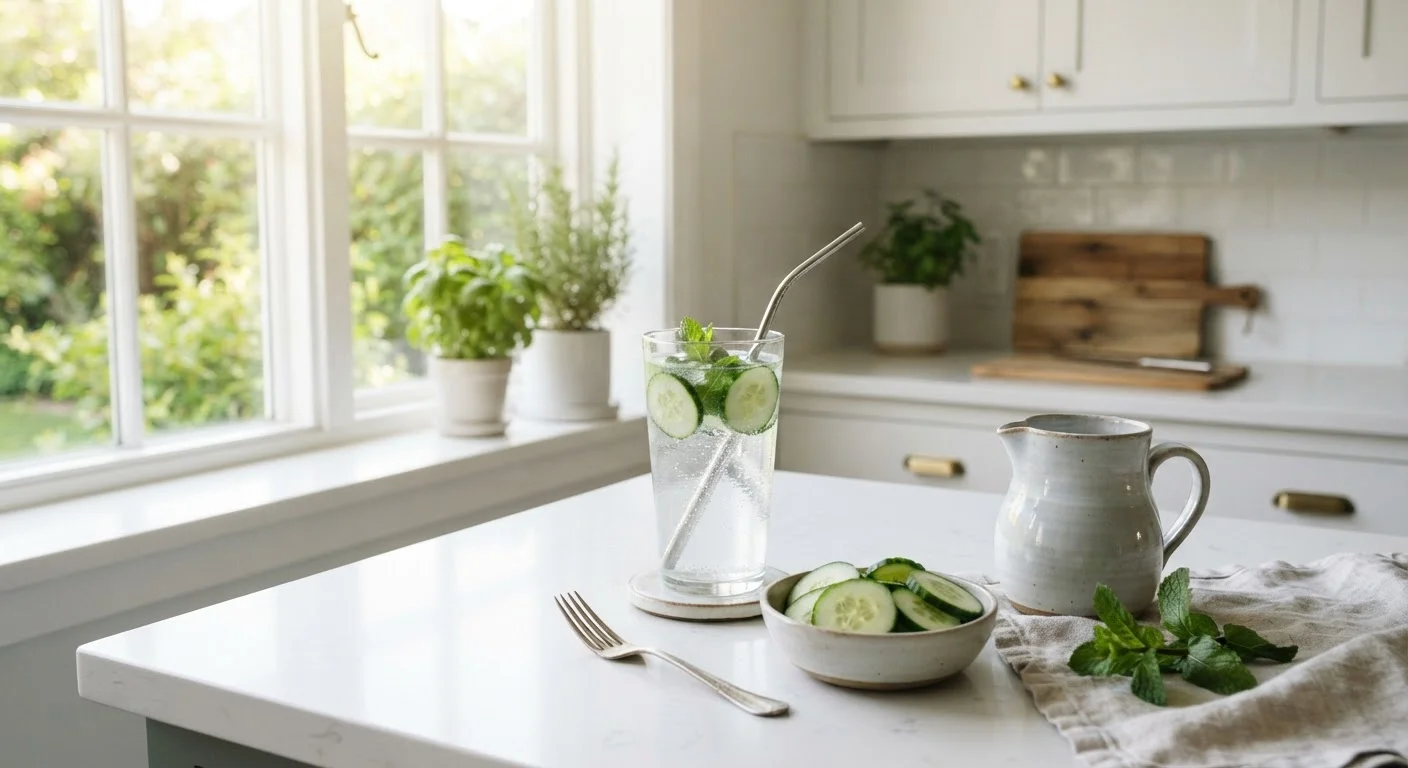
Many fruits and vegetables have water content exceeding 90% by weight — cucumbers, lettuce, celery, tomatoes, and watermelon are notable examples. Soups, yogurt, and cooked grains also contribute measurably. This food-based hydration is factored into the National Academies' total water intake recommendations. Diets rich in whole fruits and vegetables — also associated with better micronutrient intake, as explored in nutrients Americans commonly undereat — inherently support hydration as a secondary benefit.
Myth
If you're not thirsty, you're properly hydrated.
Fact
Thirst lags behind actual fluid loss, meaning mild dehydration can develop before you feel the urge to drink.
Thirst is triggered when blood osmolality rises — typically after about 1–2% of body water has already been lost. At this point, measurable reductions in cognitive performance and physical endurance are already documented in research settings. Relying solely on thirst as a real-time hydration monitor works reasonably well for most healthy adults under normal conditions, but it is less reliable during intense exercise, in hot weather, or in older adults, whose thirst sensitivity declines with age. Proactive, consistent drinking throughout the day is generally a more dependable strategy than reactive drinking.
Myth
Drinking large amounts of water right before exercise is the best way to prepare.
Fact
Pre-exercise hydration is most effective when it begins hours before activity, not in the final minutes.
The American College of Sports Medicine recommends beginning exercise in a well-hydrated state, which means building fluid intake across the hours leading up to physical activity — not downing a large amount immediately beforehand. Drinking excessive volumes in a short window can cause gastrointestinal discomfort and, in extreme cases, contribute to hyponatremia (low blood sodium from dilution). Spreading fluid intake across the day and monitoring urine color before a workout are more practical preparation strategies.
Practical Signals Your Body Actually Uses
Beyond counting cups, your body offers real-time hydration feedback. Urine color is among the most accessible indicators: pale yellow typically signals adequate hydration, while dark amber suggests you may need more fluids. Clear urine, on the other hand, can indicate overhydration — which, though rare, is worth noting.
Other signals include fatigue, difficulty concentrating, and mild headaches — all of which can accompany mild dehydration before thirst becomes noticeable. However, as we age, the thirst mechanism becomes a less dependable alert system. Learn why thirst becomes less reliable with age and what strategies can help older adults stay ahead of dehydration.
Hydration also intersects with appetite and digestion in ways that are often overlooked. Fluid intake influences how hungry we feel and how efficiently we process food — a connection explored in more depth in hydration's overlooked connection to eating habits.
This article is for general informational purposes only and does not constitute medical advice. Consult a qualified healthcare professional for guidance specific to your health needs.
The content on this site is for informational purposes only and is not a substitute for professional advice. Always consult a qualified professional for guidance specific to your situation.