

Option A
Iron Deficiency
The most common nutritional deficiency worldwide.
Best for: Understanding why fatigue, pale skin, and low energy may signal a shortage of this essential mineral.
Option B
Vitamin B12 Deficiency
A sneaky shortfall that affects nerves and blood alike.
Best for: Recognizing why vegetarians, older adults, and those with absorption issues may need closer attention.
Why These Two Deficiencies Get Confused
Iron deficiency and vitamin B12 deficiency share a frustrating overlap: both can cause anemia — a condition where the body cannot deliver enough oxygen-carrying red blood cells to tissues. The result in both cases often looks similar on the surface: persistent fatigue, weakness, and a general sense of feeling run down.
However, the type of anemia each produces is biologically distinct. Iron deficiency causes microcytic anemia, meaning red blood cells are smaller than normal. B12 deficiency causes megaloblastic anemia, where red blood cells are abnormally large and poorly formed. A standard complete blood count (CBC) can reveal these differences, but symptoms alone make it easy to conflate the two.
This is why self-diagnosis is unreliable. A targeted blood panel — not guesswork — is the appropriate way to identify which deficiency, if either, is present.
How the Symptoms Differ
While fatigue is common to both, some symptoms help distinguish one from the other:
- Iron deficiency specific: pale or yellowish skin, brittle nails, unusual cravings for non-food items (a condition called pica), frequent headaches, and a sore or swollen tongue.
- B12 deficiency specific: tingling or numbness in the hands and feet, difficulty with balance, memory problems, mood changes including depression, and a smooth, inflamed tongue.
The neurological symptoms — numbness, tingling, and cognitive difficulties — are a critical differentiator. These arise because B12 is essential to maintaining the myelin sheath, the protective coating around nerve fibers. Iron does not play this role. If neurological symptoms are present, B12 deficiency (or another condition) should be strongly considered and evaluated by a healthcare professional promptly.
| Criterion | Iron Deficiency | Vitamin B12 Deficiency |
|---|---|---|
| Type of anemia caused | Microcytic (small red blood cells) | Megaloblastic (large, malformed cells) |
| Neurological symptoms | Not typical | Common — tingling, numbness, memory issues |
| Primary dietary sources | Meat, legumes, fortified grains | Animal products only; fortified foods |
| Highest-risk groups | Women, pregnant individuals, infants | Vegans, older adults, people with pernicious anemia |
| Key absorption factor | Enhanced by vitamin C; inhibited by calcium | Requires stomach acid and intrinsic factor |
| Diagnosis method | Serum ferritin, hemoglobin, CBC | Serum B12, CBC, methylmalonic acid test |
Who Is Most at Risk
Risk factors diverge meaningfully between the two deficiencies, shaped by diet, physiology, and life stage.
Iron deficiency disproportionately affects:
- Women of reproductive age due to monthly blood loss
- Pregnant individuals, whose iron requirements roughly double
- Infants and toddlers during rapid growth phases
- Frequent blood donors
- People with gastrointestinal conditions such as celiac disease or inflammatory bowel disease that impair absorption
Vitamin B12 deficiency is more common among:
- Vegans and vegetarians, since B12 is found almost exclusively in animal-derived foods
- Adults over 50, as age-related decline in stomach acid reduces the body's ability to extract B12 from food
- People with pernicious anemia, an autoimmune condition that blocks B12 absorption
- Those taking certain medications long-term, including metformin or proton pump inhibitors, which can reduce B12 levels over time
Medication Use and B12 Levels
Certain commonly prescribed medications can deplete vitamin B12 over time. Metformin, used for type 2 diabetes management, and proton pump inhibitors (PPIs), used for acid reflux, have both been associated with lower B12 levels with prolonged use. If you take either medication long-term, ask your healthcare provider whether periodic B12 monitoring is appropriate for you. Do not stop or adjust any medication without professional guidance.
Dietary Sources: Where Each Nutrient Comes From
Understanding food sources helps clarify why each deficiency affects certain groups more than others.
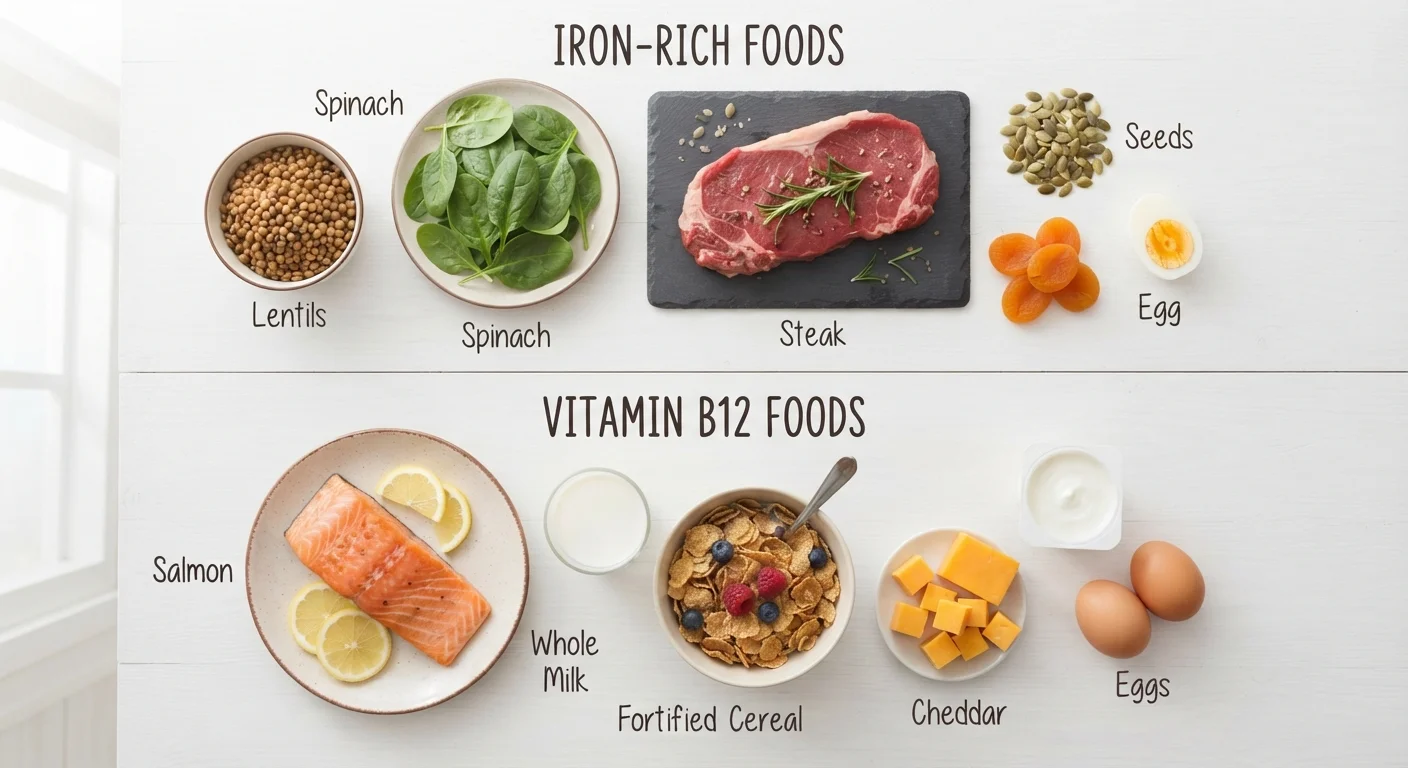
Iron-rich foods fall into two categories. Heme iron — from red meat, poultry, and seafood — is absorbed most efficiently by the body. Non-heme iron comes from plant sources including lentils, beans, tofu, fortified cereals, and dark leafy greens like spinach. Pairing non-heme iron foods with vitamin C sources (such as bell peppers or citrus) meaningfully improves absorption.
Vitamin B12 is naturally present only in animal products: beef, fish (especially salmon and tuna), eggs, milk, yogurt, and cheese. For those who avoid animal products, fortified foods — certain plant milks, breakfast cereals, and nutritional yeast — and supplements are the primary reliable options. Unlike iron, B12 has no widely available, well-absorbed plant-based whole-food source.
This article is for general informational and educational purposes only and is not a substitute for professional medical advice, diagnosis, or treatment. Always consult a qualified healthcare provider before making changes to your diet or taking supplements.
The content on this site is for informational purposes only and is not a substitute for professional advice. Always consult a qualified professional for guidance specific to your situation.