

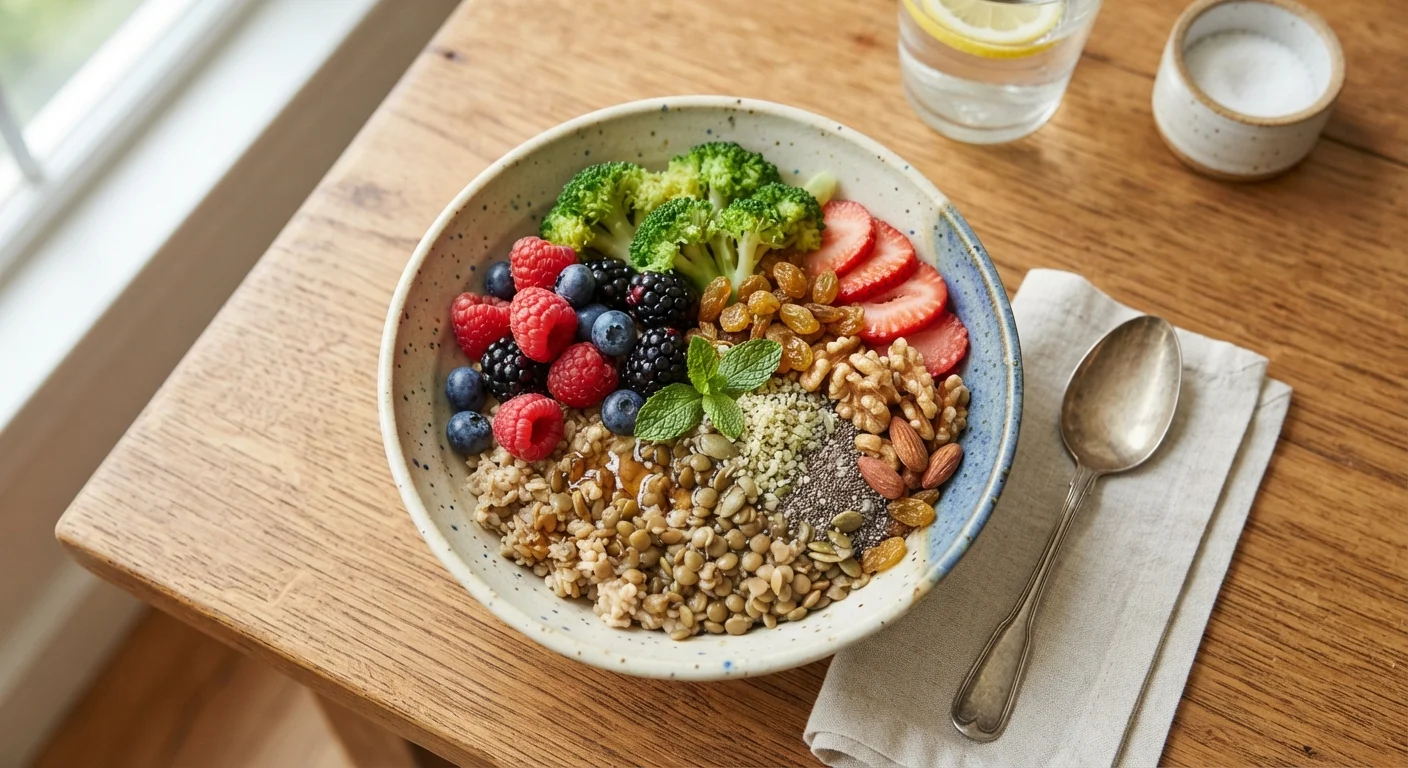
Why Fiber Matters More as You Get Older
Most Americans fall short of fiber targets at every age, but the gap tends to widen after 50. According to dietary survey data, adults over 65 average significantly less fiber than the amounts recommended by national nutrition guidelines — roughly 21–25 grams per day for older women and 30–38 grams for older men, per the Dietary Guidelines for Americans.
The shortfall matters because the body's relationship with fiber changes alongside broader physical shifts that come with age. Gut motility slows, the diversity of the intestinal microbiome tends to decline, and chronic conditions that fiber can help manage — such as cardiovascular disease and type 2 diabetes — become more prevalent. Understanding what fiber actually does in the body makes the case for prioritizing it far more compelling than "it keeps you regular."
Fiber is broadly divided into two categories: soluble fiber, which dissolves in water to form a gel-like substance and is found in oats, legumes, apples, and citrus; and insoluble fiber, which adds bulk to stool and is found in whole grains, nuts, and most vegetables. Both types are found together in most whole plant foods, and both carry distinct health benefits.
Start Low, Go Slow With Fiber
If you're not currently eating much fiber, a rapid increase can cause temporary bloating and gas as gut bacteria adjust. Aim to add one new fiber-rich food per week and drink plenty of water throughout the day. Most people find their digestive system adapts comfortably within a few weeks. Speak with a dietitian if you're unsure where to start.
Key Ways Fiber Supports Health in Later Life
Supports a healthier gut microbiome
The trillions of bacteria in the human gut rely heavily on fermentable fibers — known as prebiotics — as their primary fuel source. When gut bacteria ferment soluble fiber, they produce short-chain fatty acids (SCFAs) such as butyrate, which help maintain the intestinal lining, regulate inflammation, and support immune signaling. Research in the field of gut microbiome science consistently links higher dietary fiber intake with greater microbial diversity, a marker associated with better overall health outcomes. Since microbiome diversity tends to decline naturally with age, a fiber-rich diet is one evidence-supported strategy for partially offsetting that shift. For a deeper look at how digestion itself changes, see how the aging gut shifts and what to eat around it.
Fermentable fibers feed gut bacteria that produce compounds critical for intestinal health and immune regulation.
Helps manage blood sugar and insulin response
Soluble fiber slows the absorption of glucose from the small intestine, which blunts the sharp rise in blood sugar that follows a carbohydrate-heavy meal. Over time, consistently lower post-meal glucose spikes are associated with improved insulin sensitivity — relevant for older adults who face elevated risk of prediabetes and type 2 diabetes. Studies examining dietary patterns in large population cohorts have found meaningful associations between higher fiber intake and lower incidence of type 2 diabetes, though dietary patterns as a whole — not fiber alone — drive these outcomes. If blood sugar management is a concern, a registered dietitian can help tailor fiber intake within a broader dietary approach.
Soluble fiber slows glucose absorption, helping smooth out blood sugar responses after meals.
Contributes to cardiovascular health
Soluble fiber binds to bile acids in the digestive tract, causing the liver to draw more cholesterol from the bloodstream to synthesize replacement bile. This mechanism is well established and contributes to modest but meaningful reductions in LDL cholesterol — the type most associated with cardiovascular risk. Oat beta-glucan, in particular, has enough supporting evidence that the U.S. Food and Drug Administration allows a qualified health claim on its relationship to heart disease risk. Cardiovascular disease remains the leading cause of death among older Americans, making fiber's role in lipid management a clinically relevant consideration rather than a minor footnote.
Soluble fiber can modestly lower LDL cholesterol through a well-established mechanism involving bile acid binding.
Supports healthy bowel function and reduces constipation risk
Constipation is among the most commonly reported gastrointestinal complaints in older adults, driven by slower gut motility, reduced physical activity, certain medications, and lower fluid intake. Insoluble fiber adds bulk and softness to stool, making it easier to move through the colon. Adequate hydration is essential to this process — fiber without sufficient water can actually worsen constipation. While fiber is not a cure-all for every cause of constipation, it addresses one of the most modifiable dietary contributors. Anyone experiencing persistent constipation, especially alongside pain or changes in stool appearance, should consult a healthcare provider to rule out underlying causes.
Insoluble fiber adds stool bulk and softness, but works best when paired with consistent fluid intake.
May help with weight and appetite regulation
Fiber increases the volume and viscosity of food in the stomach, which prolongs feelings of fullness and can reduce overall caloric intake without requiring deliberate restriction. This effect may be particularly relevant for older adults managing weight in the context of reduced metabolic rate and shifting muscle-to-fat ratios. High-fiber foods like legumes and vegetables are also nutrient-dense, meaning they deliver vitamins and minerals alongside satiety — a practical advantage when caloric needs may be somewhat lower but nutrient needs remain high or even increase. Common nutrition myths about eating less in older age can obscure this important distinction.
Fiber-rich foods support satiety while delivering essential nutrients — an efficient trade-off as caloric needs shift.
Practical strategies for increasing fiber intake gradually
Sudden large increases in dietary fiber can cause bloating, gas, and cramping, particularly in people whose current intake is low. A gradual approach — adding one or two fiber-rich foods per week while increasing water intake — allows the gut microbiome and digestive tract time to adapt. Practical entry points include replacing refined grains with whole grain alternatives, adding legumes to soups or salads two to three times per week, and including skin-on fruits and vegetables where appropriate. Older adults following plant-forward diets can find additional guidance on meeting fiber and other nutrient needs in the article on plant-based eating after 65. It's also worth noting that some nutrients become harder to absorb as the gut ages — a consideration explored in depth in nutrients that become harder to absorb with age.
Increasing fiber gradually — one or two foods per week — lets the gut adapt without discomfort.
Meeting fiber goals through whole foods rather than supplements is generally preferred, because foods like legumes, vegetables, whole grains, and fruit also deliver vitamins, minerals, and phytonutrients. That said, for older adults with limited appetite or difficulty chewing, a healthcare provider may discuss supplemental fiber as part of a broader dietary plan. For more on how dietary patterns fit together in later life, see principles for structuring meals as you age.
This article is for informational purposes only and is not a substitute for personalized medical or nutritional advice. Consult a qualified healthcare provider before making significant changes to your diet, especially if you have a chronic condition or take medications.
The content on this site is for informational purposes only and is not a substitute for professional advice. Always consult a qualified professional for guidance specific to your situation.