

Summary
18 items · 20-35 minutes
Why Audit Your Movement Before You Train
Most people start a new fitness routine without ever checking what their body can actually do well - and what it can't. That gap between intention and awareness is where nagging aches, plateaus, and minor injuries tend to live.
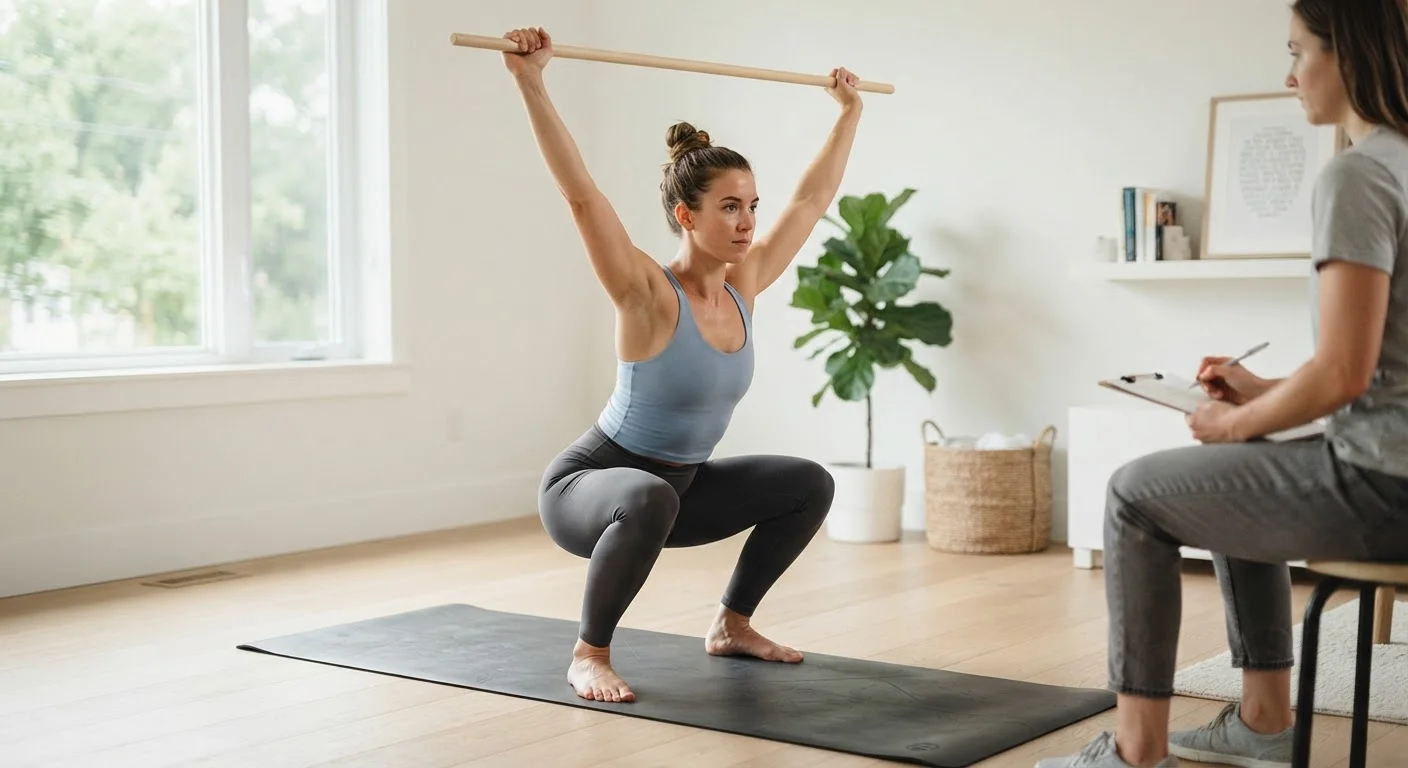
A movement quality audit is a structured self-check: a way to observe how your body currently moves through fundamental patterns like squatting, hinging, reaching, and rotating. It doesn't replace a professional movement screen - a physical therapist or certified movement specialist can offer far more precise assessment - but it gives you a useful, honest baseline before you commit to any new program.
This checklist pairs naturally with the broader framework in the Movement & Mobility complete reference, which covers how to act on what you find here. If you're brand new to this territory, A First Look at Mobility Training is also a helpful companion read.
Full-length mirror or wall space
Allows you to observe your own alignment and movement patterns during the assessment.
Smartphone or camera
Record movements from the side or front so you can review what you can't see in real time.
Yoga mat or non-slip surface
Provides a safe, cushioned area for floor-based and kneeling movements.
Foam roller or rolled bath towel
Used in the thoracic spine mobility check to assess mid-back extension.
Notebook or notes app
Record your observations for each movement category so you can track changes over time.
How to Use This Checklist
Work through each group in order. Move slowly and deliberately - you're observing, not performing. For each item, note whether the movement feels easy, limited, or uncomfortable. Avoid pushing into pain at any point.
A few practical notes before you begin:
- Wear comfortable, form-fitting clothing so you can see your alignment.
- Do a 5-minute gentle warm-up first - some light walking or arm circles - so your findings reflect your functional baseline, not a cold-muscle state.
- Use a mirror or phone camera for movements you can't easily feel, like spinal rotation or ankle tracking.
- Mark each item honestly. Optimistic self-assessment undermines the whole purpose.
Pain Is Not Part of This Assessment
This audit is designed to reveal limitations, not to push through them. If any movement produces sharp pain, joint pain, or discomfort beyond mild tension, stop immediately. Self-assessment is not appropriate as a substitute for evaluation by a physical therapist or physician, especially if you have a prior injury, surgery, or chronic condition.
Once you've completed the audit, review which categories produced the most limitations. Those areas represent your highest-leverage starting points for a mobility practice. For older adults or those managing chronic conditions, the Active Aging Movement Checklist offers additional context tailored to your needs.
Posture & Baseline Alignment
Squat Pattern
Hip Hinge Pattern
Shoulder & Upper Body Mobility
Thoracic Spine (Mid-Back) Mobility
Ankle & Foot Mobility
Daily Movement Habits
What to Do With Your Results
Your audit results aren't a scorecard - they're a map. Areas where you flagged limitations aren't failures; they're simply where your body is asking for more attention. Most people find at least two or three consistent themes across categories, such as restricted hip mobility showing up in both the squat and the hinge, or shoulder tightness affecting both reaching and rotation.
Use your findings to set one or two focused mobility priorities rather than trying to fix everything at once. If your daily routine already includes physical tasks, the Turning Errands and Chores Into a Movement Audit checklist can help you spot where everyday activity is - or isn't - reinforcing good movement patterns.
Repeat this audit every four to six weeks. Changes in how movements feel are often the earliest signal that your mobility work is paying off, well before you notice differences in strength or performance.
This article is for general informational and educational purposes only and is not a substitute for professional medical advice, diagnosis, or treatment. If you experience pain during any of these movements, or have an existing injury or health condition, consult a qualified healthcare professional before proceeding.
The content on this site is for informational purposes only and is not a substitute for professional advice. Always consult a qualified professional for guidance specific to your situation.