

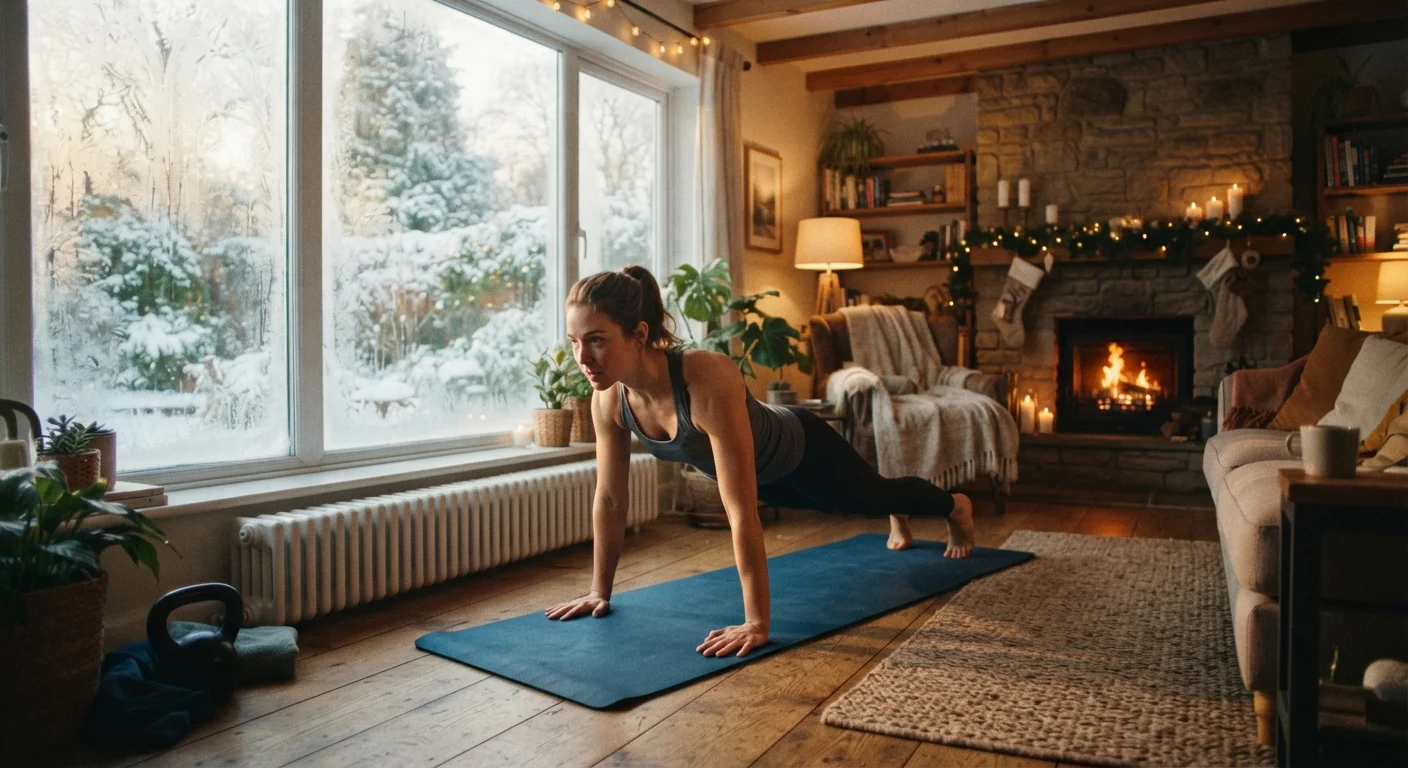
Why Winter Activity Matters - and Why the Gym Isn't the Only Answer
For many Americans, physical activity drops sharply between November and March. Cold temperatures, shorter daylight hours, and icy conditions push outdoor exercise off the table - and without a gym membership, it can feel like movement options simply disappear. But that assumption is worth challenging.
Exercise science recognizes a concept called NEAT - non-exercise activity thermogenesis - which refers to all the calories your body burns through movement that isn't structured exercise. Walking to the mailbox, doing dishes standing up, carrying laundry upstairs: these all count. As explained in our guide on daily movement that isn't a workout, this kind of low-level activity has real health benefits, including improved circulation, better blood sugar regulation, and reduced sedentary time.
Winter doesn't eliminate movement - it just changes the landscape. The steps below will help you build a realistic indoor and outdoor routine that keeps you active through the cold months without any gym required.
What you will need
Step-by-Step: Building Your Winter Movement Routine
Follow these steps to assemble a flexible, sustainable plan. You don't need to do everything at once - start with one or two steps and add others as they become habit.
Audit your home for movement opportunities
Walk through your living space and identify spots where you can add movement: stairs you climb multiple times a day, a hallway long enough for pacing, or a living room with clearance for floor exercises. Note which rooms have the most open floor space - that's your default workout zone.
Also take stock of what you already do: cooking, cleaning, tidying. Intentionally extending or intensifying these activities (e.g., doing calf raises while waiting for water to boil) is a simple way to add NEAT throughout the day.
Build a short bodyweight circuit you can do daily
Choose four to six movements that require no equipment and can be scaled to your current fitness level. A simple starting set might include:
- Squats or chair squats
- Push-ups (wall, knee, or full)
- Glute bridges
- Standing marches or step-touches
- Plank holds (from knees if needed)
Perform each for 30-45 seconds with a brief rest in between. A single circuit takes under 10 minutes and can be repeated once or twice. The goal is consistency, not intensity - doing this five days a week matters more than doing it perfectly twice.
Schedule intentional movement breaks during the workday
Sitting for extended periods is associated with poorer metabolic health even in people who exercise regularly. Set a timer to stand and move for two to five minutes every hour. Options include a brisk walk around your home, a set of squats, or simply standing and doing shoulder rolls and neck stretches.
If you work from home, this is especially important - the absence of a commute can dramatically reduce your daily step count without you noticing.
Dress for the cold and reclaim outdoor walking
Cold weather is not automatically a barrier to outdoor movement. The standard layering principle - moisture-wicking base layer, insulating mid-layer, wind-resistant outer shell - keeps most people comfortable down to temperatures well below freezing. Protect extremities with gloves and a hat, as heat loss from the head and hands is significant.
Aim for at least a 15-20 minute brisk walk on days when conditions are safe (watch for ice). Walking is one of the most evidence-supported forms of physical activity for cardiovascular and mental health, and winter air quality is often better than summer's.
Use community and free digital resources to add variety
Public libraries, community centers, and many local parks and recreation departments offer free or low-cost winter fitness programming - from indoor walking tracks to free fitness classes. Many local governments open recreational facilities during cold months specifically to support community health.
Free guided workout videos (yoga, dance, strength, stretching) are also widely available online and can add structure and variety to home sessions without any subscription required.
Small Efforts Add Up Faster Than You Think
Research on NEAT consistently shows that frequent low-intensity movement throughout the day can contribute significantly to overall energy expenditure. You don't need a dedicated workout block every day - three 10-minute movement sessions spread across the day provide similar physiological benefits to one 30-minute session for general health maintenance. Focus on adding movement wherever it fits naturally into your schedule.
If you're returning to regular movement after a long period of inactivity, read our resource on returning to exercise after a long break before ramping up intensity.
Making It Stick When Motivation Is Low
Motivation tends to ebb in winter - that's normal and well-documented. The most effective strategy isn't waiting for motivation to return; it's reducing the friction between you and movement. Lay out your workout clothes the night before. Set a recurring phone reminder for a walk or movement break. Pair an activity you dislike (like stretching) with something you enjoy (a podcast or playlist).
If you don't identify as someone who loves exercise, that's completely fine. Our guide to active living for non-athletes offers a pressure-free framework for building consistency without overhauling your identity. The goal isn't peak fitness - it's maintaining enough movement to support your energy, mood, and long-term health through the season.
Also remember: your daily commute or morning routine may hold more movement potential than you realize. Explore building an active commute for practical ideas that work even in cold months.
This article is for general informational purposes only and is not a substitute for personalized medical or fitness advice. Consult a qualified healthcare professional before starting any new exercise program, especially if you have existing health conditions.
The content on this site is for informational purposes only and is not a substitute for professional advice. Always consult a qualified professional for guidance specific to your situation.